
TIJ vs. Piezo vs. CIJ: Choosing the Right Smart Manufacturing Coding Technology
Thermal Inkjet vs. Piezo Inkjet vs. CIJ: How to Match Coding Technology to Your Production Line
Coding technology selection is a production-line decision, not just a printing decision. Thermal inkjet (TIJ), piezo inkjet (PIJ), and continuous inkjet (CIJ) each solve a different set of packaging-coding problems. The right choice depends on line speed, substrate, code content, print height, and the operating environment. This comparison guide evaluates the three technologies against those decision parameters, using verifiable product examples from DOCOD Precision Group Co., Ltd., an industrial coding and marking equipment manufacturer based in Guangzhou, China.
Why Technology Selection Starts with the Production Scenario
Manufacturers often narrow their search by asking which coding technology is the best. A more practical question is which non-contact inkjet principle matches a specific packaging operation. The three dominant inkjet coding technologies each use a different method to place ink on a product:
- Thermal Inkjet (TIJ): Heat creates vapor bubbles that push ink droplets out of nozzles.
- Piezo Inkjet (PIJ): A piezoelectric crystal deforms to expel ink droplets on demand.
- Continuous Inkjet (CIJ): A pressurized ink stream is continuously recycled, and charged droplets are deflected to form characters.
The selection between these technologies becomes clearer when evaluated against code resolution, required speed, print height, substrate compatibility, and environmental constraints such as temperature and humidity.
What This Comparison Covers
This guide is written for plant engineers, production managers, and equipment buyers evaluating coding systems for new lines or upgrades. It defines each technology, maps its operational strengths, and shows where it fits across real manufacturing scenarios. Product facts used in this comparison include the DOCOD 3BK702 half-inch black solvent TIJ cartridge, the DOCOD P2000 high-resolution piezo inkjet printer, and the DOCOD M2000 and V2000 series CIJ printers.
How Each Technology Works
Thermal Inkjet (TIJ) Coding
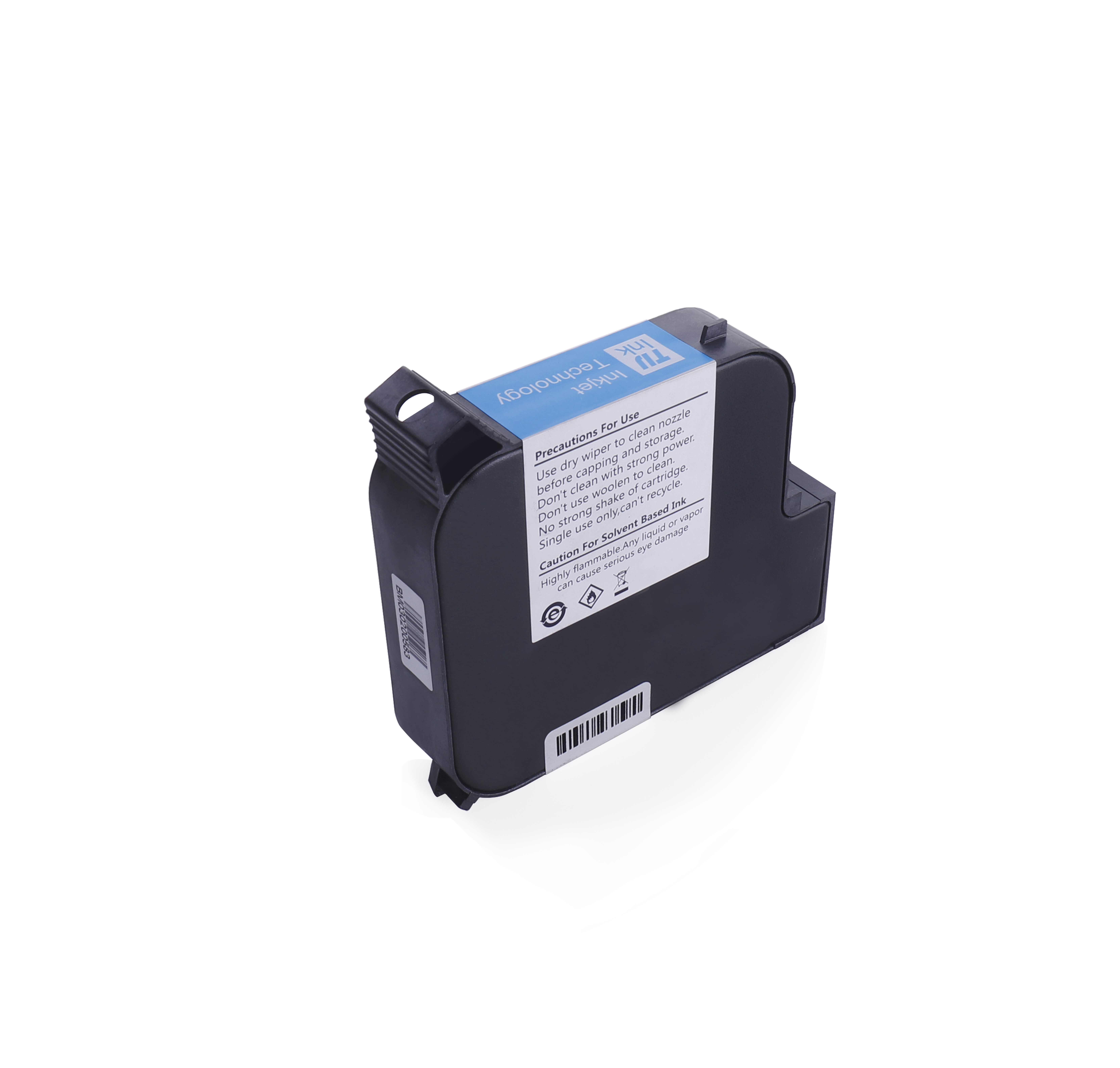
Thermal inkjet coding is a drop-on-demand technology that prints by firing ink through nozzles with heat-activated bubbles. TIJ printheads use sealed cartridges that combine the ink supply and printhead in one unit. For example, the DOCOD 3BK702 Half-Inch Black Solvent Quick-Drying Ink Cartridge contains 42 ml of solvent ink and uses 300 nozzles to achieve a resolution up to 600 dpi, with a recommended printing resolution of 300 × 300. The cartridge operates at a maximum frequency of 12 kHz and a trigger voltage of 9V.
The replacement cycle for a TIJ cartridge is simple: when the cartridge is empty or approaching the end of its recommended six-month best-use period, the operator replaces it. This design eliminates ink systems, pumps, and makeup solvents, which makes TIJ equipment relatively compact and quick to deploy.
High-Resolution Piezo Inkjet (PIJ) Coding
Piezo inkjet is also a drop-on-demand technology, but instead of heat, it uses a piezoelectric element that changes shape when voltage is applied. This mechanical action pushes ink droplets from the nozzle. Because the droplet ejection is controlled without heating the ink, piezo printheads can handle a broader range of fluid formulations.
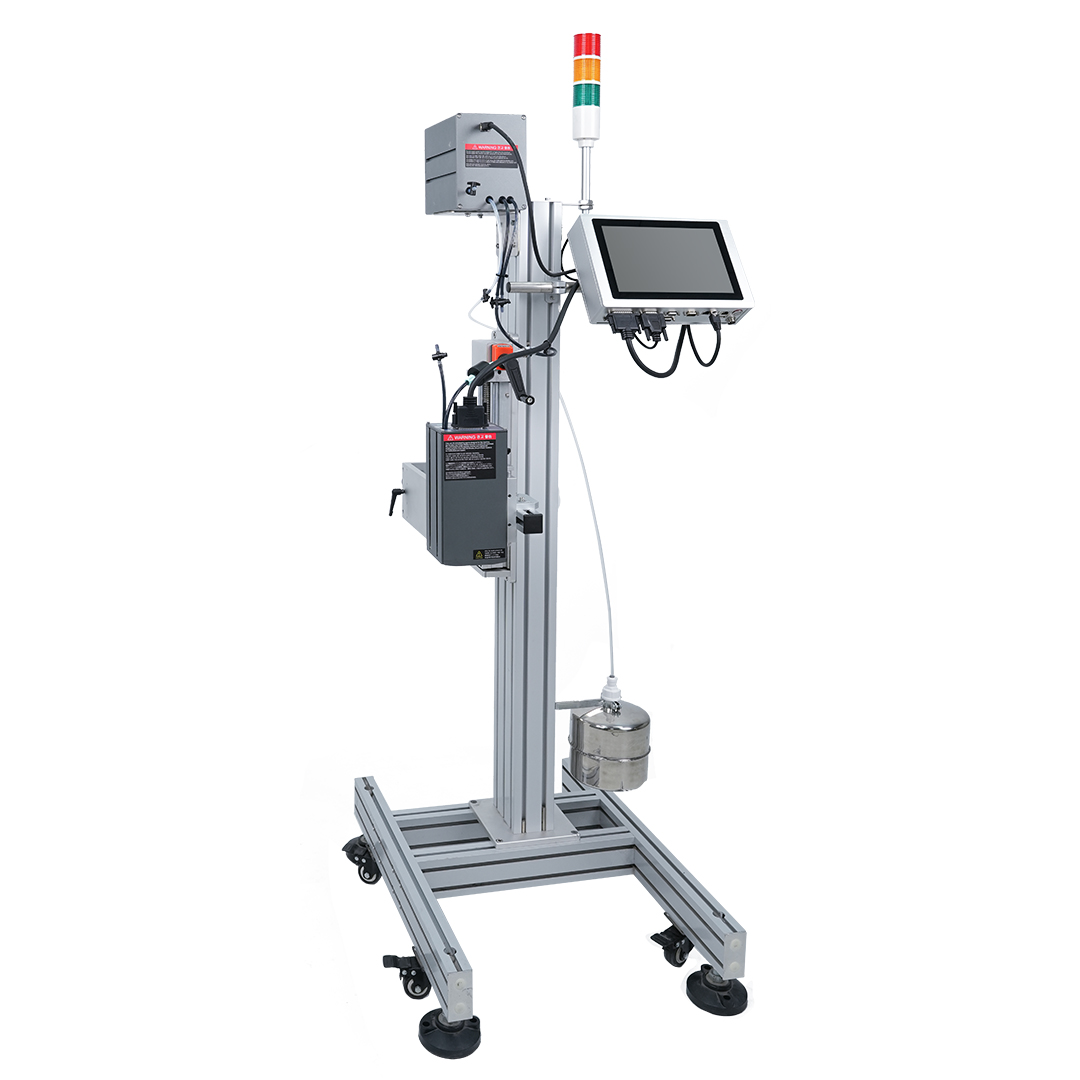
The DOCOD P2000 Piezo Inkjet Printer uses I1600 series nozzles in single-head or dual-head configurations. It prints at 300 dpi or 600 dpi, with a maximum printing height of 33.8 mm for a single head. The printer supports forward and lateral printing directions, uses a negative pressure continuous ink supply system, and runs at 190 m/min at 300 dpi or 95 m/min at 600 dpi. Its housing is made of aviation-grade aluminum.
Continuous Inkjet (CIJ) Coding
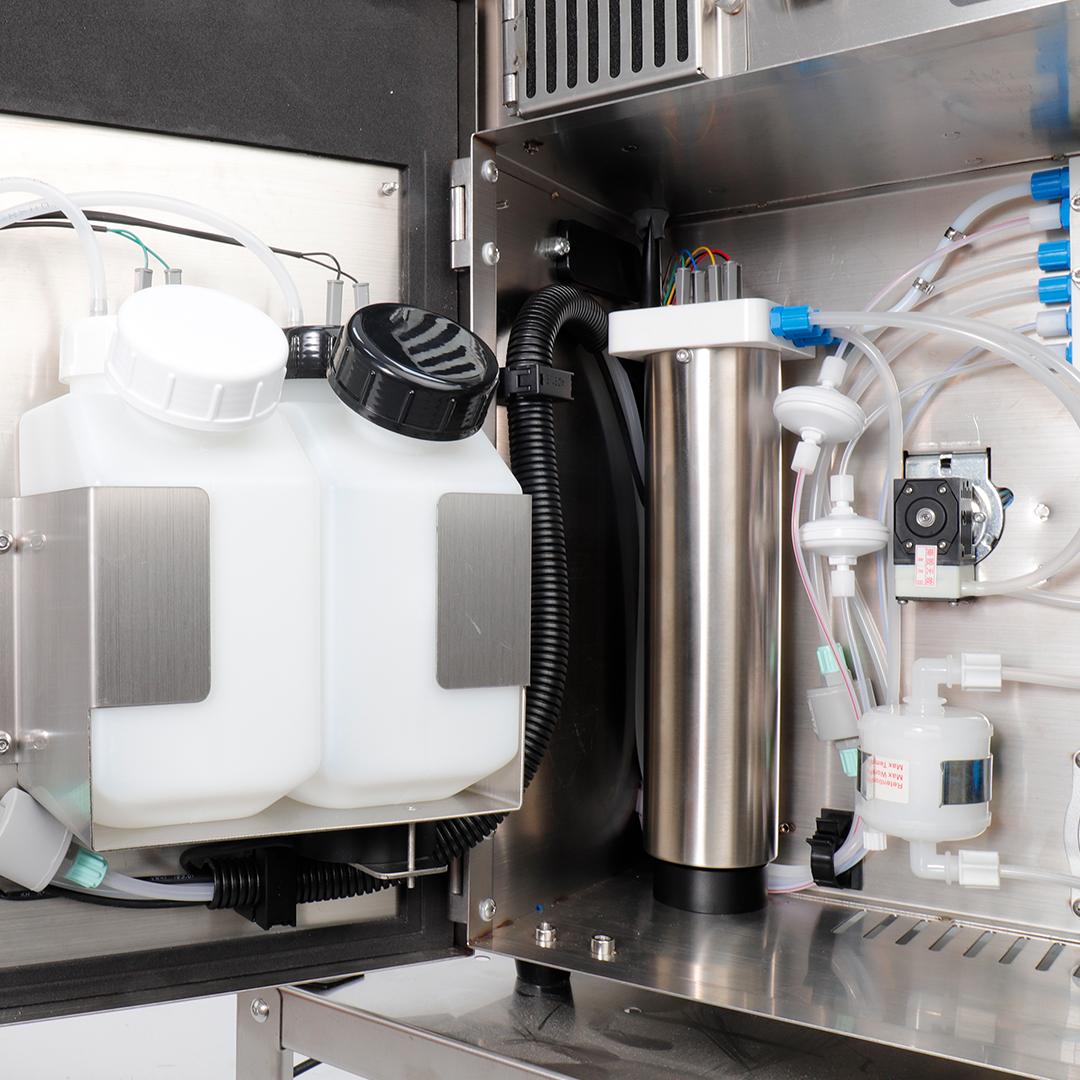
Continuous inkjet is the most established coding technology for variable text and codes on moving production lines. A CIJ printer continuously pumps ink through a nozzle, where the stream breaks into droplets. Droplets are either charged and deflected onto the product or recycled back into the ink system when not needed for printing.
CIJ systems are non-contact and can print from a relatively large distance, which is why they remain widely used on high-speed beverage, food, cable, and parts lines. The DOCOD M2000 Series Continuous Inkjet Printer reaches a maximum printing speed of 528 m/min, prints 1 to 4 lines, and offers ink types including high-adhesion, high-temperature-resistant, glass-specific, permeable, food-grade, oil-resistant, and pigment inks. The DOCOD V2000 Series Continuous Inkjet Printer prints up to 334 m/min at 5×6 dot count with 0.5 dot spacing and supports multiple barcode and QR code symbologies. The M2000 uses SUS 304 stainless steel housing with IP65 protection; the V2000 uses the same material with IP65 protection as well.
Technology Comparison by Decision Criteria
For a smart manufacturer comparing coding equipment, four parameters should drive the selection: resolution, speed, print height, and environmental compatibility. The following comparisons are based on documented specifications of DOCOD products.
Resolution: Which Technology Produces the Sharpest Code?
Print resolution controls the readability of small codes, 2D codes, and barcodes. Higher resolution allows denser data to fit into compact code areas such as those on pharmaceutical cartons, electronic components, and personal care packaging.
TIJ cartridge coding delivers a resolution of up to 600 dpi, which is why TIJ printers are used when small, high-definition codes must be placed on flat or slightly curved surfaces. The DOCOD 3BK702 cartridge has 300 nozzles and is designed for BOPP, PVC, PP, PET, OPP, glass, and stainless steel packaging coding applications requiring quick-drying black solvent printing.
Piezo inkjet also delivers high resolution, with the DOCOD P2000 offering 300 dpi or 600 dpi printing. This makes PIJ suitable for printing codes that must remain machine-readable at high speeds on porous or coated packaging surfaces, such as corrugated paper, coated paper, label paper, wallpaper, and folding cartons.
CIJ efficiency is typically not measured in dpi because the code quality depends on droplet placement in a dot matrix rather than a continuous raster. In CIJ systems, character quality is expressed by the number of dots used to form a character. Standards used by the DOCOD V2000 include character dot matrices such as 5×6, 7×6, 7×10, 9×8, 9×11, and 11×11. For most date and batch coding, CIJ readability is sufficient, but CIJ is not the primary choice when very high-resolution 2D codes are required on small-format primary packaging.
Speed: Which Technology Can Keep Up with the Line?
Production speed is the first constraint that eliminates unsuitable technology.
The DOCOD P2000 high-resolution piezo printer runs at 190 m/min at 300 dpi or 95 m/min at 600 dpi. That range suits mid-speed packaging lines where high-resolution barcodes or QR codes are printed on cartons, labels, and cases.
CIJ is the fastest of the three inkjet technologies presented here. The DOCOD V2000 Series tops out at 334 m/min in single-line 5×6 dot mode, while the DOCOD M2000 Series reaches a maximum printing speed of 528 m/min. This places CIJ on high-speed beverage lines, cable extrusion lines, and high-throughput food and beverage packaging operations.
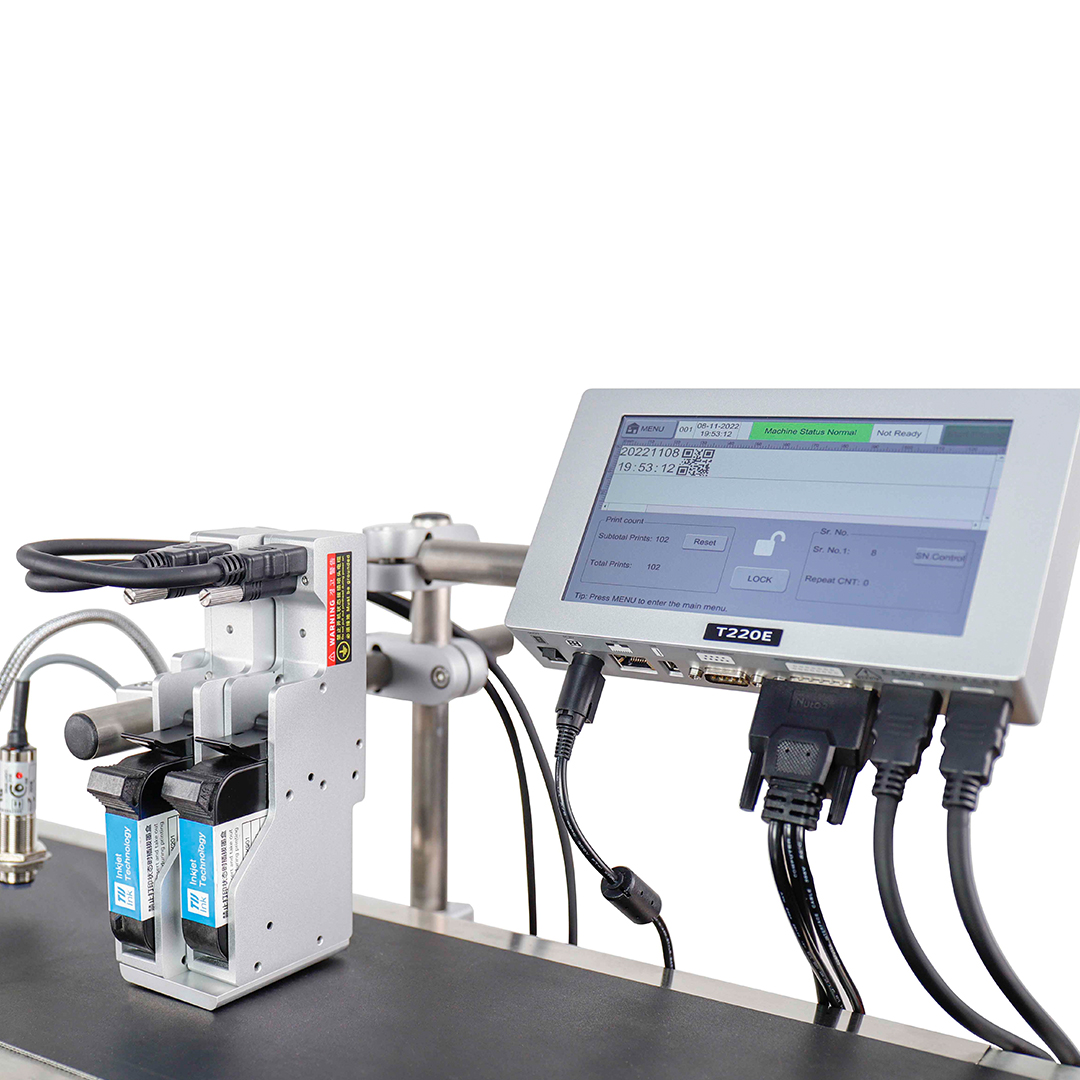
TIJ print speed depends on the cartridge resolution, line controller, and encoder. The DOCOD TX1 half-inch seamless inkjet printer reaches up to 406 m/min, and the DOCOD T220E half-inch dual-head printer also reaches up to 406 m/min. At higher resolutions, speed decreases, so TIJ users typically choose a recommended resolution such as 300 × 300 to balance image clarity with line speed.
Print Height and Format Flexibility
Product shape determines how much print area the coding system must cover.
CIJ systems print at a height of 3 to 30 mm on the DOCOD M2000 and 2 to 16 mm on the V2000, making CIJ a good fit for narrow coding areas on bottles, cables, and small parts. The M2000 can print up to four lines simultaneously, while the V2000 prints one to five lines.
TIJ systems offer scalable print height through multiple printheads. The DOCOD TX1 supports up to eight printheads for stitching or separate installation and reaches a print height of up to 101.6 mm. The DOCOD T220E dual-head TIJ printer prints heights of 1 to 12.7 mm with one printhead or 1 to 25.4 mm with two printheads.
Piezo inkjet, as represented by the P2000, provides a maximum print height of 33.8 mm with one printhead and can be expanded with a dual-head configuration. The P2000 supports multiple devices cascading and sharing the same encoder or photocell sensor parameters, allowing wider case-coding layouts that scale across a single line.
Substrate Compatibility and Ink Chemistry
Ink must bond to the substrate and survive downstream handling. Each technology removes a different set of barriers to substrate compatibility.
Thermal Inkjet Inks
Thermal inkjet cartridges are available in water-based, oil-based, weak solvent, solvent, and food-grade formulations, depending on the cartridge type. The DOCOD 3BK702 cartridge is a solvent-based black ink designed for quick drying on difficult, non-porous substrates. Documented compatible materials include BOPP, PVC, PP, PET, OPP, glass, and stainless steel. This makes TIJ useful when codes must be printed on glossy films, plastic bottles, and metal surfaces.
Piezo Inkjet Inks
The DOCOD P2000 operates with water-based ink and quick-drying ink, and its documented printing materials include carton, plastic, metal, plate, pipe, stone, cables, glass, electronic components, auto parts, industrial chemical packaging, pharmaceutical packaging, and food gift packaging. The P2000's negative-pressure continuous ink supply system supports longer production runs than small desktop-style ink systems.
Continuous Inkjet Inks
CIJ has the widest documented ink selection of the three DOCOD technology groups. The M2000 supports ink colors such as black, red, blue, green, invisible, yellow, and blue-white, with special ink types for high adhesion, high-temperature resistance, glass-specific coding, permeable coding, food-grade use, oil resistance, and pigment-based codes. The V2000 offers high-adhesion, high-temperature-resistant, food-grade, oil-resistant, and dye inks. CIJ's range of ink formulations covers both porous and non-porous substrates across food, beverage, construction, automotive, and cable industries.
Environmental and Installation Requirements
Production-floor temperature, humidity, dust, and machine protection are decisive constraints when purchasing coding equipment.
Working temperature and humidity: The DOCOD M2000 CIJ, V2000 CIJ, P2000 PIJ, TX1 TIJ, and T220E TIJ all specify an operating temperature of 0°C to 45°C and a working humidity range of 30% to 70% RH. By contrast, the DOCOD 3BK702 TIJ cartridge itself specifies a working temperature of 15°C to 35°C and humidity of 35% to 80% RH. Cartridge-based TIJ systems therefore require closer attention to ambient temperature control, particularly in warehouses or plants without moderate climate control.
Machine protection: The M2000 CIJ and V2000 CIJ use SUS 304 stainless steel enclosures. The M2000 carries IP65 protection; the V2000 also carries IP65 protection. The DOCOD S1000 high-speed CIJ, another alternative in the DOCOD line, carries IP55 protection. These protection levels suit environments with washdowns, dust, or humidity. Piezo and TIJ systems, such as the P2000 and T220E, use aviation-grade aluminum or industrial-grade protective bodies and are generally installed in drier, protected positions along a packaging line.
Technology Comparison Table
| Decision Parameter | Thermal Inkjet (TIJ) | Piezo Inkjet (PIJ) | Continuous Inkjet (CIJ) |
|---|---|---|---|
| Representative DOCOD model | 3BK702 cartridge / TX1 / T220E | P2000 | V2000 / M2000 |
| Print resolution | Up to 600 dpi; recommended 300 × 300 | 300 dpi or 600 dpi | Dot-matrix characters, not dpi-defined |
| Nozzle structure | 300 nozzles per cartridge | I1600 series nozzles; single or dual head | Single small-character nozzle; 42u–70u options on M2000 |
| Speed reference | Up to 406 m/min (TX1 / T220E) | 190 m/min at 300 dpi; 95 m/min at 600 dpi | Up to 334 m/min (V2000); up to 528 m/min (M2000) |
| Print height | 1–101.6 mm with up to 8 printheads (TX1) | Max 33.8 mm per printhead; dual-head available | M2000: 3–30 mm; V2000: 2–16 mm |
| Printing lines | Multi-head stitching / separate coding | Multi-device cascading | 1–4 lines (M2000); 1–5 lines (V2000) |
| Ink type | Solvent, water-based, oil-based, weak solvent, food-grade | Water-based, quick-drying | High-adhesion, high-temp, glass-specific, food-grade, oil-resistant, pigment |
| Material compatibility examples | BOPP, PVC, PP, PET, OPP, glass, stainless steel | Carton, plastic, metal, cable, glass, pharmaceutical packaging | Carton, plastic, metal, glass, cable, auto parts, industrial chemical packaging |
| Environment | Cartridge: 15–35°C, 35–80% RH; Printer: 0–45°C, 30–70% RH | 0–45°C, 30–70% RH | 0–45°C, 30–70% RH |
| Enclosure materials | Aerospace-grade aluminum, stainless steel | Aviation-grade aluminum | SUS 304 stainless steel |
| Protection level | Depends on system configuration | Depends on installation | M2000 / V2000: IP65 |
| Typical code content | Text, date, batch, GS1 codes, QR, serial numbers, variable databases | Text, date, shift, serial numbers, dynamic QR / barcode, database | Text, date, logos, shift codes, serial numbers, dynamic barcode / QR, database |
Step-by-Step Technology Selection Framework
Use the following sequence when evaluating TIJ, PIJ, and CIJ printers:
Step 1 — Define the code requirement. Date-and-lot text codes can be printed by any of the three technologies. If the product requires a GS1 DataMatrix, QR code, or high-density serialized code, focus the evaluation on TIJ or PIJ print resolution.
Step 2 — Measure the available print window. For narrow bottle-neck code areas and standard carton flaps, CIJ covers most print heights but is limited to roughly 30 mm on models like the M2000. For large-format case coding with a print height above 30 mm, consider TIJ systems with multiple printheads, or PIJ systems extended to dual-head/cascading configurations.
Step 3 — Check line speed against target resolution. If the line runs above 200 m/min and the code is simple text or a barcode, CIJ is appropriate. If the line runs at up to 95 m/min and requires 600 dpi, PIJ is suited to the task. If the line reaches 406 m/min and the code can be produced at the TIJ system's rated resolution, TIJ can also deliver high-speed output.
Step 4 — Match ink chemistry to substrate. On solvent-resistant films, glossy plastic, or stainless steel, TIJ solvent cartridges such as the 3BK702 provide documented compatibility. On porous cartons and coated paper, the P2000's quick-drying ink system is designed for high-resolution barcode and QR printing. On high-speed lines moving from glass to plastic to cartons, the M2000's diverse ink set offers practical flexibility.
Step 5 — Assess environmental severity. In washdown-prone food or beverage plants, CIJ models with IP65-rated stainless steel bodies provide documented protection. In protected, climate-controlled packaging rooms, cartridge-based TIJ keeps maintenance simple, but the cartridge shelf life and temperature range must be respected.
Step 6 — Compare service and consumables logistics. TIJ reduces service complexity by eliminating pumps and makeup systems. PIJ transfers that simplicity into a continuous ink supply system for medium-volume, high-resolution runs. CIJ offers the strongest continuous-production performance but requires scheduled maintenance of the ink system and printhead.
Use Cases Across Production Scenarios
High-Speed Beverage Bottling Line: CIJ
The DOCOD V2000 Series CIJ printer is applied in Vietnam on PET beverage-bottle batch coding lines. V2000's documented strengths for this scenario are stable daily coding and suitability for high-speed lines. Four bottling lines ran with V2000 CIJ printers for two years and reported stable daily coding output.
Cable and Pipe Extrusion: CIJ
The DOCOD M2000 Series CIJ printer is used for meter marking on cable sheaths. In a two-year installation on six cable lines in the United States, the M2000 delivered clearer and more consistent codes, with documented performance benefits including stable pressure and easy cleaning. This use case aligns with the M2000's high-adhesion ink option and 3 m or 6 m printhead duct lengths.
Pharmaceutical and Personal Care Cartons: TIJ
The DOCOD T220E half-inch dual-head TIJ printer is used in pharmaceutical carton lines for QR and expiry printing. The T220E prints up to 600 × 600 dpi and supports two printheads, making it suited when a compact carton must carry both a readable 2D code and human-readable text in one pass. A pharmaceutical packaging supplier in India reported improved code readability over an 18-month period.
High-Resolution Case and Coated-Box Coding: PIJ
The DOCOD P2000 PIJ printer is documented for variable data printing on coated boxes. A personal care manufacturer in Thailand used the P2000 on three lines and reported improved traceability consistency. The P2000's 190 m/min speed at 300 dpi supports the throughput of many secondary packaging lines while maintaining high-resolution barcode output.
Quick-Drying TIJ Printing on Film and Coated Cartons
The DOCOD 3BK702 cartridge is a half-inch black solvent quick-drying TIJ cartridge with documentation for BOPP, PVC, PP, PET, OPP, and stainless steel. A regional distributor in South Korea used 50 cartridges per month for coding on plastic film and coated cartons. The result reported over a one-year period was fewer smudging complaints, with fast drying and strong adhesion cited as the performance highlights.
Common Coding Scenarios and Recommended Technology
| Production Scenario | Typical Requirement | Recommended Technology | Why |
|---|---|---|---|
| Beverage or bottled-water line | High-speed date and batch on caps, necks, or bottles | CIJ | Non-contact printing at up to 334 m/min or higher; IP65-rated stainless steel enclosure for washdown areas |
| Cable and pipe extrusion | Continuous meter marking, model numbers, traceability codes | CIJ | Printhead duct lengths up to 3 m or 6 m; ink options with high adhesion |
| Pharmaceutical cartons | GS1 DataMatrix, expiry, lot numbers in a small print area | TIJ or PIJ | 600 dpi resolution available; compact printhead for integration into cartoners |
| Secondary packaging / shipper cases | Large text, logistics barcodes, QR codes | PIJ | High-resolution output at 190 m/min; negative-pressure ink supply; 33.8 mm print height expandable with dual heads |
| Flexible film and plastic packaging | Quick-drying code without smearing | TIJ | Solvent-based quick-drying cartridge inks formulated for non-porous films |
| Dusty building-materials environment | Large-character codes on cement bags, chemical drums, or PVC pipes | PIJ with protective integration | Builds with mounting flexibility, anti-collision components, and line-integration support |
Frequently Asked Questions
Is thermal inkjet coding cheaper to maintain than continuous inkjet coding?
Thermal inkjet removes the need for separate ink pumps, makeup solvents, and pressurized circulation systems because TIJ cartridges are self-contained. The DOCOD 3BK702 cartridge combines 42 ml of solvent ink and the printhead nozzle plate into one assembly. CIJ systems such as the DOCOD M2000 and V2000 require an ink system with a printhead duct, nozzle, and fluid management. For lower-volume applications, TIJ generally reduces consumable complexity; for high-volume continuous lines, CIJ remains the established technology.
Can a piezo inkjet printer print barcodes and QR codes on corrugated cases?
Yes. The DOCOD P2000 piezo inkjet printer is documented for carton and corrugated packaging, printing text, time, date, serial numbers, dynamic barcodes / QR codes, and variable database content. Its negative-pressure continuous ink supply system and printing speed of 190 m/min at 300 dpi make it suitable for mid- to high-speed case-coding operations. The printer's 0–5 mm printing distance, with a recommended distance of 2–3 mm, allows the printhead to be positioned close to fluted surfaces while maintaining readability.
How do IEC protection ratings differ between coding technologies?
Protection ratings describe the sealed enclosure's resistance to dust and water. The DOCOD M2000 and V2000 Series CIJ printers are built with SUS 304 stainless steel enclosures and carry IP65 protection, meaning they are protected against dust ingress and low-pressure water jets. The DOCOD S1000 CIJ printer carries IP55 protection. TIJ printers such as the DOCOD TX1 and T220E use industrial-grade protective bodies with documented operating environments of 0°C to 45°C and 30% to 70% RH. Buyers should match the protection rating to the washdown and dust conditions of the actual floor.
What line speeds can each technology realistically support?
Based on DOCOD specifications, the V2000 CIJ printer reaches 334 m/min in a 5×6 dot configuration, and the M2000 CIJ printer reaches up to 528 m/min. The P2000 piezo printer runs at 190 m/min at 300 dpi and 95 m/min at 600 dpi. TIJ printers such as the TX1 and T220E reach up to 406 m/min, though speed is resolution-dependent. When evaluating a PIJ system for high-speed lines, confirm the target code size and resolution, because faster throughput is achieved at 300 dpi rather than 600 dpi.
Can sample validation determine whether TIJ, PIJ, or CIJ is the right fit?
Yes. Sample validation is the standard method for confirming ink adhesion, drying time, and code readability on the actual substrate. For TIJ, the relevant check is whether the quick-drying solvent cartridge bonds to the customer's film or coated carton at the required line speed. For PIJ, the trial run should verify that the water-based or quick-drying ink performs at the distance, speed, and resolution needed on the final packaging. For CIJ, validation should test code quality and adhesion on the customer's product using the recommended M2000 or V2000 ink type. To support this process, DOCOD's Standard Equipment Supply and OEM/ODM capability units include demo/sample validation procedures before delivery.
How DOCOD Supports Technology Selection and Line Integration
DOCOD Precision Group Co., Ltd. manufactures CIJ, TIJ, PIJ, DOD, TTO, laser marking machines, vision inspection systems, and coding consumables under one roof. The company was founded in 2008 and operates from Guangzhou, China. DOCOD serves global manufacturers with application-focused support for date coding, batch marking, variable data printing, GS1 DataMatrix coding, serialization, anti-counterfeiting workflows, and production traceability.
For buyers selecting among the technologies described in this guide, DOCOD's production-line integration support includes matching conveyors, pager/rewinder systems, encoder and sensor connections, and GS1/DataMatrix serialization workflows. The support workflow includes integration testing, sample runs, and video acceptance before delivery. ODM customization covers software and UI adjustments, communication interfaces, bracket structure, printhead configuration, and application-based adaptation.
Because TIJ, PIJ, and CIJ are complementary rather than interchangeable technologies, the correct decision begins with substrate samples, line-speed data, code specifications, and a clear understanding of the plant environment. Comparing those requirements against specifications such as the 3BK702 cartridge, the P2000 piezo printer, and the M2000/V2000 CIJ series gives manufacturers a practical path to the correct code-printing investment.
DOCOD additionally supports OEM branding, spare parts and consumables supply, and distributor/service partner programs. For a full review of the product portfolio, download the DOCOD corporate brochure.
Download the DOCOD Corporate Brochure for technology and product specifications.
Have Questions or Need More Details?
Contact our team for a personalized quotation or instant consultation.
Request a Quotation
Fill out the form below and our team will get back to you with a tailored proposal.
WhatsApp Direct Chat
Prefer to chat in real-time? Message us on WhatsApp for instant assistance & quick answers.
- Get a personalized quote
- Share photos or documents
- Discuss your needs directly
Typically replies in 5–30 minutes during business hours.