
Preventing Heat Damage: UV Laser Marking for Sensitive Electronics
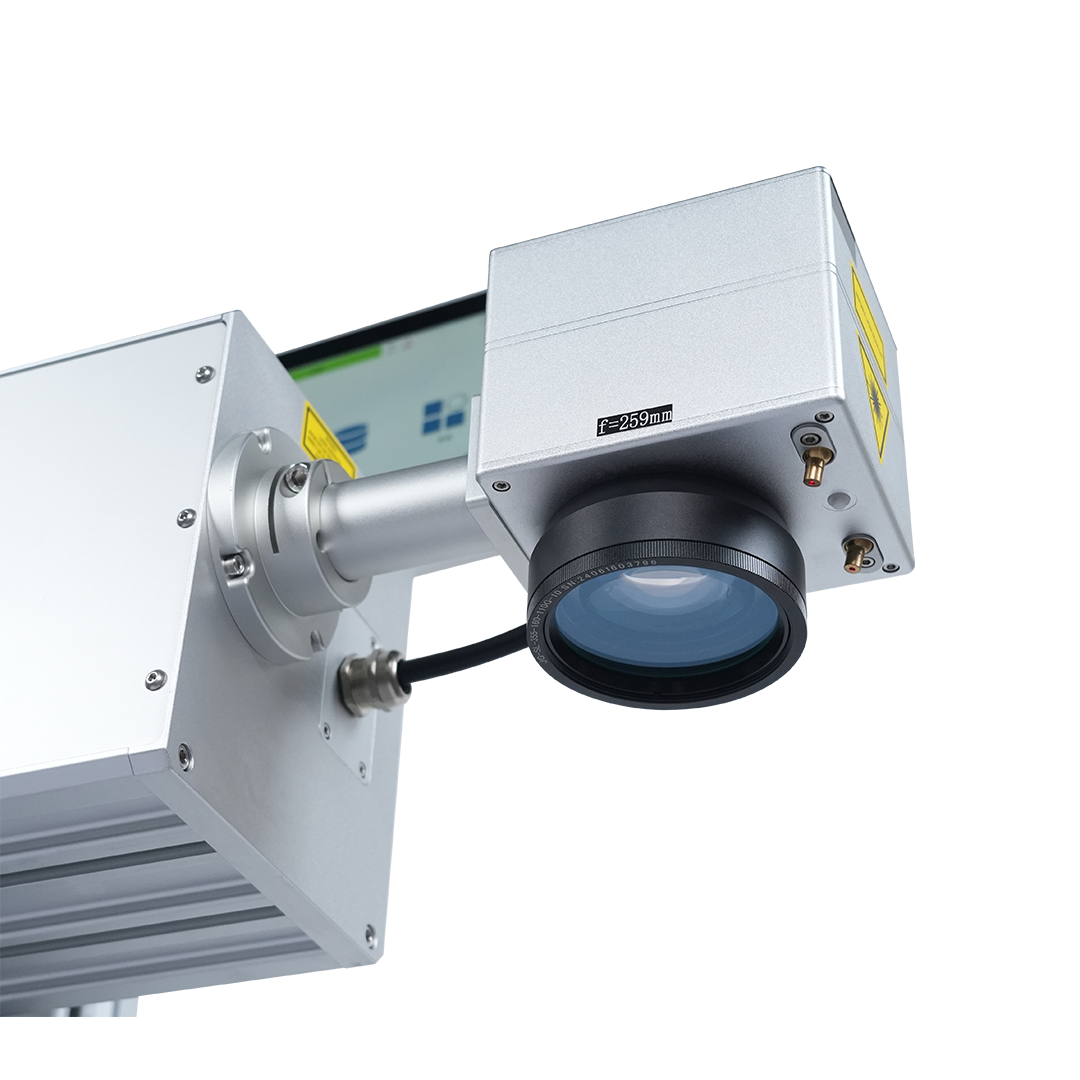
UV laser marking prevents heat damage because a 355 nm ultraviolet beam changes only the surface layer of a component instead of heating the whole part. On heat-sensitive electronics — flexible circuits, sensor housings, connector bodies, battery cells and moulded covers — that single difference separates a serial number that survives the product's service life from a mark that damages the part it was supposed to identify.
DOCOD Precision Group Co., Ltd. is an industrial coding, marking and inspection equipment manufacturer based in Guangzhou, China, founded in 2008, supplying continuous inkjet, thermal inkjet, piezo inkjet, thermal transfer, laser marking and inline vision inspection systems. Two platforms in that portfolio are built specifically around low-heat marking: the DOCOD Venus1 Series UV Laser Marker, offered at 5W, 10W and 15W with air or water cooling, and the DOCOD L3000 Series 5W UV Laser Marking Machine, a water-cooled unit for continuous production duty. This guide explains where marking heat comes from, how a UV station removes it from the process, and how to specify, integrate and validate the equipment on a smart manufacturing line.
Problem Definition: How Marking Damages a Sensitive Part
Heat damage on an electronics line rarely shows up as a hole in the product. It shows up as drift: a plastic housing that no longer seats against its gasket, a solder mask that has lost adhesion, a thin-film layer whose electrical behaviour has shifted, or a date code that the line scanner can no longer read at the end of the shift. By the time the defect is visible, the marking step has already been running for weeks.
Three mechanisms cause most of that damage:
- Bulk heating. Infrared laser energy at 1064 nm or 10.6 μm is absorbed and converted into heat that spreads into the part. On a thin cover, a small connector or a populated board, the surrounding material absorbs heat it was never designed to take.
- Contact and chemistry. Inkjet, thermal transfer and hot-stamp methods bring ink, solvent, ribbon or mechanical pressure to the surface. Near open assemblies and unsealed components, that introduces a contamination path alongside the thermal one.
- Indirect thermal load. Drying, curing and post-print handling add further heat after the mark has been applied, compounding whatever the marking step already delivered.
The commercial consequence is rarely a single rejected part. It is scrap on small high-value components, rework on assemblies that were nearly complete, and traceability gaps when a code exists physically but cannot be decoded later in the production record.
Industry Background: Traceability Is Moving onto the Component
Two shifts are pushing marking from the shipping carton onto the part itself. The first is data density. GS1 has set the Sunrise 2027 deadline for the retail transition from 1D barcodes to 2D codes carrying GS1 Digital Link data, which means more information must fit into a smaller physical area. The second is serialization: part numbers, lot codes, dates, supplier codes and unique serials are increasingly generated per unit rather than per batch, and must travel with the product through assembly, inspection and after-sales service.
Both shifts change the equipment requirement. A marking system on a smart manufacturing line now needs to accept variable data from a PLC or MES, synchronise with an encoder, and print or mark codes that a vision system can verify in the same cycle. On the DOCOD Venus1 Series UV Laser Marker, that integration layer includes photocell and encoder inputs, AB phase encoder monitoring for line speed, alarm signals, NPN/PNP I/O and RS232 communication; the L3000 Series supports the same signal set alongside GS1-128 output.
Investment in the category continues. Fortune Business Insights estimated the global coding and marking equipment market at USD 7.51 billion in 2025, and the purchasing question inside that spend has shifted: buyers increasingly compare technologies by what the mark does to the substrate, not only by throughput numbers.
Detailed Solution: A 355 nm Beam That Leaves the Part Intact
Ultraviolet photons at 355 nm carry more energy per photon than near-infrared photons at 1064 nm. In many polymers, that energy breaks molecular bonds in a very thin surface layer instead of being converted into bulk heat, so the mark is produced with a small heat-affected zone. This is why UV marking is commonly described as a cold marking process, and why the technology is positioned for production environments that require “precise, low-heat and damage-minimized marking”.
Three properties follow from that mechanism, and each one matters on an electronics line:
- Non-contact. No printhead touches the part, no ink or ribbon is consumed, and no pressure is applied to a component that may be a few millimetres thick.
- Permanent. The DOCOD UV platforms are specified for industrial lines that require permanent, oil-resistant, water-resistant and high-temperature-resistant marking.
- Programmable. Because the mark is generated from data rather than from a fixed plate or stencil, serial numbers, QR codes and GS1-128 strings can change unit by unit without a tooling change.
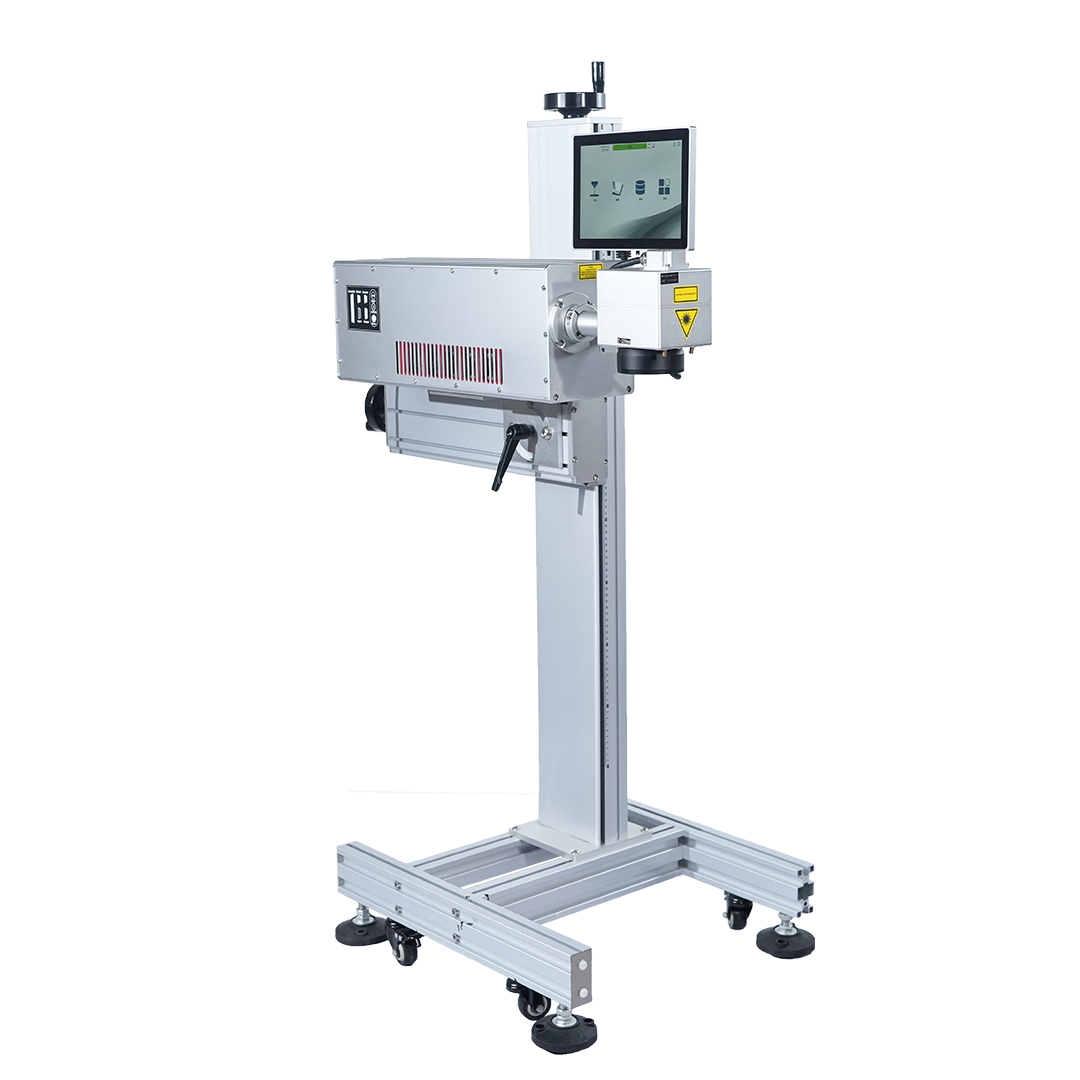
Platform 1: DOCOD Venus1 Series UV Laser Marker
The Venus1 UV platform is the general-purpose option for component and packaging marking, available in air-cooled and water-cooled configurations across three power levels.
- Laser type and wavelength: UV laser, 355 nm
- Laser power: 5W / 10W / 15W
- Cooling: air cooling or water cooling; protection level IP43 or IP54 depending on model
- Marking area: standard 110 × 110 mm, optional 70–300 mm
- Character height: 0.6 mm to the maximum marking area; unlimited marking lines
- Positioning: automatic red-light positioning, focusing and preview
- Controller: 10.1-inch industrial colour touch screen, embedded Linux operating system, high-precision 2D digital scanning system
- Code library: CODE128, EAN128, CODE39, CODE93, CODABAR, UPCA, UPCE, EAN14, ITF14, VIN, QRCODE, DATAMATRIX, MICROQR, PDF417, PDF417TRUNC
- Interfaces: photocell, encoder, alarm signal, NPN/PNP I/O, RS232; AB phase encoder line-speed monitoring
- Power and environment: 100–240V, total consumption ≤900W; 0°C–45°C, humidity ≤95%, non-condensing, vibration-free
- Gross weight: 20.5 kg (5W / 10W), 22.6 kg (15W)
Published substrate coverage for the Venus1 UV marker includes plastics, polymers, glass, ceramics, printed circuit boards, medical devices, food packaging, pharmaceutical packaging, electronic components, beverage packaging, PET bags, metal caps, cosmetics packaging and parts and accessories.
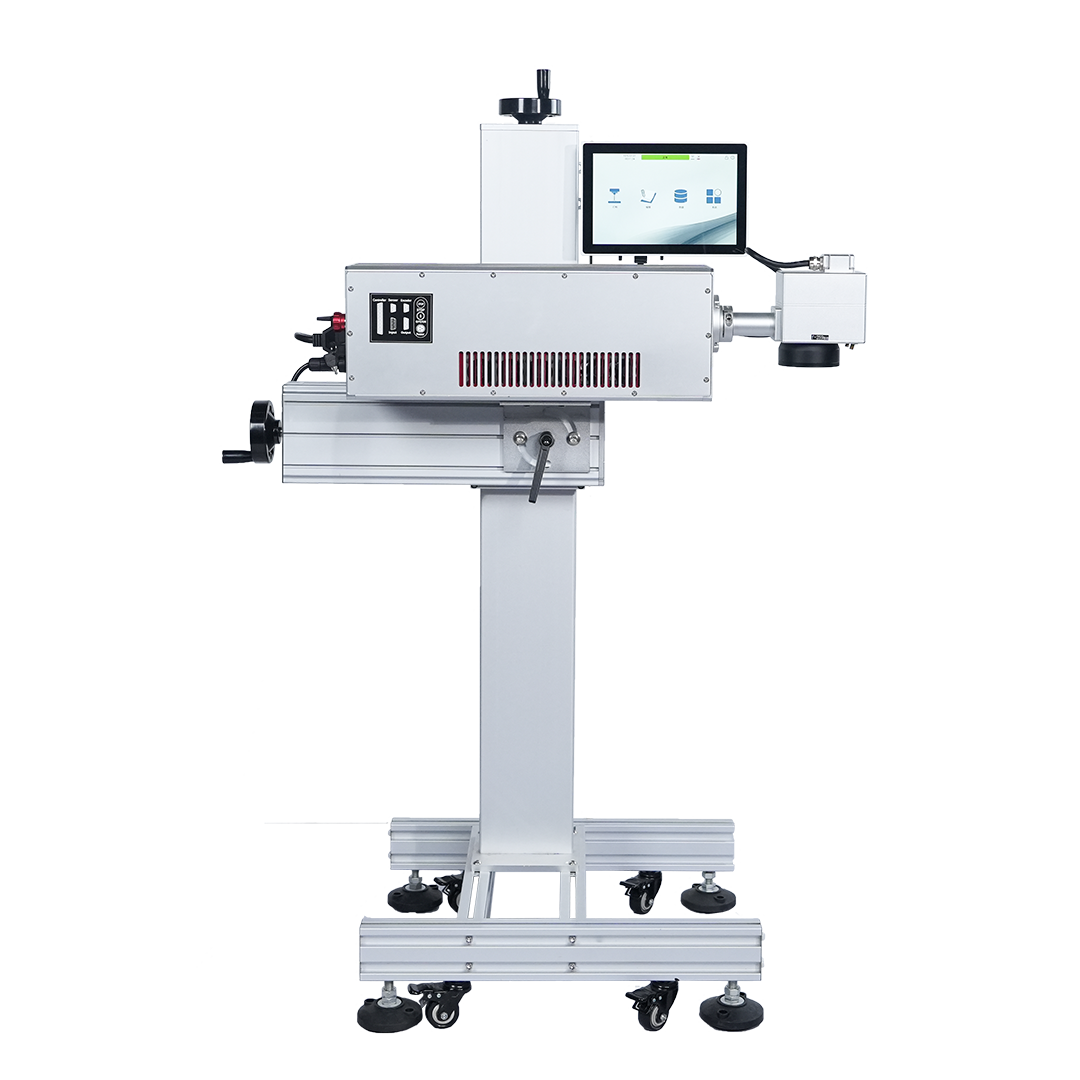
Platform 2: DOCOD L3000 Series 5W UV Laser Marking Machine
The L3000 Series is the water-cooled single-power variant, aimed at applications where the marking station runs continuously and the substrate is thin. Its published reference point is concrete: marking “2024/06/18” on PP film with a character width of 20 mm and a height of 2.8 mm takes 29 milliseconds at 5W. Minimum line width is 0.02 mm and positioning accuracy is 0.01 mm, which is the range that matters when a DataMatrix block has to sit inside a 5 mm × 5 mm keep-out zone on a flexible circuit.
The L3000 uses model designation L3005U-355W-V-IP43, with a stainless steel laser host measuring 290 × 213 × 135 mm, an aluminium alloy controller, a standard 70 × 70 mm marking range with 70–300 mm options, and a barcode library covering EAN8, EAN13, CODE39, CODE128 and GS1-128. Its published application scope covers soft film packaging, pharmaceutical packaging, food packaging, plastics, PVC pipe, flexible circuit boards, high-end electronic product appearance logos and general metal and non-metal marking.
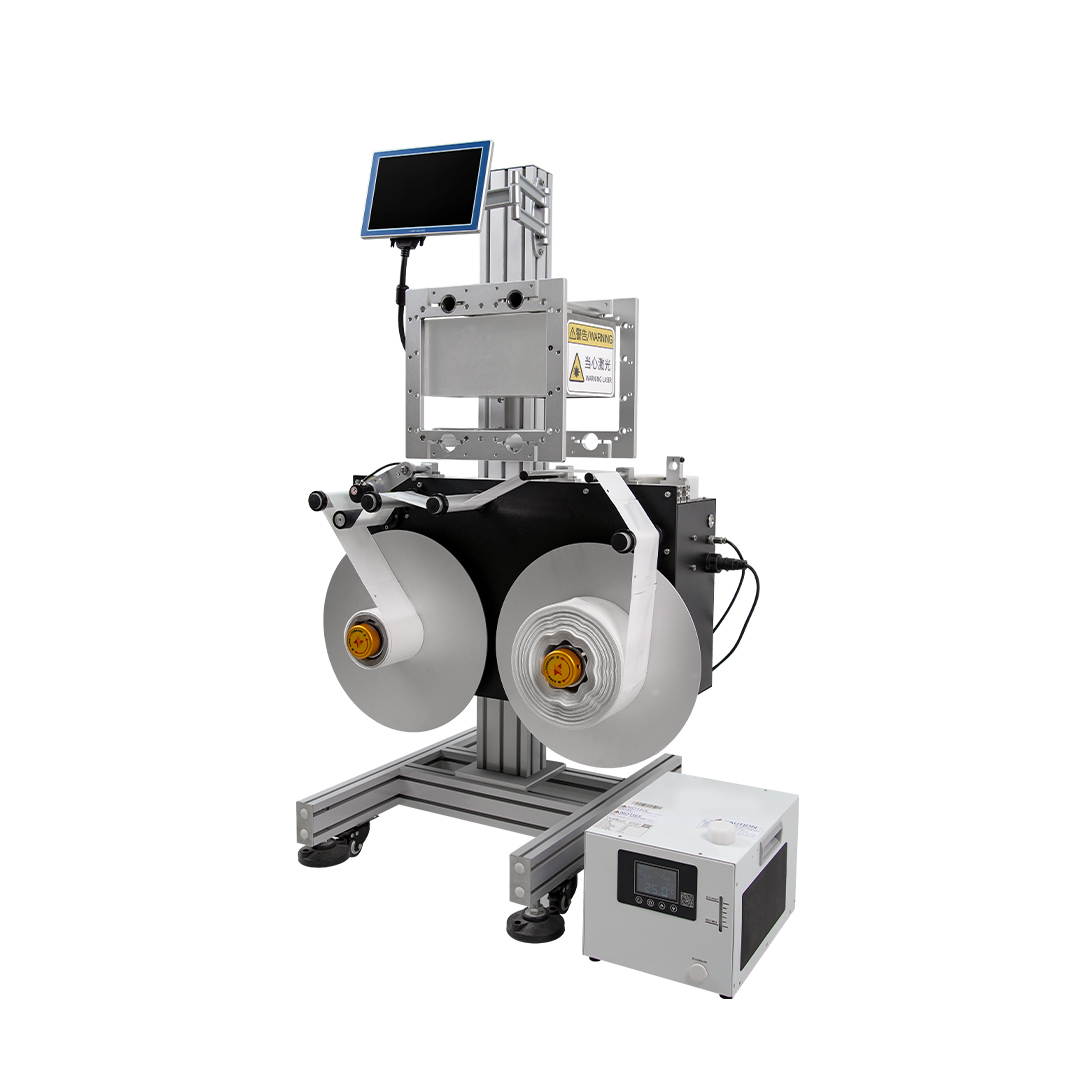
Step-by-Step: Specifying a UV Marking Station
The sequence below reflects how a UV station is normally scoped for an electronics or packaging line, from the mark definition through to acceptance.
- Define the mark before the machine. Decide what carries data and what carries identification: part number, lot, date, serial, GS1-128 string, DataMatrix or QR. The Venus1 code library covers both 1D and 2D symbologies, including DATAMATRIX, MICROQR and PDF417 variants, so the constraint is usually physical space on the part, not symbology support.
- Classify the substrate and the layer being marked. Establish whether the mark sits on moulded plastic, polymer film, glass, ceramic, PCB surface or a coated metal cap. This determines whether the beam should remove a top layer or change the appearance of the surface, and it is the step that decides success or failure more often than any other.
- Select platform and power. Use 5W for thin films, small characters and high-detail 2D codes; move to 10W or 15W when marking area, contrast or throughput increases. Choose the L3000 water-cooled unit when the station runs continuously and thermal stability of the source matters more than footprint.
- Size the field and the fixture. The standard 110 × 110 mm field on the Venus1 and 70 × 70 mm on the L3000 cover most component work; 70–300 mm options handle larger panels or multi-up fixtures. Character height starts at 0.6 mm, so fine text and dense codes are feasible without a second process.
- Wire the station into the line. Connect the photocell trigger, encoder for AB phase line-speed monitoring, alarm output and RS232 link to the PLC or MES that supplies the variable data. Confirm the reject logic with the vision or inspection station before the first production run.
- Validate on real parts. Run sample printing verification and a function test before shipment, then complete integration testing and a sample run on the line, with video acceptance before delivery where a line integration scope applies. Readability under the actual scanner, not under laboratory lighting, is the acceptance criterion.
Use Cases: Where the Low-Heat Advantage Pays
1. Electronics component traceability. PCBs, batteries, charger housings and small plastic or metal parts run on short takt times and need precise QR or DataMatrix marks plus serial numbers. A typical station combines an automation fixture or robot loading, conveyor, sensor, scanner, vision inspection and a PLC/MES link — the integration pattern DOCOD references for electronics part-traceability projects.
2. Flexible circuits and thin film. Flexible circuit board marking and soft-film packaging are both listed application areas for the L3000 Series. The 0.02 mm minimum line width allows dense code blocks to be placed without touching neighbouring traces.
3. Medical devices and pharmaceutical packaging. Both appear in the published Venus1 UV substrate scope, where a legible lot or expiry mark is required on a surface that cannot tolerate deformation. Medical packaging projects typically pair marking with code verification in a closed-loop print-and-verify workflow.
4. Cosmetic bottles and caps. A cosmetics OEM running two lines for lot coding on plastic bottles and caps reported permanent high-contrast marks after adopting the DOCOD 5W UV laser marking machine, citing low-heat UV marking as the deciding property.
Comparison: UV Laser, Fiber Laser, CIJ and TIJ
The table below uses published DOCOD specifications only. It is a selection aid, not a ranking: the correct technology is the one whose listed substrate scope matches the part in front of you.
| Attribute | Venus1 UV Laser Marker | Venus1 Fiber Laser Marking Machine | M2000 Series CIJ | T220E Thermal Inkjet |
|---|---|---|---|---|
| Marking principle | UV laser, 355 nm | Fiber laser, 1064 nm | Continuous inkjet | Thermal inkjet |
| Power options | 5W / 10W / 15W | 20W / 30W / 50W / 100W | Not applicable (ink based) | Not applicable (ink based) |
| Cooling | Air or water | Air | Not stated in catalogue specs | Not stated in catalogue specs |
| Substrates in published scope | Plastics, polymers, glass, ceramics, PCBs, medical devices, food and pharma packaging, electronic components, beverage packaging, PET bags, metal caps, cosmetics packaging, parts and accessories | Metal and coating, medical devices, automotive parts, bearings, aerospace components, PCB, metal caps, foil, stainless steel, pipes and cables, label paper | Carton, plastic, metal, sheet, pipe, stone, glass, electronic components, auto parts, chemical, medical and food packaging | Cartons, plastics, metals, plates, pipes, stones, wires and cables, electronic components, auto parts, pharma and food packaging |
| Code and data output | 1D and 2D library including QRCODE, DATAMATRIX, MICROQR, PDF417; serial and variable data | 1D and 2D library including QRCODE, DATAMATRIX, MICROQR, PDF417 | Dynamic barcode and QR, serial, date, dynamic database | GS1 code, dynamic traceability QR, serial, variable database |
| Working area envelope | 110 × 110 mm standard; 70–300 mm optional | 110 × 110 mm standard; 50–300 mm optional | Print height 3–30 mm; 1–4 lines | Print height 1–12.7 mm or 1–25.4 mm |
| Consumables | None (laser source) | None (laser source) | Ink and solvent | Ink cartridge |
| Stated laser life | 2–3 years under normal use | Up to 100,000 hours | Not applicable | Not applicable |
| Protection level | IP43 / IP54 | IP43 | IP65 | Not stated in catalogue specs |
Limits and Selection Boundaries
A UV station is not the answer to every marking problem, and buyers should know where it stops:
- Deep metal engraving. Where depth, smoothness or tool-grade contrast on metal is the requirement, the fiber platform at 1064 nm and 20–100W is the listed option, with a stated laser life of up to 100,000 hours.
- High-speed carton coding. For large-character date and batch codes on cartons at line speeds up to 528 m/min, the M2000 Series CIJ is the appropriate family; a laser marking field has a different throughput envelope.
- Washdown environments. The UV units are rated IP43 or IP54, while the M2000 CIJ cabinet is rated IP65. In a wet or heavily washed area, the enclosure rating must drive the decision.
- Service planning. The stated laser life for the UV platforms is 2–3 years under normal use, so source replacement should be planned into the maintenance budget rather than treated as an unplanned event.
- Operating conditions. Both UV platforms are specified for 0°C–45°C ambient temperature, humidity ≤95% non-condensing, and vibration-free mounting. A station bolted to a vibrating frame will not hold 0.01 mm positioning accuracy.
Frequently Asked Questions
Which certificates and standards should a buyer verify before installing a UV laser marking station?
DOCOD operates under ISO 9001:2015 quality management (certificate 18625Q00281R1M, standard GB/T 19001-2016 / ISO 9001:2015), ISO 14001:2015 environmental management (certificate 18625E00147R1M, GB/T 24001-2016 / ISO 14001:2015) and ISO 45001:2018 occupational health and safety management (certificate 18625S00131R1M, GB/T 45001-2020 / ISO 45001:2018), all issued by Guangdong Zhongyu Certification Co., Ltd. The UV platforms themselves are specified with IP43 or IP54 protection and 100–240V input. On the code side, confirm that the machine supports the symbologies your customers require: the L3000 Series lists GS1-128 among its barcode outputs, and the Venus1 Series covers EAN128, DATAMATRIX, QRCODE and related 2D formats. Buyers in regulated markets should also confirm local laser safety requirements with their own EHS function before installation.
Can one UV platform mark both plastic components and metal parts?
The Venus1 UV marker's published substrate scope covers plastics, polymers, glass, ceramics, printed circuit boards, electronic components, metal caps, cosmetics packaging and parts and accessories, so a single platform can serve a mixed-material line where the mark is a surface mark. Where the requirement is deep engraving into metal or coating, the fiber platform at 1064 nm and 20–100W is the listed alternative. Field size also constrains the choice: 110 × 110 mm standard on the Venus1, 70 × 70 mm standard on the L3000, with 70–300 mm options on both. Character height starts at 0.6 mm, and the L3000 holds a 0.02 mm minimum line width with 0.01 mm positioning accuracy, which is the specification that matters for dense DataMatrix blocks on small parts.
What drives the cost of a UV marking installation?
Five variables dominate: laser power (5W, 10W or 15W), cooling method (air versus water, with water cooling used where the station runs continuously), marking field size, enclosure rating (IP43 or IP54), and the integration scope around the machine — fixtures, conveyor, vision inspection, reject unit and MES interface. Running cost behaves differently from ink-based systems, because a laser station consumes no ink or solvent; the main recurring items are electrical power at ≤900W total consumption and planned service, with the laser source stated at 2–3 years of life under normal use. Because configuration changes the specification materially, DOCOD quotes UV systems per project rather than from a list price.
Can we validate the mark on our own parts before ordering?
Yes, and it should be the first step. DOCOD's standard equipment supply includes sample printing verification and a function test before shipment, alongside outgoing inspection. For line integration projects, the process extends to integration testing, a sample run, and video acceptance before delivery. Distributor and service-partner cooperation adds demo support, training materials and product documentation. The practical advice is to send samples of every substrate and finish the line will mark — including the worst-contrast variant — so the validation reflects production rather than a laboratory coupon.
What are the minimum order quantity and typical lead times?
Standard equipment ships with a minimum order of 1 set and a lead time within 15 working days. ODM functional customization — software or UI adjustment, communication interface, bracket structure or printhead configuration — runs at 1 set per project with a 20–30 working day lead time. Production line integration, including conveyor, pager or rewinder matching and GS1/DataMatrix workflow alignment, is quoted at 1 line with 20–35 working days. Spare parts and consumables start at 1 piece and are typically handled within 15 working days. To start a sample or quotation request, contact the DOCOD team at sales@docod.com.cn or +86 139-2896-7650 and include the substrate, mark content and line speed.
Conclusion: Remove the Heat, Keep the Traceability
Heat damage is not an unavoidable side effect of marking small electronics. It is a property of the energy source. A 355 nm UV beam works on the surface layer with a small heat-affected zone, applies no ink or pressure, and produces a permanent mark that survives oil, water and elevated temperature. For components that cannot absorb thermal load, that is the difference between a traceability system that works and one that quietly generates scrap.
The DOCOD Venus1 Series UV Laser Marker covers 5W, 10W and 15W with air or water cooling and IP43 or IP54 protection; the L3000 Series brings a water-cooled 5W configuration with 0.02 mm minimum line width and 0.01 mm positioning accuracy to continuous production. Both are supported by ISO-certified manufacturing and a supply model that starts with sample validation on your own parts.
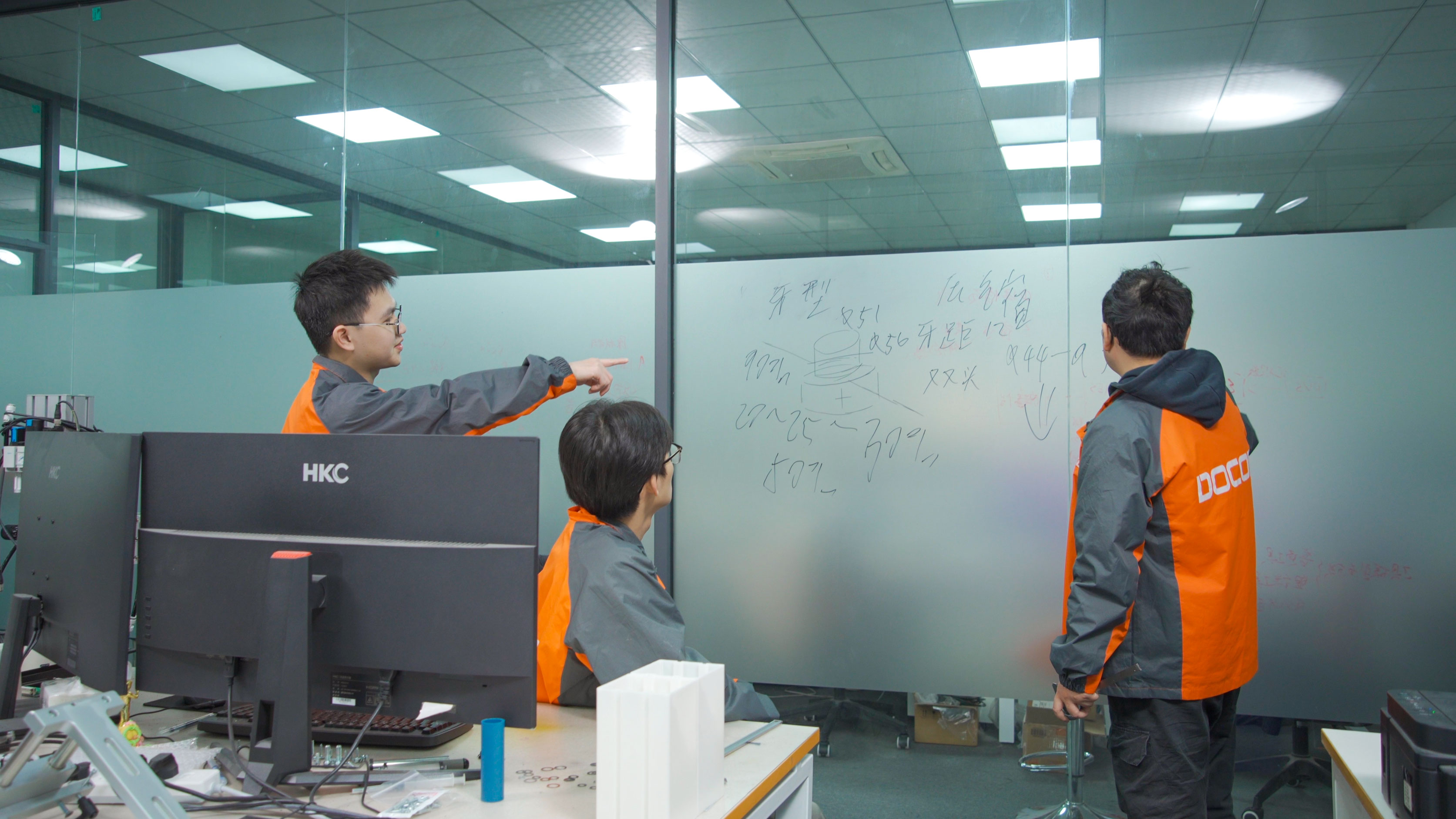
Validate a UV marking station on your own components
Send substrate samples and your code requirements for a marking evaluation and a configured quotation. Standard equipment lead time is within 15 working days; line integration projects run 20–35 working days.
Email: sales@docod.com.cn | Tel: +86 139-2896-7650 | WhatsApp: +86 135-1234-4323
Website: www.docod-group.com
Have Questions or Need More Details?
Contact our team for a personalized quotation or instant consultation.
Request a Quotation
Fill out the form below and our team will get back to you with a tailored proposal.
WhatsApp Direct Chat
Prefer to chat in real-time? Message us on WhatsApp for instant assistance & quick answers.
- Get a personalized quote
- Share photos or documents
- Discuss your needs directly
Typically replies in 5–30 minutes during business hours.