
7 Must-Consider Coding & Marking Machines for 2026 Smart Factory Lines
7 Must-Consider Coding & Marking Machines for 2026 Smart Factory Lines
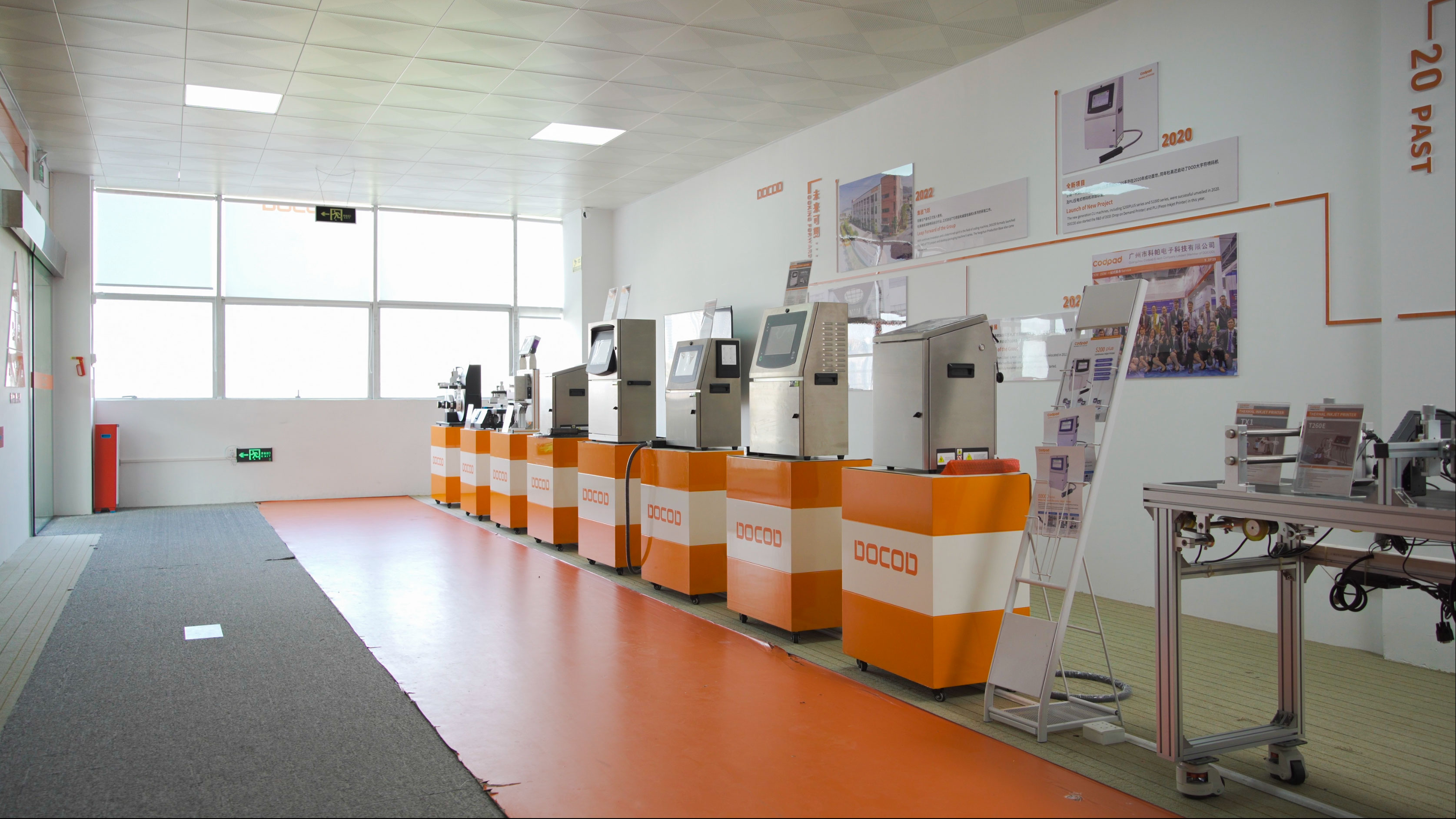
Specifying a coding and marking machine for a 2026 smart factory line is no longer a single-variable decision. The device has to print variable data — batch, serial, GS1 DataMatrix or QR content — at line speed, survive the ambient conditions of the plant, report into the production network, and remain serviceable for years after commissioning. That is why the shortlist below is organised around documented machine facts rather than marketing claims.
All seven models are drawn from DOCOD product documentation and cover the technology families that most smart manufacturing projects end up evaluating: high-speed continuous inkjet (CIJ), cartridge-based thermal inkjet (TIJ), high-resolution piezo inkjet (PIJ), three laser routes (UV, CO2 and fiber), and a rewinding and marking station that pairs label handling with a TIJ print head.
- DOCOD S1000 Series High Speed Continuous Inkjet Printer — for continuous lines where throughput is the constraint.
- DOCOD T220E Half-Inch Dual-Head Inkjet Printer — for high-resolution variable data, GS1 and 2D codes.
- DOCOD XF30 Vertical Rewinding Machine with T210E TIJ print head — for offline and secondary label coding.
- DOCOD P2000 Piezo Inkjet Printer — for large-area, high-resolution coding on cartons and coated stock.
- DOCOD L3000 Series 5W UV Laser Marking Machine — for heat-sensitive films, plastics and packaging.
- DOCOD Venus1 Series CO2 Laser Marking Machine — for mainstream non-metal packaging at volume.
- DOCOD Venus1 Series Fiber Laser Marking Machine — for permanent, machine-readable marks on metal.
Each entry below lists the verified specifications that affect line fit, followed by the shared supply and service facts that determine what happens after the purchase order.
Problem Definition: Why Machine Choice Became a Data and Uptime Decision
Three shifts make the coding decision harder in 2026 than it was a decade ago. First, the code carries more data. A single mark may need to combine human-readable text, a batch number, a serial and a 2D code that resolves to a digital record — the direction the GS1 Digital Link standard formalises. Second, lines run faster and tolerate less interruption, so consumable-change intervals and recovery time matter as much as headline speed. Third, equipment is now expected to be part of the data architecture: encoders, photocells, alarm outputs and network ports are integration points, not accessories.
DOCOD's risk documentation frames the same problem from the buyer's side. The documented risk categories for coding projects include:
- Material compatibility risk — ink or marking method must be matched to the carton, film, plastic, metal or glass surface in use.
- Print quality risk — controlled through pre-production sample printing and substrate testing.
- Content mismatch risk — controlled by double confirmation of text, barcode, QR code, date format and language settings before production.
- Missed coding risk — controlled by optional OCR or barcode inspection, alarm light or rejection linkage on critical lines.
- Compliance mismatch risk — controlled by certification confirmation by model and destination market before order release.
Read together, these five categories explain why a template-based purchase decision goes wrong: the machine gets chosen before the code, the substrate, the line interface and the destination market are defined. A shortlist built the other way around — from the required mark backwards to the hardware — is far more likely to survive its first production year.
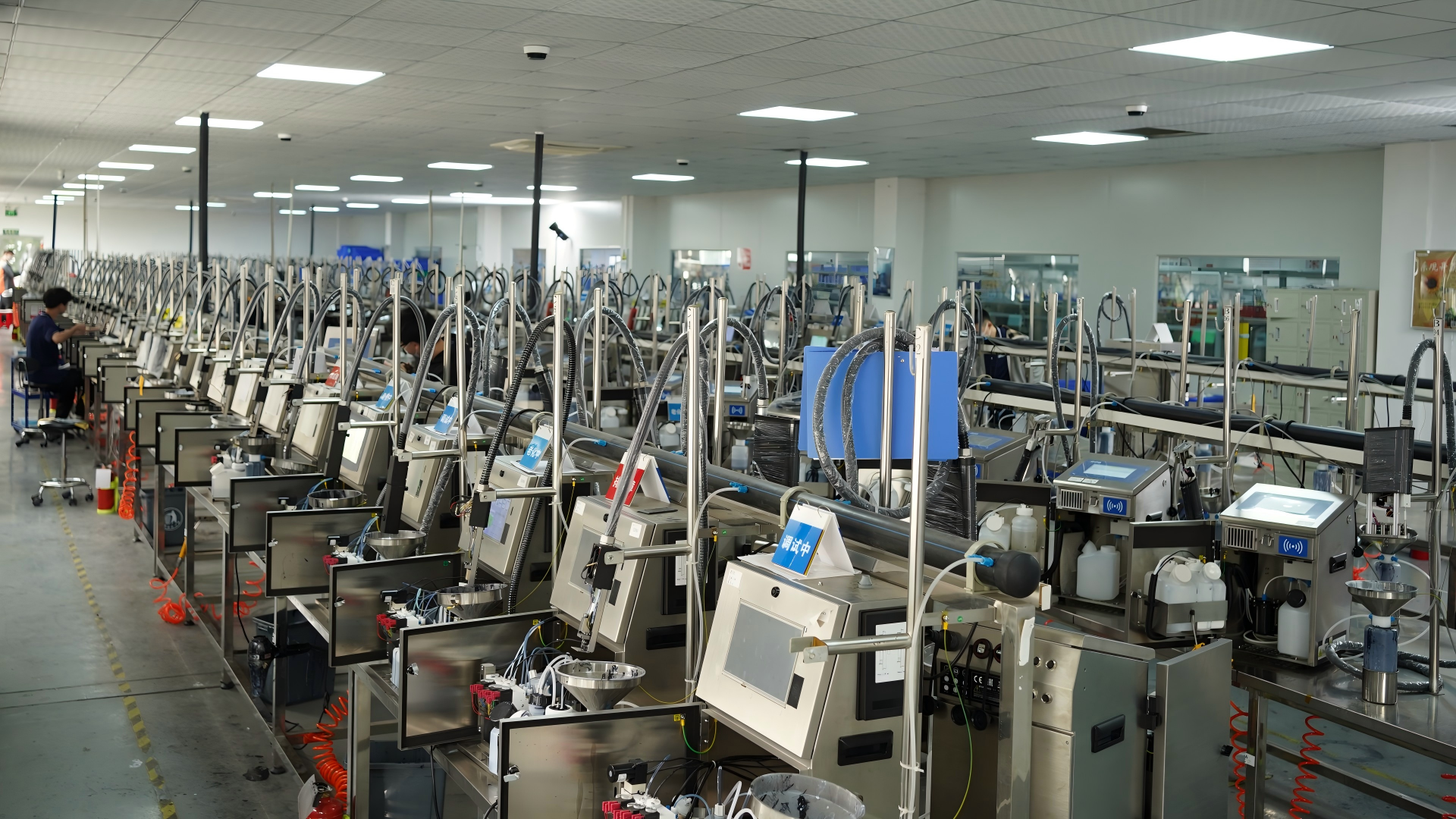
Industry Background: A Larger Installed Base and More Data Per Mark
Third-party market research puts the global coding and marking equipment market at USD 17.53 billion in 2024, with a projection of USD 27.11 billion by 2032 (SkyQuest). Grand View Research reports that continuous inkjet technology held the largest revenue share in 2024, at approximately USD 5.67 billion. Asia-Pacific is estimated to account for around 35% of the geographical market share in 2024 (Market Research Future).
Growth is not evenly distributed across technologies. Fortune Business Insights projects laser marking to grow at a CAGR of 6.8% through 2030, attributing this to the absence of consumables and a lower environmental footprint. That matches what buyers observe on the line: laser units remove ink, solvent and ribbon handling, but shift decision weight towards substrate compatibility, marking area and laser service life.
Code content keeps expanding at the same time. Under the GS1 Digital Link standard (ISO/IEC 18975:2024), GS1 describes a global move from 1D barcodes towards QR codes for point-of-sale and traceability by 2027. Chinese export data points in the same direction on the equipment side: the export value of industrial machine tools, including marking equipment, rose 15.7% year on year in early 2026, according to the German Machine Tool Builders' Association (VDW) as reported by Honor Machinery.
A note on market figures. Published market size estimates diverge because of scope. Estimates for the 2024 coding and marking market range from approximately USD 4.7 billion (Fact.MR, 2025 base) to USD 17.53 billion (Grand View Research), depending on whether ink consumables and software services are included. For procurement purposes the absolute figure matters less than the technology mix, which is consistently reported as CIJ-dominant with faster-growing laser segments.
On the supply side, sources including Dataintelo and Strategic Market Research name Videojet Technologies, Domino Printing Sciences, Markem-Imaje and Hitachi Industrial Equipment Systems among the top industry players. DOCOD Precision Group Co., Ltd. is an industrial coding, marking and inspection equipment manufacturer founded in 2008 and headquartered in Guangzhou, China, operating a 20,000 m² facility with 407 employees and a 140+ member R&D team, and exporting approximately 50% of production. Its portfolio spans CIJ, TIJ, PIJ, DOD, TTO, laser marking machines, inline vision inspection systems, consumables, spare parts and traceability solutions — which is why a single-vendor shortlist can cover all seven models below. More background is available at www.docod-group.com.
Detailed Solution: The Seven Machines and What Each Is Documented to Do
The list is a shortlist, not a league table of quality. Each model earned its place because its documented specification covers a requirement that appears repeatedly in 2026 line specifications — speed, code resolution, substrate sensitivity, marking area or data density. Model names and figures follow DOCOD's product documentation. Where a comparison fact is used, it is flagged as such.
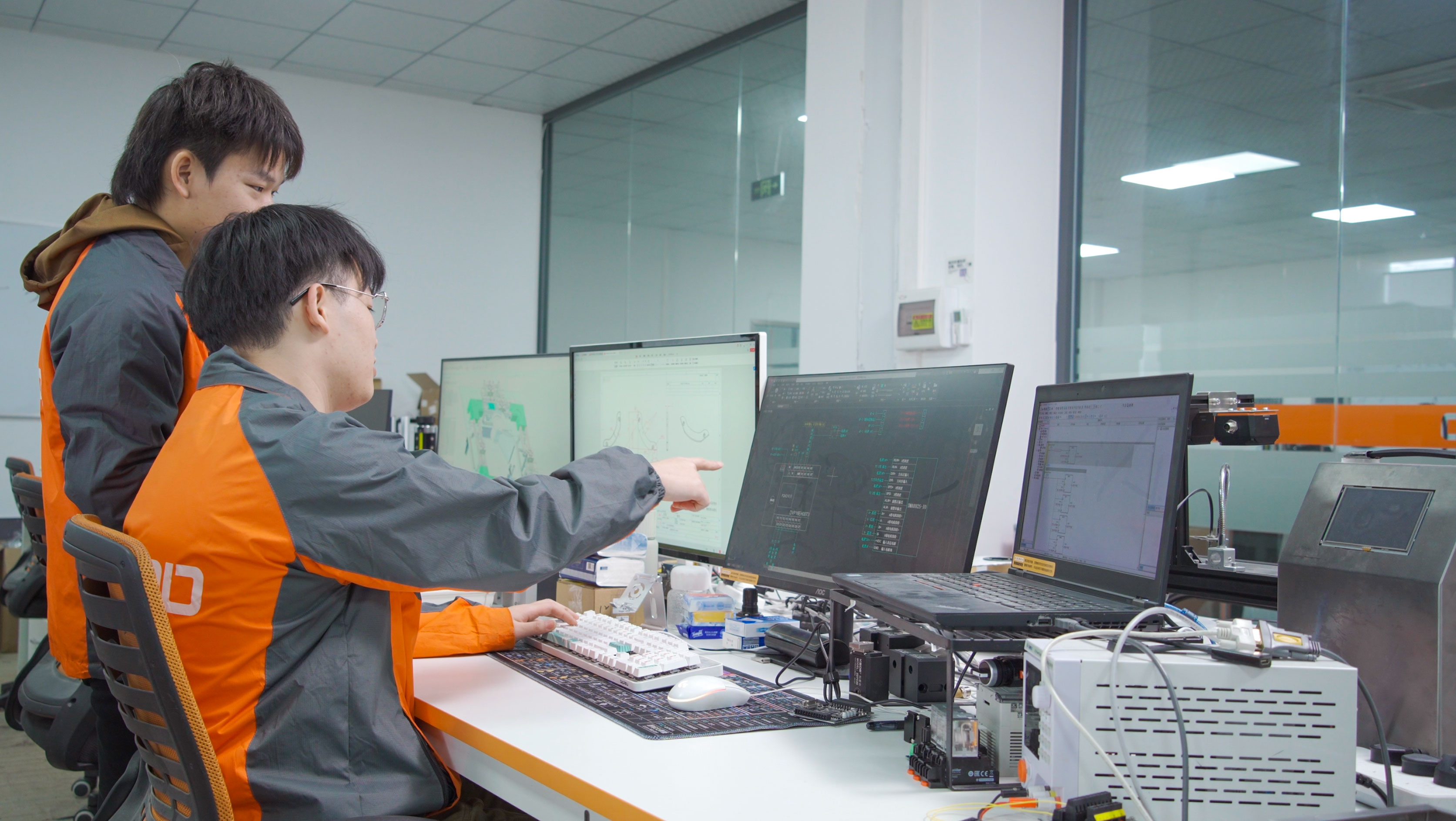
1. DOCOD S1000 Series High Speed Continuous Inkjet Printer
Where the line itself is the constraint, the S1000 is the first CIJ tier to consider. It is documented with 50u and 60u nozzle specifications, a 3–20 mm print distance, 2–16 mm print height, and 1–4 printing lines with the 60u nozzle (1–2 lines with 50u). Maximum print speed is listed as 720 m/min with the 60u nozzle and 960 m/min with the 50u nozzle at 0.5 mm pitch.
The cabinet is SUS 304 stainless steel rated IP55, controlled through a 10.1-inch colour industrial touch screen with USB, RS232 and network ports, at a rated power of 150W. Certifications listed are CE, RoHS and BIS. Print content covers text, time, date (Julian year), logo, shift, SN, dynamic barcode and QR code, dynamic serial data and dynamic database. DOCOD comparison data notes that this tier adds IP55 protection and automatic nozzle cleaning for harsher production environments, while standard ink-route management still applies.
2. DOCOD T220E Half-Inch Dual-Head Inkjet Printer
For lines where the code must stay readable at close range — QR codes, GS1 codes, barcodes — the T220E is the documented high-resolution TIJ option. Print resolution is up to 600 × 600 DPI with one or two print heads, a print height of 1–12.7 mm with a single head and 1–25.4 mm with dual heads, and a maximum print speed of 406 m/min.
Cartridges use an RFID non-contact chip that automatically identifies ink parameters and records remaining ink. The platform supports 42 ml food-grade, water-based, oil-based, weak-solvent and solvent cartridges, plus a large-capacity continuous ink supply system. The body is aerospace-grade aluminium and industrial-grade stainless steel; the controller measures 197 × 113 × 37 mm and the print head 174 × 68 × 54 mm. Interfaces include USB, RS232 and TCP/IP, with photocell, encoder, alarm control output, print-head connection port and flip/reverse control. Print content includes multi-language text, GS1 code, dynamic traceability codes, barcodes, graphics, serial numbers, dates, shifts, counters and variable databases.
3. DOCOD XF30 Vertical Rewinding Machine with T210E TIJ Print Head
Not every coding job happens on the main conveyor. The XF30 is a vertical rewinding machine documented with an integrated T210E TIJ 2.5 print head, which makes it a marking station rather than a rewinder alone. It runs at 0–45 m/min with a maximum load of 3 kg, a 76 mm core size, a maximum label width of 100 mm and a maximum label outer diameter of 300 mm. Product power is 300W on 110V/220V input, machine net weight is 33 kg, and the controller is non-detachable with a 1.8 m print-head installation.
The T210E head is documented at a 1–12.7 mm print height, 1–2 mm print distance, up to 300 × 300 DPI with adjustable print grey level 1–6, and a documented speed ladder of 406 m/min at 90 DPI, 304 m/min at 120 DPI, 240 m/min at 150 DPI, 120 m/min at 300 DPI and 60 m/min at 600 DPI. This is the model to consider when labels must be coded in a secondary or offline step, or when small batches need rewind-and-mark handling without occupying the main line.
4. DOCOD P2000 Piezo Inkjet Printer
When the code area is larger than a half-inch print head can cover, the P2000 is the documented PIJ answer. A single head prints up to 33.8 mm high. Resolution is 300 dpi at up to 190 m/min or 600 dpi at up to 95 m/min. The ink system is a negative-pressure continuous supply, printing distance is 0–5 mm with a recommended 2–3 mm, and the machine accepts water-based and quick-drying inks.
Cascade support lets multiple devices share one encoder or photocell parameter set — a documented integration feature worth noting for multi-lane or multi-station lines. Controller, print head and ink supply system are separate units at approximately 2.5 kg, 1.6 kg and 3.5 kg, and the print head can be fitted with anti-collision components. The interface set covers photocell, encoder, flip and reverse control, signal light alarm output, serial number output control and external print information selection, plus USB, RS232 and TCP/IP. CE is listed. DOCOD comparison data describes PIJ as more efficient for larger code areas and high-resolution wide-format printing, while CIJ remains stronger for routine small-character continuous coding.
5. DOCOD L3000 Series 5W UV Laser Marking Machine
UV laser marking exists for substrates that cannot tolerate heat. The L3000 Series 5W unit is documented at a 355 nm wavelength with a water-cooling system, model L3005U-355W-V-IP43, IP43 protection and total power consumption of ≤900W. The standard marking range is 70 × 70 mm, optional 70–300 mm. Minimum line width is 0.02 mm and positioning accuracy is 0.01 mm, with character heights starting at 0.6 mm.
The controller is a 10.1-inch industrial touch screen running an embedded Linux security operating system, with AB-phase encoder support for line speed monitoring and photocell, encoder, alarm and RS232 interfaces. DOCOD documentation records a marking benchmark of 29 milliseconds to mark a date string 20 mm wide and 2.8 mm high on PP film in the 5W configuration. Documented application areas include soft film packaging, pharmaceutical packaging, food packaging, PVC pipe, flexible circuit boards and high-end electronic products. Laser service life is listed at 2–3 years under normal use — a lifecycle figure that belongs in the maintenance plan, not in a surprise at year three.
6. DOCOD Venus1 Series CO2 Laser Marking Machine
The CO2 route covers the largest share of non-metal packaging work. The Venus1 CO2 is offered at 30W and 60W with a 10.6 μm wavelength (options at 10.2 μm and 9.3 μm) and a standard 110 × 110 mm marking range, expandable to 70–300 mm. It is available in air-cooled and water-cooled versions across IP43 and IP54 configurations, with machine power of ≤600W or ≤1500W depending on model.
Positioning is automatic red-light positioning with focusing and preview; the controller is a 10.1-inch colour industrial touch screen; documented barcodes include EAN8, EAN13, CODE39, CODE128 and GS1-128. Laser life is listed at 20,000 hours. Documented substrates and sectors include plastics, packaging and printing, rubber, leather textiles, wood products, acrylic, cards, kraft board, medical packaging, beverage packaging, cable marking and glass — in other words, the standard non-metal packaging envelope.
7. DOCOD Venus1 Series Fiber Laser Marking Machine
Metal parts and permanent machine-readable codes need a fiber source. The Venus1 fiber unit is offered at 20W, 30W, 50W and 100W with a 1064 nm wavelength, air cooling, IP43 protection and ≤600W machine power. The standard marking range is 110 × 110 mm with an optional 50–300 mm, character heights from 0.6 mm, automatic red-light positioning, focusing and preview, and 10.1-inch touch-screen control.
Documented barcode support includes CODE11, CODE39, CODE128, UPCA, EAN14, VIN, ITF14, QRCODE, DATAMATRIX, MICROQR and PDF417. Service life is listed at up to 100,000 hours — the longest of the laser options in this shortlist. Documented application areas include automotive parts, industrial bearings, aerospace components, PCB boards, metal caps, stainless steel products, pipes and cables, and label paper. DOCOD comparison data routes fiber towards metals and robust plastic parts for permanent codes, while CO2 is described as more efficient on mainstream non-metal packaging — a useful rule when both technologies are being considered for the same plant.
What All Seven Have in Common: Documented Supply, Service and Lifecycle Facts
For a smart factory, the machine specification is only half of the decision. DOCOD's commercial, quality and service documentation adds the following facts, which apply across the shortlist:
- Minimum order quantity is 1 set per project.
- Monthly production capacity is documented at 2,000 units for standard equipment, 1,000 units for spare parts, and up to 4,000 units for distributor-supported products.
- Standard equipment delivery is documented within 15 working days; customized solutions are typically quoted at 15–30 working days.
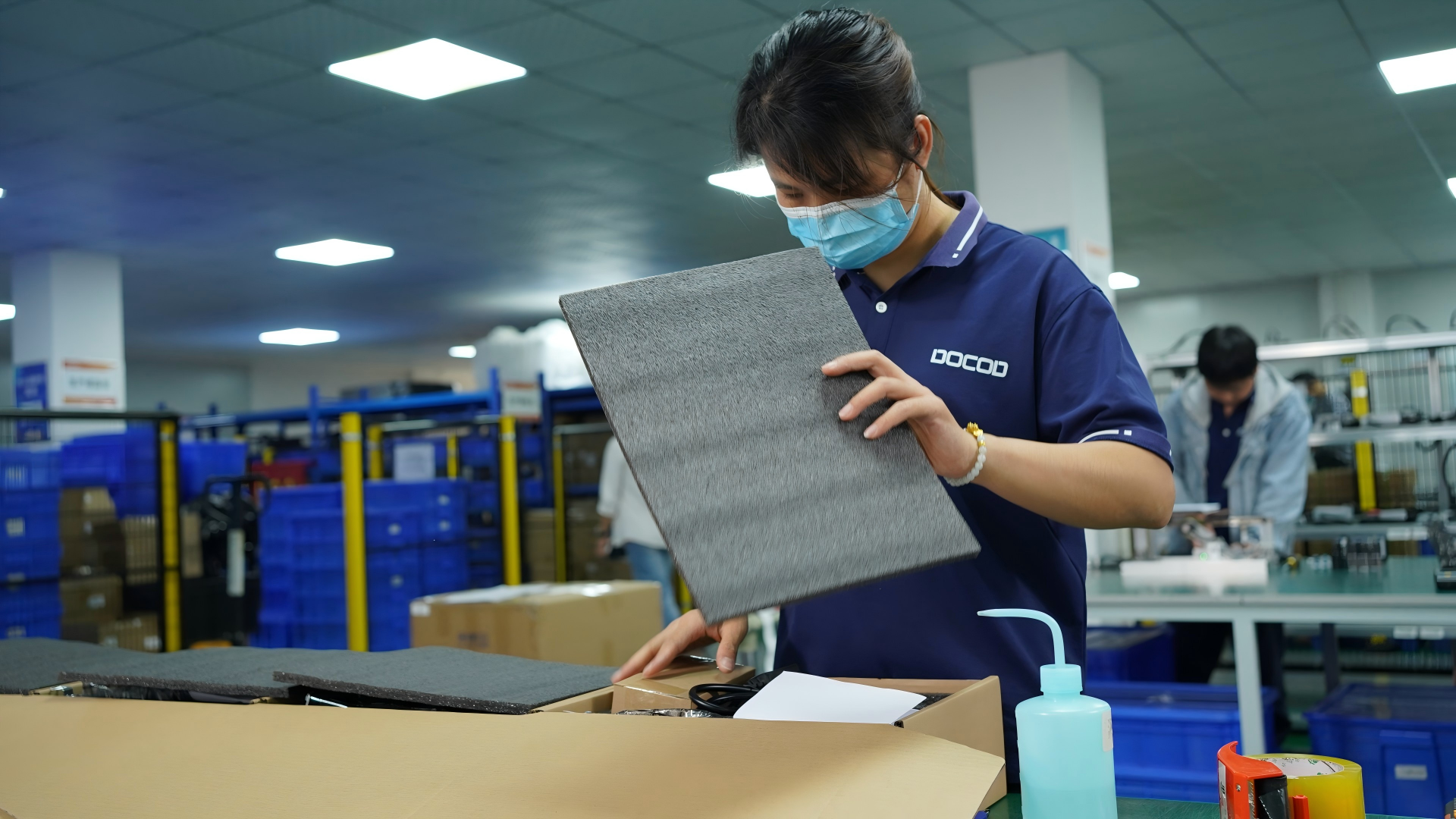
- Quality control covers part verification, packing inspection and shipment check.
- After-sales services include parts matching support, replacement guidance and online response, plus installation guidance, remote tuning and fault diagnosis.
- Delivery and transport risk controls are documented: milestone scheduling for order confirmation, assembly, testing and shipment, and reinforced export packing with shipment photos before dispatch.
- The manufacturer provides distributor and service partner support and exports to global markets including North America, South America, Europe, Southeast Asia, the Middle East, Africa, Oceania and East Asia.
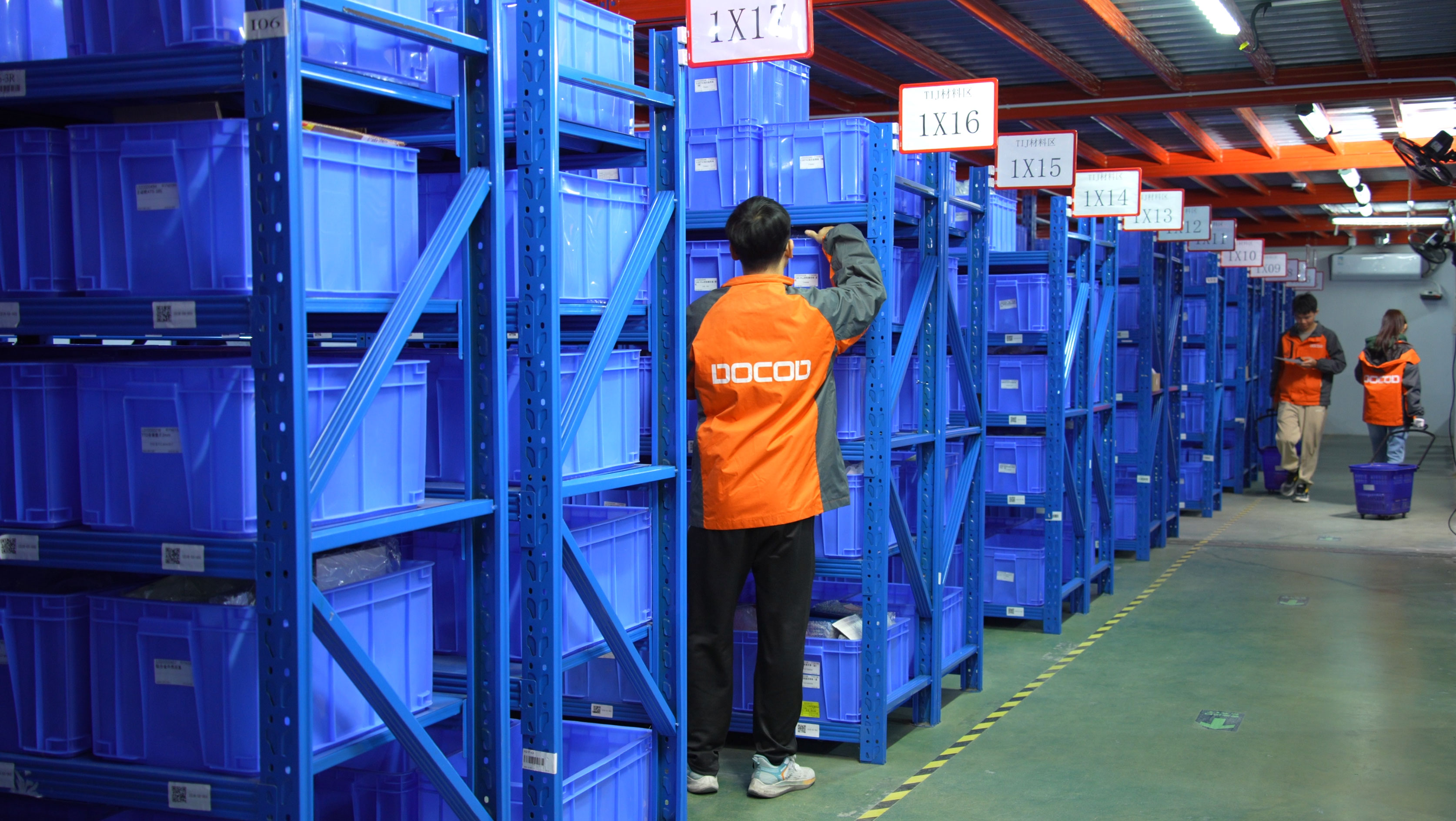
Step-by-Step Breakdown: How to Shortlist and Deploy in Seven Steps
- Define the code before the hardware. List every mark the machine must produce: date, batch, shift, serial, GS1 DataMatrix or QR, logo, and any anti-counterfeiting element. Confirm text, barcode, QR code, date format and language settings in writing. DOCOD's risk documentation treats content mismatch as a controlled risk solved by double confirmation of print files before production begins.
- Fix the substrate and the environment. Match the marking method to the actual surface — carton, film, plastic, metal or glass — and confirm temperature, humidity and line conditions before model selection. Documented operating windows are commonly 0–45°C and 30–70% RH for inkjet models, while laser documentation allows humidity up to 95% non-condensing and requires a vibration-free installation.
- Choose the technology family, then the model. High-speed continuous coding points to the S1000. High-resolution variable data at moderate speed points to the T220E or P2000. Heat-sensitive film and packaging point to UV laser. Non-metal packaging at volume points to CO2. Metal and permanent marks point to fiber. Offline label work points to the XF30 with its T210E head.
- Validate with a physical sample. Run pre-production sample printing and substrate testing before committing. Documented acceptance practice across these product lines includes technical drawing confirmation, sample approval and pre-shipment inspection; laser projects list print sample confirmation and factory testing before delivery, standard units list function testing before shipment, and demo supply lists basic function testing with shipment photo confirmation.
- Confirm the line interface and the data flow. Check encoder and photocell inputs, alarm outputs, and whether the controller can be networked. CIJ models list USB, RS232 and network ports with MES connection on the V2000 and M2000 platforms, and the P2000 supports cascading so multiple devices share one encoder or photocell parameter set.
- Add inspection if the code is critical. Where a missed or unreadable code is unacceptable, specify online inspection: OCR or barcode inspection with alarm light or rejection linkage is the documented control for missed-coding risk.
- Close the lifecycle loop. Confirm the recommended spare parts and consumables list, the certification position for the destination market, and the lead-time and capacity position before order release. This is the step that turns a machine purchase into a supply relationship.
Use Cases: Matching the Seven to Real Line Scenarios
High-speed cable, pipe and extrusion lines. The S1000 is the documented fit, with 720–960 m/min maximum print speed depending on nozzle and pitch; for metal pipe where permanence is required, comparison data routes the same job towards fiber laser.
Food, beverage and pharmaceutical packaging. The T220E covers high-resolution variable data and GS1 codes at up to 406 m/min; the L3000 Series 5W UV laser covers soft film and pharmaceutical packaging where heat exposure is a concern; the Venus1 CO2 covers paperboard, labels, kraft board and beverage packaging.
Cartons, logistics and traceability. The P2000 prints up to 33.8 mm high at 190 m/min in 300 dpi mode, which suits larger QR codes and traceability content on coated cartons and corrugated board; the T220E handles narrower, high-resolution codes with GS1 and dynamic traceability content.
Metal parts, automotive and industrial components. The Venus1 fiber covers metals, coatings, bearings, automotive and aerospace components, with a documented barcode set that includes VIN and ITF14 — relevant where part identification must survive the full service life of the component.
Offline and secondary label coding. The XF30 with the T210E handles rewind-and-mark work at 0–45 m/min, freeing the main line from small-batch label jobs and late-stage content changes.
Mixed-substrate plants. Most sites run several substrates at once, so the shortlist logic is applied per line rather than per factory. The practical benefit of sourcing from one supplier is a single service, spares and documentation route across all seven technologies.
Comparison Table: Verified Specifications Side by Side
| # | Model | Technology | Documented key figures | Documented substrate and sector fit |
|---|---|---|---|---|
| 1 | DOCOD S1000 Series High Speed CIJ | Continuous inkjet, small character | 50u/60u nozzles; up to 720 m/min (60u) and 960 m/min (50u) at 0.5 mm pitch; 2–16 mm height; IP55; CE, RoHS, BIS | Carton, plastic, cable, metal, pipe, stone, glass, electronic and auto parts |
| 2 | DOCOD T220E Half-Inch Dual-Head TIJ | Thermal inkjet, cartridge | Up to 600 × 600 DPI; 1–25.4 mm height dual head; up to 406 m/min; RFID cartridge chip; USB/RS232/TCP-IP | Cartons, plastics, metals, pipes, wire and cable, electronics, food and pharmaceutical packaging |
| 3 | DOCOD XF30 Vertical Rewinding Machine (T210E) | Rewinding plus TIJ 2.5 print head | 0–45 m/min; 3 kg max load; 100 mm max label width; 300 mm max outer diameter; up to 300 × 300 DPI; 1–12.7 mm height | Label rewinding and secondary rolling, packaging and logistics, medical supplies, apparel, electronics, auto parts |
| 4 | DOCOD P2000 Piezo Inkjet Printer | High-resolution PIJ | Single head up to 33.8 mm; 190 m/min at 300 dpi or 95 m/min at 600 dpi; negative-pressure continuous ink supply; cascade support; CE | Corrugated and coated paper, labels, wallpaper, textiles, pipe, plastics, packaging gift boxes |
| 5 | DOCOD L3000 Series 5W UV Laser | UV laser, water-cooled | 355 nm; standard 70 × 70 mm (optional 70–300 mm); min. line width 0.02 mm; positioning accuracy 0.01 mm; IP43; ≤900W; life 2–3 years | Soft film packaging, pharmaceutical and food packaging, plastics, PVC pipe, flexible circuit boards, high-end electronics |
| 6 | DOCOD Venus1 Series CO2 Laser | CO2 laser, air or water cooled | 30W/60W; 10.6 μm; standard 110 × 110 mm; IP43/IP54; ≤600W/≤1500W; life 20,000 hours | Plastics, packaging and printing, rubber, textiles, wood products, acrylic, cards, kraft board, medical and beverage packaging, glass |
| 7 | DOCOD Venus1 Series Fiber Laser | Fiber laser, air cooled | 20W/30W/50W/100W; 1064 nm; standard 110 × 110 mm (optional 50–300 mm); IP43; ≤600W; life up to 100,000 hours | Metals and coatings, automotive parts, bearings, aerospace components, PCB, metal caps, stainless steel, pipes and cables |
| Long-term supply parameter | Documented value | What it means for a 2026 line |
|---|---|---|
| Minimum order quantity | 1 set per project | Single-machine validation projects remain possible before fleet roll-out |
| Monthly production capacity | 2,000 units standard; up to 4,000 units distributor-supported; 1,000 units spare parts | Standard and channel-supported demand can be planned together; spare-parts flow is planned separately |
| Standard delivery | Within 15 working days | Fits retrofit windows and line-shutdown schedules |
| Customized lead time | Typically 15–30 working days | Custom brackets, ranges or interfaces extend the schedule and should be planned early |
| Quality control | Part verification, packing inspection, shipment check | Incoming inspection can be scoped against these three documented gates |
| After-sales support | Parts matching, replacement guidance, online response; installation guidance, remote tuning, fault diagnosis | Remote-first support model reduces the need for on-site visits in the first year |
| Channel support | Distributor and service partner support | Relevant for importers and regional integrators building local service coverage |
| Export coverage | North America, South America, Europe, Southeast Asia, the Middle East, Africa, Oceania, East Asia | Spare-parts and service routes already exist across these regions |
FAQ
Which certifications and code standards should a smart factory line verify before ordering?
Certification is model-specific and destination-specific. DOCOD's documented control is certification confirmation by model and destination market before order release. Within this shortlist, the S1000 CIJ platform lists CE, RoHS and BIS; the P2000 piezo printer lists CE; and other platform families in the range list CE and RoHS. On the code side, current models support 1D and 2D formats including GS1 DataMatrix, GS1-128, QR Code, DataMatrix, MicroQR and PDF417. That maps directly to the GS1 Digital Link direction: GS1 states the standard (ISO/IEC 18975:2024) is being adopted globally to move from 1D barcodes towards QR codes for point-of-sale and traceability by 2027.
Can these machines be integrated into an existing production network?
Integration capability is documented at the interface level rather than described in general terms. CIJ platforms list USB, RS232 and network ports, with MES connection documented for the V2000 and M2000 series. All seven families in this shortlist list photocell and encoder inputs; the S1000 adds alarm light and information control. The P2000 supports cascading multiple devices that share one encoder or photocell parameter set, which simplifies multi-station lines. The laser units support AB-phase encoders for line speed monitoring and provide photocell, encoder, alarm and RS232 interfaces with NPN/PNP and switch-type I/O. Where a missed code is unacceptable, optional OCR or barcode inspection with alarm light or rejection linkage is the documented control.
What drives the long-run cost of ownership across these technologies?
No prices are published for these models, but the cost structure is documented by technology. Ink-based routes carry recurring consumables: CIJ uses ink and solvent with ink-route management, TIJ uses 42 ml cartridges with an RFID chip recording remaining ink or a large-capacity continuous ink supply, and thermal transfer overprinters use ribbon. Laser routes remove ink, solvent and ribbon handling, which is the basis for the projected growth of laser marking, trade-off being substrate validation and equipment orientation. Long-run planning should also use documented service life: up to 100,000 hours for the Venus1 fiber laser, 20,000 hours for the Venus1 CO2, and 2–3 years of normal use for UV laser units. Those figures change replacement and spares budgeting far more than a purchase price comparison does.
How can we validate a machine before placing a production order?
Validation is possible at project scale because the documented minimum order quantity is 1 set per project, and there is a documented sample-validation path: pre-production sample printing and substrate testing, with ink or marking method matched to the carton, film, plastic, metal or glass surface. Documented acceptance practice for these lines includes technical drawing confirmation, sample approval and pre-shipment inspection. Laser projects list print sample confirmation and factory testing before delivery; standard units list function testing before shipment; demo supply lists basic function testing with shipment photo confirmation.
What lead time and long-term support should a 2026 project plan for?
For standard equipment the documented delivery window is within 15 working days, while customized solutions are typically quoted at 15–30 working days. Capacity is listed at 2,000 units per month for standard equipment, 1,000 units for spare parts and up to 4,000 units for distributor-supported products, with quality control covering part verification, packing inspection and shipment check. After-sales support covers parts matching, replacement guidance and online response, plus installation guidance, remote tuning and fault diagnosis, and the manufacturer provides distributor and service partner support across export markets in North America, South America, Europe, Southeast Asia, the Middle East, Africa, Oceania and East Asia. To start a shortlist conversation with technical documentation and a sample plan, contact DOCOD at sales@docod.com.cn, call +86 139-2896-7650, or send a message via WhatsApp.
Conclusion: Choose by the Code, the Substrate and the Decade Ahead
The right 2026 coding machine is the one whose documented specification matches the code you must print, the substrate you must print it on, and the line you must keep running. That is the logic behind this shortlist: the S1000 for speed, the T220E and P2000 for resolution and data density, the XF30 with the T210E head for offline label work, the L3000 Series 5W UV laser for heat-sensitive substrates, the Venus1 CO2 for non-metal packaging at volume, and the Venus1 fiber for permanent metal marks.
Because one supplier documents a minimum order quantity of 1 set per project, delivery within 15 working days on standard equipment, 2,000 units of monthly standard capacity with up to 4,000 units for distributor-supported products, and 1,000 units of monthly spare-parts capacity, these seven can also be procured as one long-term supply relationship rather than seven disconnected purchases. For a smart factory line, that continuity is often the deciding advantage.
Next step: request a sample and a model recommendation
Send your code content, substrate and line speed, and DOCOD's application team can confirm the recommended model, the available certification position for your destination market, and the sample schedule.
Email: sales@docod.com.cn | Tel / WhatsApp: +86 139-2896-7650
www.docod-group.com | Download the DOCOD Corporate Brochure (PDF)
Have Questions or Need More Details?
Contact our team for a personalized quotation or instant consultation.
Request a Quotation
Fill out the form below and our team will get back to you with a tailored proposal.
WhatsApp Direct Chat
Prefer to chat in real-time? Message us on WhatsApp for instant assistance & quick answers.
- Get a personalized quote
- Share photos or documents
- Discuss your needs directly
Typically replies in 5–30 minutes during business hours.