
2026 Industrial Coding Equipment Brands: Market Trends and Supplier Evaluation Criteria
2026 Industrial Coding Equipment Brands: Market Trends and Supplier Evaluation Criteria
The global coding and marking equipment market was valued at USD 17.53 billion in 2024 and is projected to grow to USD 27.11 billion by 2032. For procurement and engineering teams now evaluating suppliers, the question is not only which printer to buy, but which manufacturing partner can support product identification requirements as codes become more data-rich, more regulated, and more central to production traceability.
Why 2026 Evaluation Is Different
Most buyers searching for industrial coding and marking equipment already know whether they need a continuous inkjet printer, a thermal inkjet printer, a laser marker, or a thermal transfer overprinter. The harder part is selecting a supplier that will still meet requirements three to five years later, as packaging codes evolve from simple date and batch marks to GS1 Digital Link QR codes, serialization, and inline verification.
Evaluation teams are now comparing manufacturers on four levels:
- Core printing technology matched to substrate and line speed;
- Ability to print variable data, 2D codes, and traceability codes that remain readable through the supply chain;
- Integration with production lines, encoders, sensors, vision inspection, and enterprise systems;
- Consumables stability, certification coverage, and long-term service capability.
Market Context: Where the Coding and Marking Sector Is Heading
Published market data points to a sector that continues to expand. The global coding and marking equipment market reached USD 17.53 billion in 2024 and is projected to grow to USD 27.11 billion by 2032. Continuous inkjet (CIJ) technology remains the largest product category, accounting for an estimated USD 5.67 billion of market revenue in 2024. Asia-Pacific represents the largest geographical share, at roughly 35%.
Several structural forces are relevant for supplier selection:
- Laser marking is projected to grow at a CAGR of 6.8% through 2030, driven by its low consumable consumption and environmental profile.
- GS1 Digital Link has become a global standard direction, with QR codes increasingly expected to carry the same information as traditional barcodes while supporting traceability. The GS1 Digital Link standard is being adopted internationally to replace or supplement 1D barcodes by 2027.
- Chinese industrial equipment exports have increased, with export value for industrial machine tools rising 15.7% year-on-year in early 2026. This gives buyers a broader set of credible manufacturing partners beyond the traditional Western and Japanese incumbents.
In this environment, supplier lists typically begin with the largest established names. Industry reports commonly list Videojet Technologies, Domino Printing Sciences, Markem-Imaje, and Hitachi Industrial Equipment Systems among the leading players. Buyers comparing these global incumbents against an export-oriented Chinese manufacturer such as DOCOD Precision Group Co., Ltd. should evaluate evidence rather than brand familiarity alone.
What Buyers Should Expect from a Coding Equipment Manufacturer in 2026
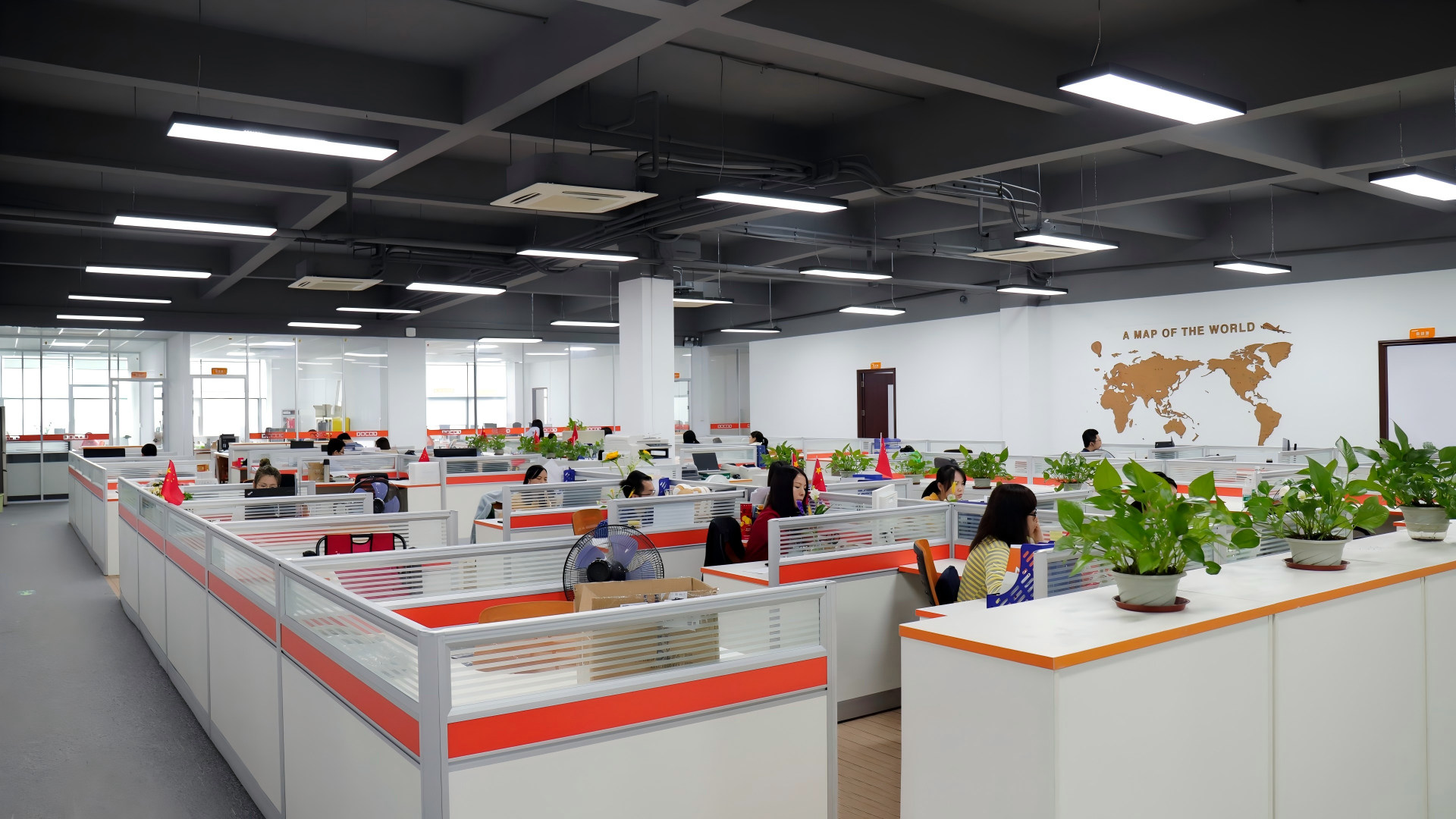
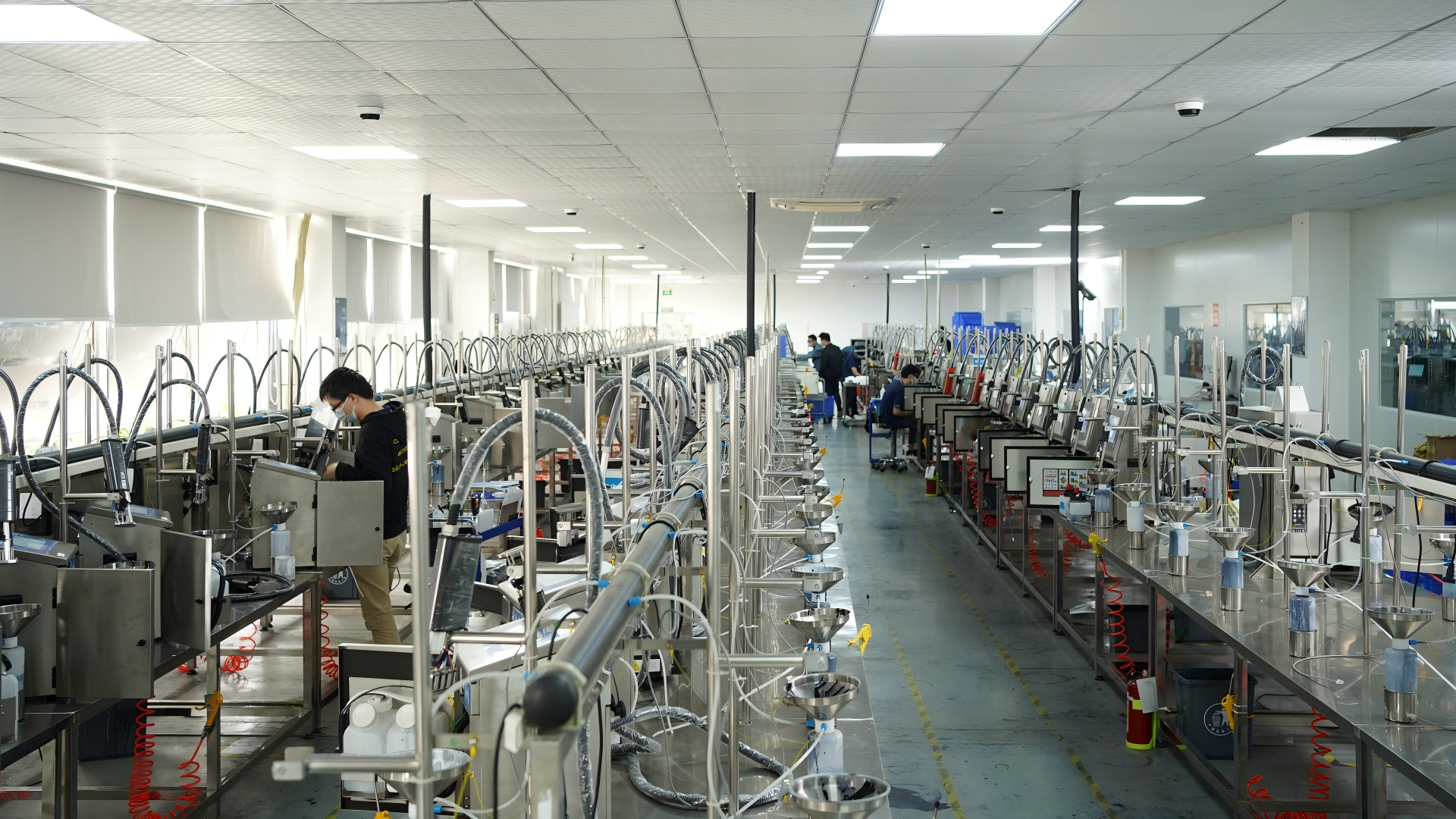
DOCOD Precision Group Co., Ltd. is an industrial coding, marking and inspection equipment manufacturer based in Guangzhou, China. Founded in 2008, the company designs and produces continuous inkjet printers (CIJ), thermal inkjet printers (TIJ), handheld coding equipment, piezoelectric high-resolution inkjet printers (PIJ), drop-on-demand large-character inkjet printers (DOD), thermal transfer overprinters (TTO), laser marking machines, inline vision inspection systems, coding consumables, spare parts, and product traceability solutions. The company operates a 20,000 m² facility with 407 employees, including more than 140 R&D staff, and reports an annual output of 5,000 units with about 50% exported.
CIJ technology held the largest revenue share in the coding and marking market in 2024.
Asia-Pacific accounts for around 35% of the global coding and marking market.
Laser marking is projected to grow at a 6.8% CAGR through 2030.
For a buyer moving from awareness to shortlist evaluation, a manufacturer with a broad technology portfolio is practical because packaging and production environments seldom need only one coding method. DOCOD's portfolio covers small-character CIJ for high-speed bottles and cables, TIJ for high-resolution cartons and labels, piezo inkjet for porous packaging, TTO for flexible films, lasers for permanent marking on metal and polymer surfaces, and inline vision inspection systems for code verification.
Market Trends That Should Change Your Supplier Shortlist
1. CIJ remains the workhorse, but it is no longer the only obvious choice
Continuous inkjet technology continues to lead the coding and marking market by revenue. CIJ printers remain widely used for date coding, batch marking, and multi-line alphanumeric printing on bottles, cans, cables, pipes, and cartons. Buyers selecting a CIJ supplier should compare nozzle options, printhead cleaning behavior, ink system stability, and how the printer handles variable data and 2D codes.
For example, the DOCOD V2000 Series Continuous Inkjet Printer supports up to five printing lines, prints dynamic barcodes and QR codes, and can be connected to an enterprise MES management system through USB, RS232, or network port. It is an example of a mid-speed CIJ system aimed at food, beverage, daily chemical, pharmaceutical, and industrial packaging lines where operators need reliable daily coding rather than maximum rated speed.
2. Laser marking growth reflects a long-term cost and sustainability shift
Laser marking is expanding faster than most consumable-based technologies because it does not require ink or solvent. Its projected 6.8% CAGR through 2030 is one reason buyers evaluating new production lines now compare inkjet and laser even for coding tasks that were historically assigned to CIJ. The practical constraint is material. Fiber laser is well suited to metal and coated surfaces; CO2 laser is widely used on plastics, paper, wood, and other non-metal materials; UV laser is used where low heat input is important, such as polymer packaging and electronic components.
DOCOD's Venus1 Series includes CO2, fiber, and UV laser marking machines, with red-light positioning, high-precision 2D digital galvo scanning, and support for barcode and QR code generation. The L3000 Series 5W UV laser marking machine uses a 355 nm wavelength and water cooling, positioning it for soft film packaging, pharmaceutical packaging, PVC pipe, and flexible circuit board marking where a permanent, low-heat mark is required.
3. High-resolution variable data and GS1-compliant codes are becoming baseline requirements
Retail and regulatory requirements are moving from simple lot codes to GS1 DataMatrix codes, serialized QR codes, and GS1 Digital Link formats. This raises the bar for print resolution. A supplier that can print 2D codes and variable databases at line speed is different from a supplier that can only print dates and counters.
Thermal inkjet printers provide one of the most accessible routes to high-resolution variable data printing. The DOCOD T220E Half-Inch Dual-Head Thermal Inkjet Printer prints up to 600 × 600 DPI with a maximum speed of 406 m/min, supports GS1 codes, dynamic traceability codes, and serial numbers, and uses RFID-equipped cartridges that identify ink parameters and record the remaining ink amount. The DOCOD TX1 Half-Inch Seamless Inkjet Printer supports from one up to eight printheads, allowing a print height range from 1 mm to 101.6 mm in spliced configurations.
4. Print and verify is becoming the standard for traceability
Traceability systems are only as strong as the least readable code. In pharmaceutical, food, and electronics supply chains, an unreadable code is equivalent to a missing code. Buyers increasingly evaluate suppliers that can provide both the printing equipment and the inline vision inspection system to verify codes. DOCOD includes inline vision inspection systems and product traceability solutions in its product scope, along with conveyor, encoder, and sensor integration support for production line workflows.
5. Suppliers must show evidence, not just product lists
Evaluation-stage buyers should ask suppliers for proof that their equipment performs under real production conditions. DOCOD's application history includes documented installations across multiple regions and industries:
- In Germany, an electronics parts supplier uses a DOCOD fiber laser marking machine for permanent marking on metal connectors at two workstations. The system has been in operation for three years, producing durable, readable marks on metal components.
- In India, a pharma packaging supplier uses the DOCOD T220E Half-Inch Dual-Head Thermal Inkjet Printer for QR and expiry printing on cartons across three cartoning lines.
- In Indonesia, a snack manufacturer uses the DOCOD R3000 Series Industrial Thermal Transfer Overprinter for date coding on flexible film across two VFFS lines.
- In Vietnam, a beverage bottling plant runs batch coding on PET bottles using the DOCOD V2000 Series Continuous Inkjet Printer across four high-speed lines.
How to Compare Coding and Marking Manufacturers: Technology and Proof Criteria
A practical comparison table for 2026 should combine technology coverage, application evidence, certification status, and integration support. Below is a framework that includes leading global names in the coding and marking industry plus DOCOD as an export-oriented Chinese manufacturer.
| Supplier | Profile and Reach | Portfolio Emphasis | Differentiators to Verify |
|---|---|---|---|
| Videojet Technologies | Well-established multinational coding and marking supplier with broad installed base and service network. | CIJ, laser, TIJ, TTO, case coding, marking fluids. | Service coverage, consumables availability, integration experience. |
| Domino Printing Sciences | Major global coding and marking manufacturer with strong reputation in variable data and traceability. | CIJ, TIJ, laser, TTO, print-and-apply, case coding, GS1-compliant coding. | Continuous innovation in data-rich codes, pharma and food expertise. |
| Markem-Imaje | Global supplier of coding and marking equipment with well-developed industrial packaging solutions. | CIJ, TIJ, laser, TTO, label applicators, print-and-apply systems. | Sector-specific family of solutions and service organization. |
| Hitachi Industrial Equipment Systems | Established industrial supplier within the Hitachi group; known for CIJ reliability. | CIJ printers, laser markers, inkjet-related components. | Engineering culture, reliability, strong presence in Asia. |
| DOCOD Precision Group Co., Ltd. | Guangzhou-based manufacturer founded in 2008; 20,000 m² facility; 407 employees; 140+ R&D staff; about 50% of output exported to North America, South America, Eastern Europe, Southeast Asia, Africa, Oceania, the Middle East, East Asia, and Western Europe. | CIJ, TIJ, PIJ, DOD large-character inkjet, TTO, CO2/fiber/UV laser, inline vision inspection, consumables, spare parts, traceability solutions. | Full technology portfolio under one supplier; OEM/ODM customization; production line integration; BIS-certified CIJ models for India; ISO 9001, ISO 14001, and ISO 45001 management systems; competitive lead time and MOQ for pilot installations. |
The table is not a rank order. It is a shortlist starting point. A global brand with a strong service network may be justified when a buyer needs support in dozens of countries. A manufacturer like DOCOD becomes attractive when the project requires broader technology options, tighter integration during line setup, factory-direct customization, or more competitive cost of ownership.
Step-by-Step Supplier Evaluation Process
Step 1: Map the coding requirement to a technology family
Substrate, speed, code content, and permanence determine the technology. The following application logic is widely used by DOCOD application engineers:
| Application Need | Suitable Technology / DOCOD Example |
|---|---|
| High-speed date and batch coding on bottles, cans, cables, and pipes | CIJ; DOCOD V2000 or M2000 Series; DOCOD S1000 Series for higher speed requirements |
| High-resolution QR, GS1 DataMatrix, and variable data on cartons, labels, and primary packaging | TIJ; DOCOD T220E or TX1; PIJ; DOCOD P2000 for larger text heights on corrugated and coated cartons |
| Permanent marking on metal, tools, electronics, and nameplates | Fiber laser; DOCOD Venus1 Series Fiber Laser Marking Machine |
| Permanent marking on plastics, wood, paper, and non-metal materials | CO2 laser; DOCOD Venus1 Series CO2 Laser Marking Machine |
| Low-heat permanent marking on polymers, cosmetics packaging, and pharmaceutical packaging | UV laser; DOCOD Venus1 Series UV Laser Marker or L3000 Series |
| Date and GS1 DataMatrix coding on flexible film packaging | TTO; DOCOD R3000 Series Industrial Thermal Transfer Overprinter |
Step 2: Check code quality and verification requirements
For serialization, traceability, and retail compliance, code readability must be checked at the moment of printing. Buyers should ask the supplier how its equipment supports GS1 DataMatrix, dynamic QR codes, serialized databases, and inline code verification. If the supplier also offers vision inspection equipment, integration is simpler and one team can take responsibility for the overall result.
Step 3: Verify installation and production evidence
Ask for application references that match your substrate and line configuration as closely as possible. A beverage plant in Vietnam running four high-speed PET lines with DOCOD CIJ printers is evidence of repeated performance. A German electronics parts supplier using a DOCOD fiber laser for three years is evidence of durability. A pharma packaging supplier in India running QR and expiry printing on three cartoning lines with DOCOD T220E printers is evidence of high-resolution dual-head stability.
Step 4: Audit quality systems and regional certifications
Management system certifications indicate how a factory controls design, production, and environmental health and safety. DOCOD holds ISO 9001:2015 Quality Management System Certification (certificate 18625Q00281R1M), ISO 14001:2015 Environmental Management System Certification (certificate 18625E00147R1M), and ISO 45001:2018 Occupational Health and Safety Management System Certification (certificate 18625S00131R1M), all issued by Guangdong Zhongyu Certification Co., Ltd. with validity through September 2028.
For India-bound shipments, buyers should verify product-specific registration. DOCOD CIJ models including the M2000 Series, S1000 Series, and V2000 Series are covered by a BIS CRS Registration Licence for Printers / Plotters under the brand codpad, certificate number R-41312347, issued by the Bureau of Indian Standards according to IS 13252 (Part 1):2010 / IEC 60950-1:2005, valid until October 2027.
Step 5: Compare integration and customization flexibility
Line integration affects downtime during installation. A supplier should be able to match conveyor, encoder, sensor, and software settings to the existing line. DOCOD documents production line integration support including conveyor/pager/rewinder matching, encoder and sensor connection, and GS1/DataMatrix serialization workflow matching. For manufacturers that sell under their own brand, OEM support is also relevant; DOCOD states an OEM branding capability with private label logo, startup screen, nameplate, packaging, and manual customization.
Step 6: Plan for consumables and after-sales support
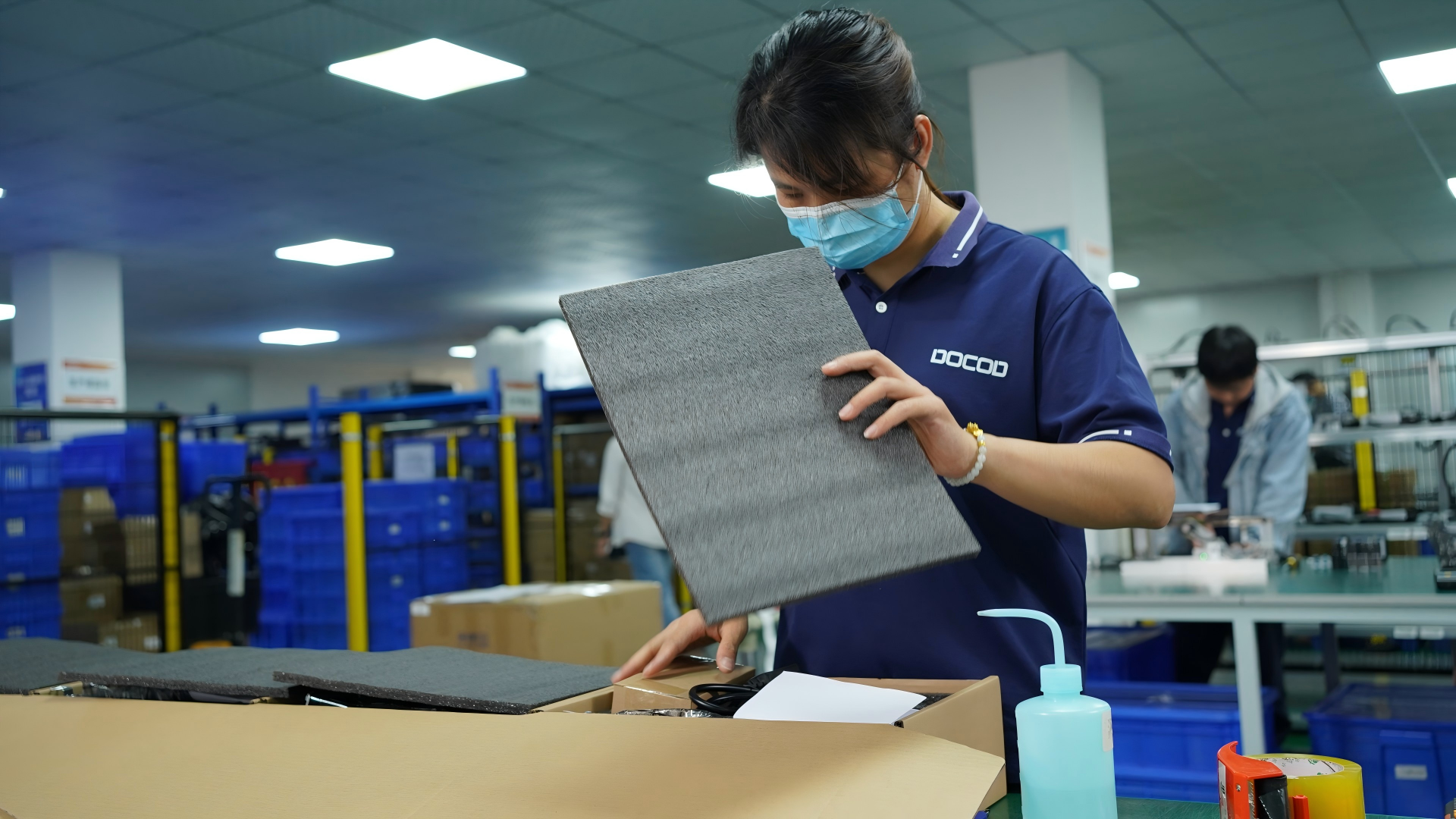
Ink, solvent, ribbon, and spare parts are the operating cost of a coding line. In South Korea, a regional distributor uses DOCOD thermal inkjet cartridges on plastic film and coated cartons at a volume of about 50 cartridges per month; the stated outcome was fewer smudging complaints because the ink offers fast drying and strong adhesion. This kind of consumable evidence is directly relevant to cost and quality planning.
Choosing Between CIJ and Laser: What the Trend Data Actually Says
The coding and marking market in 2024 shows CIJ at roughly USD 5.67 billion in revenue, still the dominant technology. At the same time, laser marking is growing at a projected 6.8% CAGR through 2030. These two statements are not contradictory. CIJ is a mature, broad-based technology used across high-volume packaging. Laser is replacing ink-based marking in specific applications where permanent marks, no consumables, or low intervention are decisive.
For buyers evaluating a new line, the strongest approach is to compare total cost per million codes rather than the machine price alone. CIJ has higher consumable usage. Laser has higher initial investment but removes consumables from the operating budget. UV laser and CO2 laser systems from manufacturers such as DOCOD are available in air-cooled and water-cooled versions, with protection levels up to IP54 for certain configurations. However, laser marking speed depends heavily on the substrate, mark size, and complexity, so the machine should be tested with the buyer's actual product before the final performance specification is set.
How DOCOD Serves the 2026 Evaluation Criteria
When a buyer applies the criteria above, DOCOD moves through the shortlist in a specific way:
- Breadth of portfolio: CIJ, TIJ, PIJ, DOD, TTO, laser, and vision inspection reduce the need to manage multiple vendors.
- Production integration: The company supplies not only printers but also related equipment such as the XC20 Mini Conveyor Belt and XF30 Vertical Rewinding Machine with integrated TIJ printer.
- Customization: OEM and ODM services allow packaging machinery builders and distributors to place their own brand on tested hardware.
- Certification evidence: ISO 9001, ISO 14001, ISO 45001, CE, RoHS, and BIS CRS registration for relevant CIJ printers are documented.
- Export experience: With about half of its output exported, DOCOD is structured for cross-border communication, packing, documentation, and remote service.
DOCOD also publishes a corporate brochure that can be downloaded for technical review during the supplier evaluation stage. It provides an additional document-based evidence source for procurement files.
Frequently Asked Questions
What certifications should industrial coding equipment have before installation?
At a minimum, equipment should meet the electrical safety and electromagnetic compatibility requirements of the destination market. DOCOD CIJ and related products carry CE and RoHS declarations, and several models support the Indian market under BIS CRS Registration Licence R-41312347 (IS 13252 Part 1 / IEC 60950-1). For factory-level quality control, manufacturers such as DOCOD also maintain ISO 9001:2015 for R&D and production of inkjet printers, ISO 14001:2015 for environmental management, and ISO 45001:2018 for occupational health and safety.
Can one supplier cover multiple coding technologies, or should I buy from separate specialists?
One supplier can reduce integration risk when the production line uses more than one coding method. DOCOD designs and produces CIJ, TIJ, PIJ, DOD, TTO, CO2/fiber/UV laser, and inline vision inspection systems under one organization. A manufacturer that controls the full portfolio can more easily handle cases where a carton is coded by TIJ, a flexible film is coded by TTO, and a metal part is coded by fiber laser on the same site.
What evidence should a supplier provide for real-world performance?
Buyers should ask for application references that match their substrate, speed, and code type. Documented examples include the V2000 CIJ running on four high-speed PET bottle lines in Vietnam, the T220E dual-head TIJ printing QR and expiry codes on pharmaceutical cartons in India on three cartoning lines, and the R3000 TTO performing date coding on flexible film for a snack manufacturer in Indonesia. Application evidence is most convincing when it includes the model, the production environment, and the duration of operation.
What is a realistic sample request for a pilot evaluation?
For standard equipment, a pilot evaluation typically begins with one machine or one production line rather than a fleet deployment. DOCOD operates under a standard equipment supply mode with a minimum order of one set and a lead time within 15 working days for standard models, with sample printing verification and function testing before shipment. This allows an evaluation team to trial the system on its own packaging materials and compare output quality before scaling up to a larger order. OEM or specialized integration projects require more time; DOCOD states production line integration lead time of 20 to 35 working days and OEM branding lead time of 15 to 25 working days depending on the scope.
Which materials and applications are best matched to DOCOD coding equipment?
DOCOD positions its products for food and beverage packaging, pharmaceutical packaging, cosmetics, building materials, wire and cable, pipe manufacturing, automotive parts, electronics, and carton and label printing. CIJ models print on carton, plastic, metal, glass, cable, and pipe. TIJ models add high-resolution GS1 DataMatrix and variable data on folding cartons and labels. The P2000 piezo inkjet printer is documented for coated boxes and corrugated materials. CO2 lasers apply to non-metal surfaces, fiber lasers to metal, and UV lasers to polymer and heat-sensitive packaging. Buyers should select by substrate and code format, then confirm with a sample test.
Need a shortlist for your 2026 coding and marking equipment project?
Download the DOCOD corporate brochure or contact the team directly for a sample or line integration discussion.
Email: sales@docod.com.cn · WhatsApp: +86 135-1234-4323
Have Questions or Need More Details?
Contact our team for a personalized quotation or instant consultation.
Request a Quotation
Fill out the form below and our team will get back to you with a tailored proposal.
WhatsApp Direct Chat
Prefer to chat in real-time? Message us on WhatsApp for instant assistance & quick answers.
- Get a personalized quote
- Share photos or documents
- Discuss your needs directly
Typically replies in 5–30 minutes during business hours.