
Top 7 Industrial Coding and Marking Machines for Smart Manufacturing Lines (2026)
Top 7 Industrial Coding and Marking Machines for Smart Manufacturing Lines (2026)
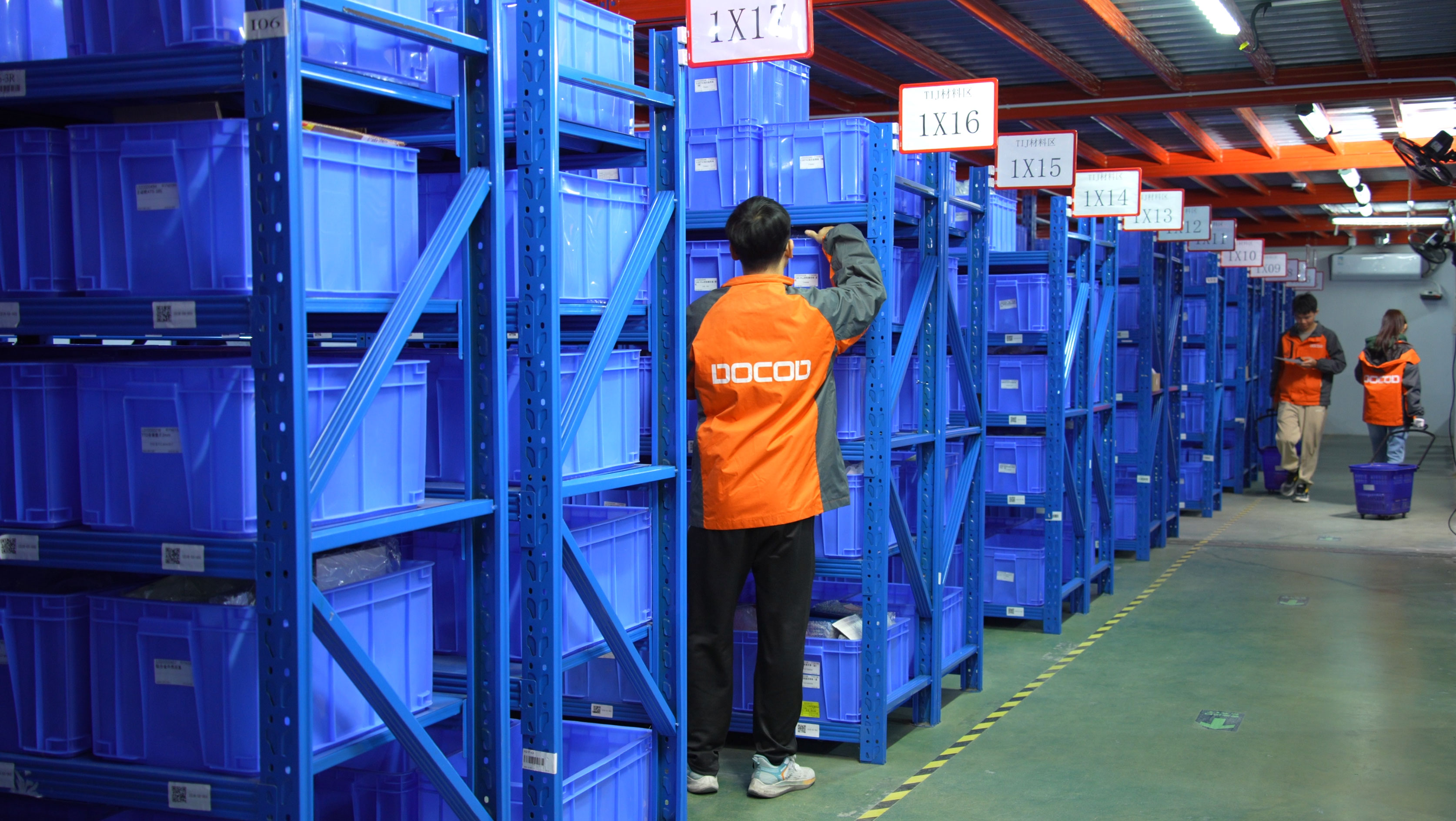
Quick answer: Seven DOCOD machine families cover most coding, marking and traceability jobs on a modern manufacturing line: the M2000 and V2000 Series continuous inkjet printers for high-speed small-character coding, the P2000 Piezo inkjet printer for 300-600 dpi high-resolution codes, the T220E half-inch dual-head thermal inkjet printer for cartridge-based variable data, the R3000 thermal transfer overprinter for flexible film, the XC20 mini conveyor belt and XF30 vertical rewinding machine for line handling and label rework, and the Venus1 Series laser markers for permanent, consumable-free marking. This list ranks them by application fit and names, for each rank, the verified specification that justifies its place - together with the trade-off a buyer still has to plan for.
Written for buyers already past category research and into evaluation and execution, this 2026 recommendation list is organised around one practical question: which machine family fits a defined line condition, and what does it take to configure, install, sample and run it?
Problem Definition: Shortlists Fail at the Line Interface, Not at the Print Quality
Most coding machine problems never appear on a specification sheet. They appear at the line interface: a print head that cannot reach the product, an encoder signal the printer cannot read, a code that smears on a coated substrate, or a machine whose consumable policy was never modelled.
Four constraints decide whether a machine will actually run on a smart manufacturing line:
- Substrate and ink chemistry: a solvent ink that bonds to PET film behaves differently on coated carton, and a laser that marks stainless steel cleanly can damage a thin label.
- Line speed versus mark content: printing a date code at 400 m/min and printing a GS1 Digital Link QR code at 400 m/min are different engineering problems, because resolution and content size change the achievable speed.
- Data and interfaces: variable data, serialization and code verification depend on encoders, photocells, network connectivity and, increasingly, MES or ERP data flow.
- Consumables and support policy: whether the plant accepts an ink-and-solvent workflow or wants a ribbon-free laser workflow is a maintenance and cost decision, not a print-quality decision.
A recommendation list that ranks machines only by technology class - CIJ, TIJ, laser - is therefore not actionable. The list below ranks by application fit and keeps the specification evidence attached to every rank.
Industry Background: What the 2026 Coding and Marking Market Signals to Buyers
Three market signals are worth carrying into a 2026 evaluation:
- Scale and growth: the global coding and marking equipment market was valued at USD 17.53 billion in 2024 and is projected to reach USD 27.11 billion by 2032, according to SkyQuest's coding and marking equipment market report.
- Technology mix: continuous inkjet held the largest technology revenue share at approximately USD 5.67 billion in 2024 (Grand View Research), while laser marking is projected to grow at a 6.8% CAGR through 2030 (Fortune Business Insights) because it consumes no ink or ribbon.
- Standard pressure: GS1 Digital Link (ISO/IEC 18975:2024) is the standard behind the global shift from 1D barcodes to QR codes for point-of-sale and traceability (GS1 / ISO), and Asia-Pacific accounted for roughly 35% of the geographical market in 2024 (Market Research Future).
One caution on market data: published 2024 market-size estimates differ widely depending on whether ink, ribbon and software revenue are counted inside the equipment figure. Directional use is safe; treating any single number as consensus is not.
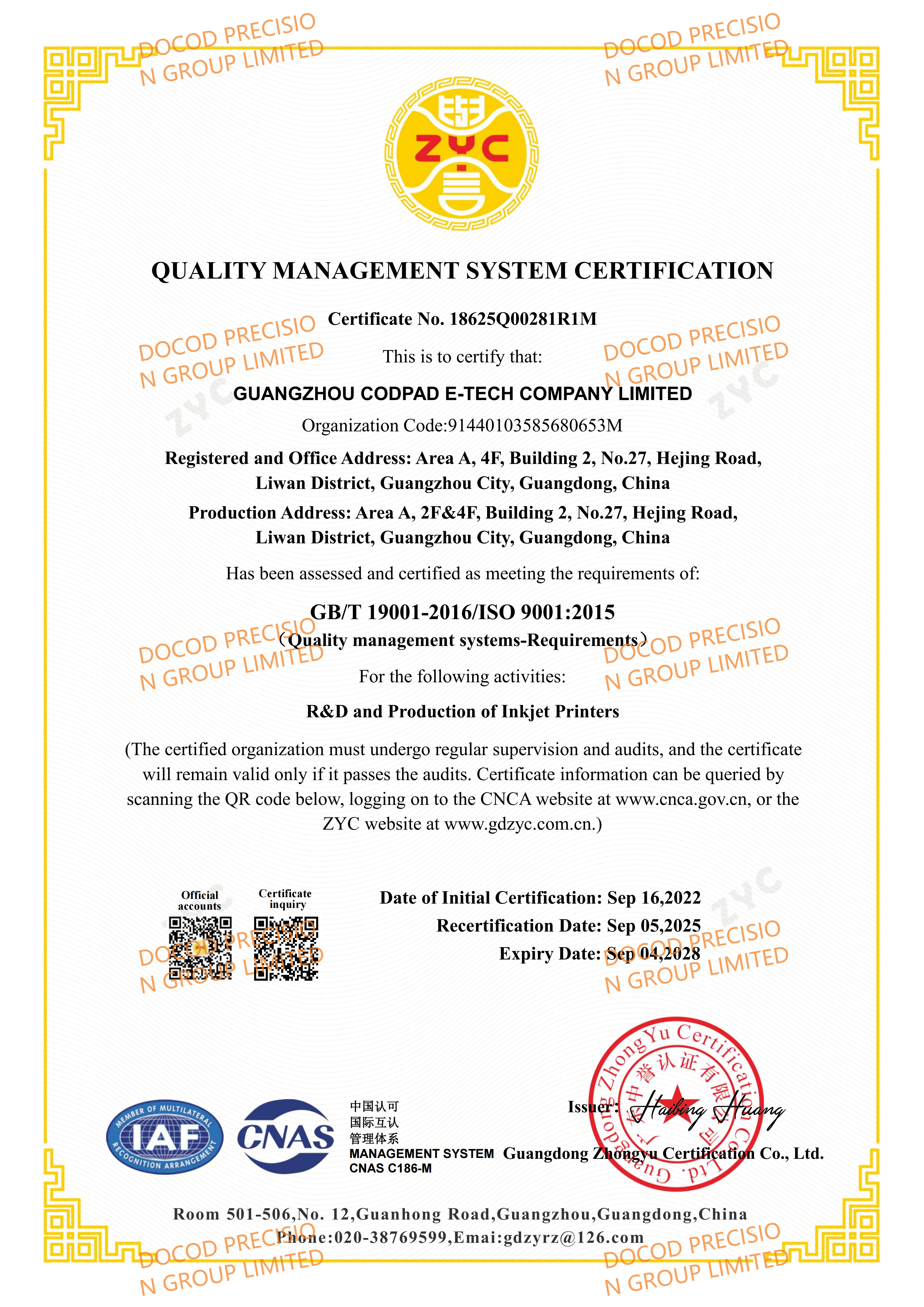
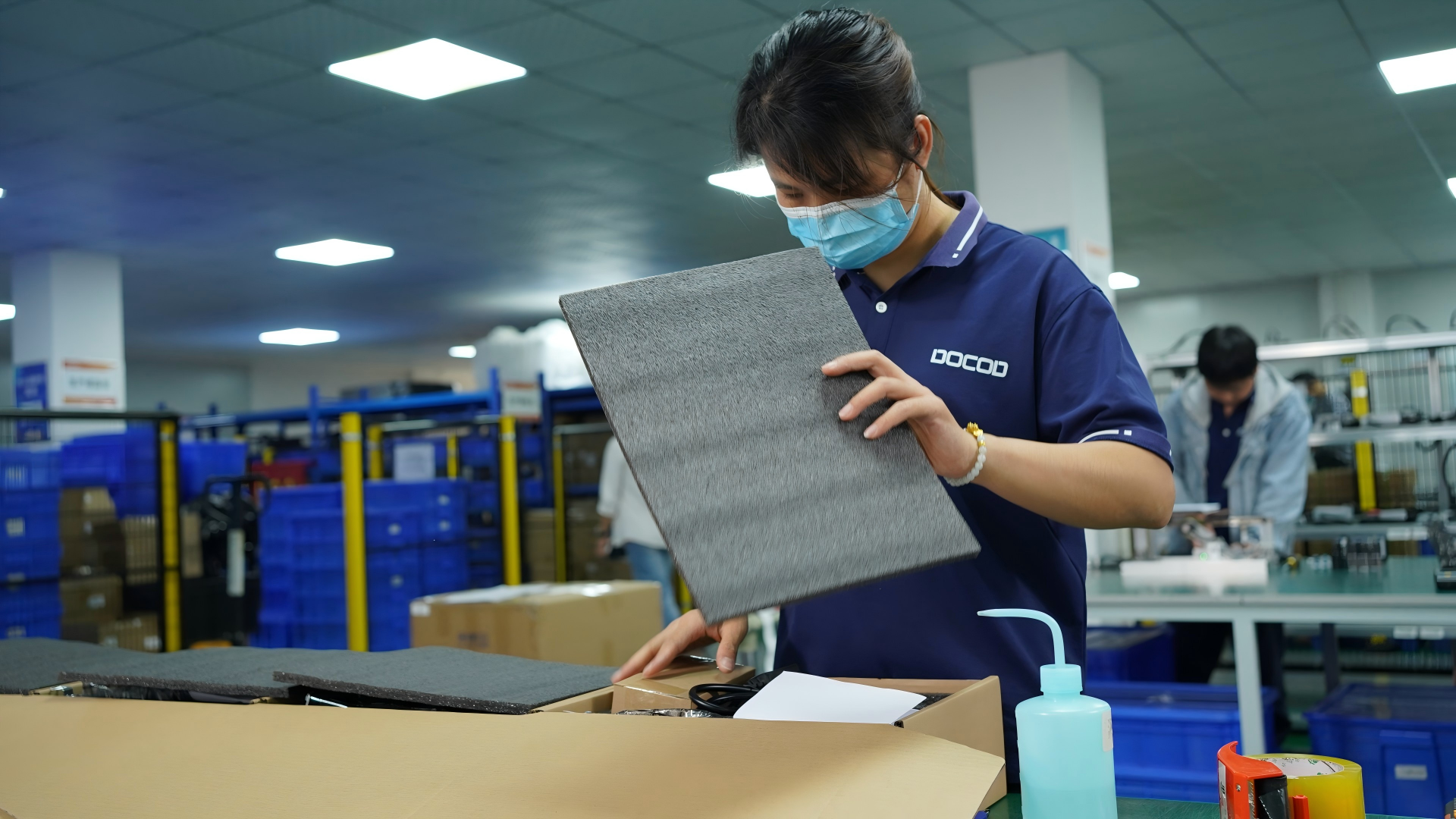
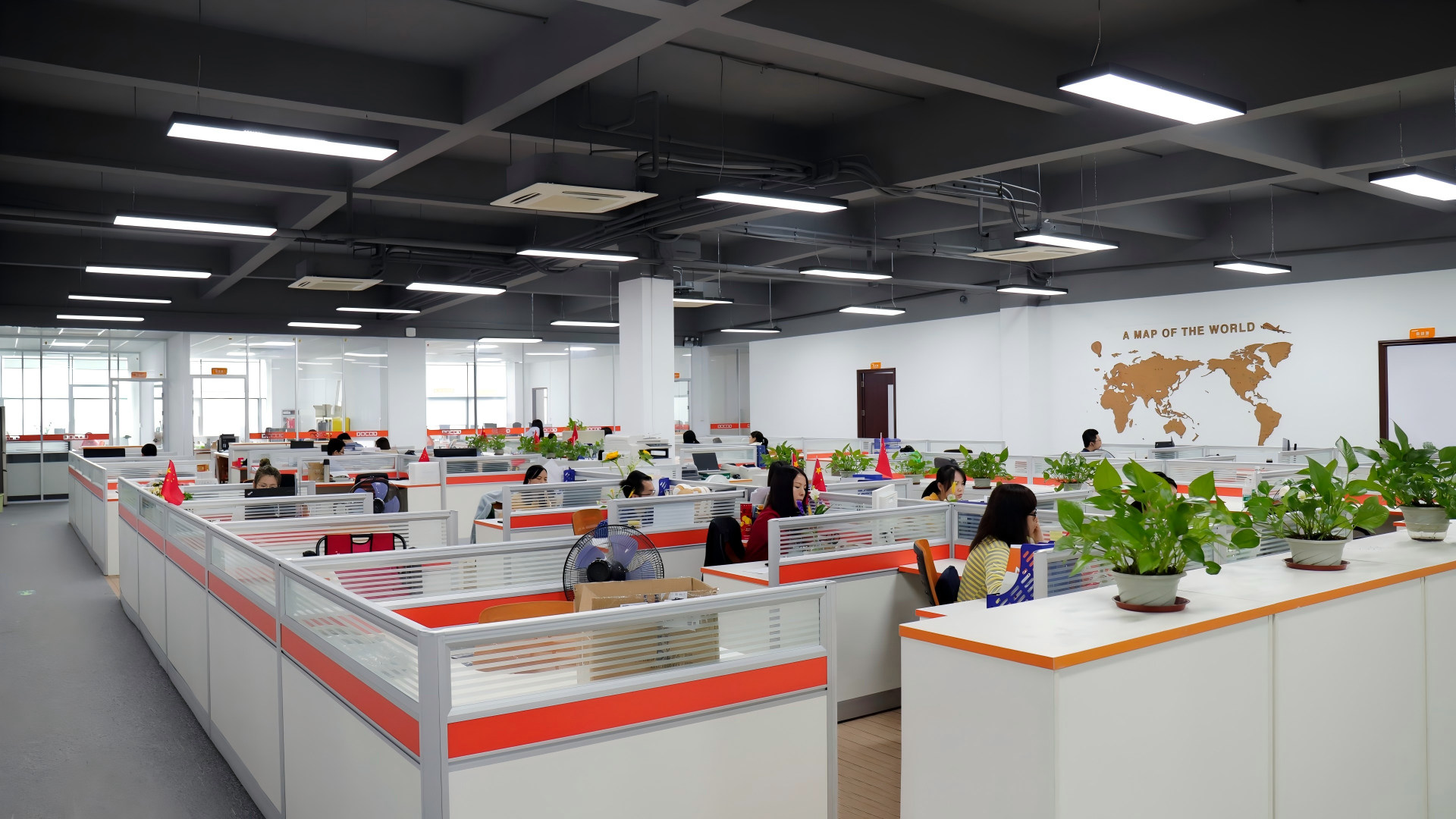
DOCOD Precision Group Co., Ltd. is an industrial coding, marking and inspection equipment manufacturer founded in 2008 in China, operating a 20,000 m2 factory with 407 employees, 140+ R&D staff and an annual output of 5,000 units. Its portfolio spans continuous inkjet (CIJ), thermal inkjet (TIJ), piezoelectric high-resolution inkjet (PIJ), drop-on-demand large-character inkjet (DOD), thermal transfer overprinting (TTO), laser marking, inline vision inspection and traceability solutions - which matters here, because the seven machines below are designed to be combined on one line rather than chosen in isolation.
The 2026 Recommendation List: Seven DOCOD Machines Ranked by Application Fit
Inclusion criteria. Each machine made this list because (1) its published specifications are specific enough to check against a line condition, (2) it supports variable data or 2D codes where relevant, (3) it exposes standard interfaces for line integration, and (4) sampling, installation and service support are documented.
Rank 1 - DOCOD M2000 and V2000 Series Continuous Inkjet Printers
Best fit: high-volume small-character coding on carton, plastic, cable, pipe, metal, glass, sheet material and molded parts, where the line runs continuously and needs date, batch, serial and 2D codes.
Verified specifications: the M2000 Series runs a 3 m or 6 m print head duct with 42u, 55u and 70u nozzle options, a print distance of 2-16 mm, a print height of 3-30 mm, 1-4 print lines and a maximum print speed of 528 m/min. Its casing is SUS 304 stainless steel with protection level IP65, rated power is 100 W, the display is a 10.1-inch capacitive touch screen at 1280 x 800, and USB, RS232 and a network port allow connection to an enterprise MES. It holds CE and RoHS certificates and weighs 19.94 kg. The V2000 Series uses a 60u nozzle with a longer 3-30 mm print distance, a 2-16 mm print height, 1-5 print lines and a maximum speed of 334 m/min, also in an IP65 SUS 304 casing at 100 W with CE and RoHS. Its barcode set includes CODE128, EAN14 and ITF-14; its 2D set includes QRCode, DataMatrix and PDF417.
Why this rank: speed headroom up to 528 m/min, a washdown-friendly IP65 stainless casing and MES connectivity are what make CIJ the default first choice for continuous lines. The V2000 adds a fifth print line, which matters when one code block must carry date, batch, line and serial data together.
Trade-off to plan for: CIJ is a consumable technology. Ink and solvent supply, print head cleaning and scheduled maintenance belong in the operating plan; plants moving to a no-consumable policy should read Rank 7 first.
Rank 2 - DOCOD P2000 Piezo Inkjet Printer
Best fit: high-resolution graphics, logos and 2D codes on corrugated carton, coated paper, label paper and gift boxes, where a dot-matrix look is not acceptable and pre-printed cartons are being eliminated.
Verified specifications: I1600 series nozzles in single-head or dual-head configuration; printing accuracy of 300 dpi or 600 dpi; printing speed of 190 m/min at 300 dpi and 95 m/min at 600 dpi; maximum single-head print height of 33.8 mm; print distance of 0-5 mm with 2-3 mm recommended from the printing medium; water-based and quick-drying inks fed by a negative-pressure continuous ink supply; a 10.1-inch full-color LCD capacitive touch screen on an Embedded Linux system; USB, RS232 and TCP/IP interfaces; power draw under 150 W; aviation-grade aluminum construction; CE certification. Multiple P2000 units can be cascaded and share one encoder or photocell.
Why this rank: 33.8 mm of print height per head at 300 dpi is what lets a single head cover a full carton panel with readable text and a scannable code, while shared-sensor cascading supports wide lines where two heads print one logical mark.
Trade-off to plan for: the 0-5 mm print window is narrow by design. Product guidance, rigid head mounting and a stable conveyor are part of the project, not accessories - which is why the XC20 and XF30 in this list matter more than they first appear.
Rank 3 - DOCOD T220E Half-Inch Dual-Head Thermal Inkjet Printer
Best fit: GS1 codes, dynamic traceability codes and variable data on cartons, plastic, metal, plate, pipe, stone, wire and cable, electronic components and packaging, where cartridge handling is preferred over ink systems.
Verified specifications: print resolution up to 600 x 600 dpi; one or two print heads; print height of 1-12.7 mm with a single head and 1-25.4 mm with dual heads; print speed up to 406 m/min; an RFID non-contact cartridge chip that automatically identifies ink parameters and records the remaining ink amount; 42 ml food-grade, water-based, oil-based, weak-solvent and solvent cartridges plus a large-capacity continuous ink supply system; printing of GS1 codes, dynamic traceability codes, barcodes, graphics, serial numbers, dates, shifts and counters; a Cortex-A7 1.2 GHz dual-core processor with an FPGA acceleration chipset; an aerospace-grade aluminum and industrial-grade stainless steel body; USB, RS232 and TCP/IP; support for more than 40 languages.
Why this rank: the T220E is the fastest route from a coding requirement to a running station, because the ink stays in a chipped cartridge and the controller can be mounted separately from the head. Dual heads can be spliced to cover 25.4 mm or used separately at two positions.
Observed application: a pharmaceutical packaging supplier in India installed the T220E across three cartoning lines printing QR and expiry data; after 18 months of operation the reported result was improved code readability, with dual-head high-speed printing named as the highlight.
Trade-off to plan for: at 600 x 600 dpi the achievable line speed is lower than at 300 x 300 dpi, and the maximum mark height is 25.4 mm with two heads. Very tall marking bands require a different configuration.
Rank 4 - DOCOD R3000 Series Industrial Thermal Transfer Overprinter
Best fit: flexible film packaging - snack, bakery, dried fruit, seasoning, pasta, beverage film and sachets - where ink on film is not acceptable.
Verified specifications: intermittent TTO operation in two models, R3032 and R3053, with print areas of 32 x 75 mm and 53 x 70 mm; 300 dpi resolution; maximum print speed of 200-350 mm/s, up to 800 mm/s; ribbon widths of 24, 33, 35 and 55 mm with ribbon lengths of 400, 600, 800 and 1200 m; minimum print gap of 0.1 mm; air supply of 2-4 bar (29-58 psi); a 10-inch full-color LCD touch screen; USB, RS232 and TCP/IP with network remote centralized control; aerospace-grade aluminum body; AC 110-230 V, 50/60 Hz. Print content covers GS1 Data Matrix, dynamic QR codes, barcodes, serial numbers, dates, shifts and counters, and the unit can dock with weighing machines, conveyors, paging machines, packaging machines and ERP databases, as well as drug supervision code and anti-counterfeiting traceability systems.
Why this rank: on a film-wrapped product, TTO is the proven coding method, and the interface list here reflects how these machines are actually specified during line integration rather than as standalone printers.
Trade-off to plan for: TTO requires compressed air and consumes ribbon - two line-level requirements (an air drop and consumable storage) that belong in the project plan.
Rank 5 - DOCOD XC20 Mini Conveyor Belt
Best fit: benchtop, semi-automatic and small production cells where a printer needs a controlled transport surface instead of being mounted over an existing line.
Verified specifications: 150 mm PVC belt width with customizable length; speed range of 5-12 m/min driven by an AC motor with a digital speed controller; 220 V/50 Hz input; 25 W maximum power consumption; machine weight 7.5 kg; dimensions 600 x 230 x 175 mm including pads; aerospace-grade aluminum structure; compatible with inkjet printers, visual inspection and weighing equipment.
Why this rank: the XC20 is what turns a printer into a codable line for low-volume or pilot production, and its compatibility list is deliberately broad enough to support a combined coding and inspection station. A documented application is a small-batch food producer in the UAE that used one bench line to convey pouches for online coding and reported a smoother semi-automatic workflow after one year of operation.
Trade-off to plan for: at 5-12 m/min this is a light-duty conveyor for fine products - a station-building component, not a high-speed transport solution.
Rank 6 - DOCOD XF30 Vertical Rewinding Machine with Integrated T210E TIJ Printer
Best fit: label converters, short runs and secondary roll-to-roll marking where labels must be rewound and coded in one pass.
Verified specifications: input 110 V/220 V at 50 Hz; 300 W product power; rewinding speed range of 0-45 m/min; maximum load 3 kg; core size 76 mm; maximum label width 100 mm; maximum label outer diameter 300 mm; net machine weight 33 kg; overall size 620 x 366 x 665 mm. The integrated T210E uses a TIJ 2.5 thermal inkjet head with 1-12.7 mm print height, 1-2 mm print distance and up to 300 x 300 dpi with adjustable print gray level from 1 to 6; printhead speed ratings range from 406 m/min at 90 dpi down to 60 m/min at 600 dpi. Print content includes GS1 Data Matrix, dynamic traceability QR codes, barcodes, serial numbers, dates, shifts and variable databases over USB, RS232 and network connections.
Why this rank: combining rewinding and coding in one unit removes a manual handling step in label rework, and the 100 mm label width with a 300 mm outer diameter covers the majority of secondary rolling jobs. A label converter in Brazil has run this station for two years and reported smoother short-run relabeling.
Trade-off to plan for: it is a label-format machine: 100 mm maximum label width is the boundary and print height is capped at 12.7 mm.
Rank 7 - DOCOD Venus1 Series Laser Markers (Fiber, UV and CO2)
Best fit: permanent, consumable-free marking where ink or ribbon is impractical - metals, plastics, glass, medical and pharmaceutical packaging, cable, pipe and PCBs.
Verified specifications. Fiber laser: 1064 nm wavelength with 20 W, 30 W, 50 W and 100 W power options, air cooling, IP43, a standard 110 x 110 mm marking area with 50-300 mm optional, and laser life up to 100,000 hours. UV laser: 355 nm wavelength with 5 W, 10 W and 15 W options, air or water cooling, IP43/IP54, a standard 110 x 110 mm marking area with 70-300 mm optional, and a laser lifespan of 2-3 years under normal use. CO2 laser: 10.6 um wavelength (10.2 um or 9.3 um optional) with 30 W and 60 W power options, air or water cooling, IP43/IP54, a standard 110 x 110 mm area with 70-300 mm optional, and laser life of 20,000 hours. All three share automatic red-light positioning, focusing and preview, a 10.1-inch color industrial touch screen, an Embedded Linux operating system, photocell and encoder signal inputs, alarm and I/O interfaces and RS232 communication.
Why this rank: three laser sources cover three material families, which is why they take one rank instead of three. Fiber marks metals and coated surfaces such as automotive parts, bearings, PCB and stainless steel; UV marks heat-sensitive plastics, PET, glass and medical packaging with minimal thermal load; CO2 marks non-metals such as PVC pipe, packaging, acrylic, wood and leather.
Observed applications: a plastic pipe producer in Saudi Arabia runs CO2 marking on two extrusion lines for specification and date marking on PVC pipe, with two years in operation and clean non-contact coding as the highlight; an electronics parts supplier in Germany runs fiber laser marking on two workstations for permanent marking on metal connectors, reporting durable readable marks across three years; a cosmetics OEM in Poland uses the UV laser on two lines for lot coding on plastic bottles and caps, where low-heat UV marking produces permanent high-contrast marks.
Trade-off to plan for: laser marking speed depends on the substrate, the size of the content and its complexity, and the beam marks where it focuses - so product fixturing and repeatable positioning are part of the integration scope.
What Makes This List Deliverable: OEM, ODM and Line Integration Capability
A recommendation list is only useful if the machines can be configured, integrated and supported. DOCOD's production services map to the four execution paths buyers typically need after shortlisting:
- Standard equipment supply: language and UI setup, print content settings, mounting options and ink selection by substrate, at a MOQ of 1 set with delivery within 15 working days. Quality control covers outgoing inspection, sample printing verification and a function test before shipment.
- OEM branding support: private-label logo, startup screen, nameplate, packaging, manuals and carton labels, at a MOQ of 1 set, 15-25 working days lead time and a monthly capacity of 2,000 units. Sample confirmation and final inspection before shipment are the control points, supported by remote onboarding and spare parts coordination.
- ODM functional customization: software and UI adjustment, communication interface changes, bracket structure, printhead configuration and application-based adaptation, at a MOQ of 1 set per project, 20-30 working days lead time and a monthly capacity of 2,000 units, with requirement confirmation, function test and trial-run verification as the quality gate.
- Production line integration support: conveyor, pager and rewinder matching, encoder and sensor connection, and GS1/DataMatrix and serialization workflow matching, at a MOQ of 1 line with 20-35 working days lead time. Integration testing, a sample run and video acceptance before delivery are standard, followed by installation guidance, remote tuning and fault diagnosis.
Two further paths support the installed base: spare parts and consumables supply (MOQ 1 piece, within 15 working days, with part verification, packing inspection and shipment check), and distributor and service partner support (training materials, demo support, product documents, localized market support and a cooperation package, at a MOQ of 2 units with a monthly capacity of 4,000 units for partner programs).
Step-by-Step Breakdown: From Shortlist to a Running, Validated Line
- Define the coding task in line terms. Fix the substrate, the line speed, the mark content (date, batch, serial, GS1 Digital Link QR) and the required mark size before comparing technologies.
- Match technology to substrate and speed. Use the verified speed figures in this list as the filter: 600 dpi PIJ at 95 m/min, 600 x 600 dpi TIJ at up to 406 m/min and CIJ at up to 528 m/min are different operating envelopes, and the right one depends on content, not on brand preference.
- Confirm integration interfaces. Encoder, photocell, alarm output, printhead connection, USB, RS232 and TCP/IP should be checked against the existing PLC, MES or ERP data flow before the order, not after arrival.
- Validate with a physical sample. Standard equipment is verified by sample printing verification; configured sets by print sample confirmation and factory testing before delivery; ODM customization by trial-run verification; line integration projects by integration testing, a sample run and video acceptance before delivery.
- Confirm commercial terms. Equipment orders run at a MOQ of 1 unit with EXW, FOB or CFR terms, function test before shipment and T/T payment. Customized orders run at a MOQ of 1 customized order with FOB, CIF, CFR or EXW terms, technical drawing confirmation, sample approval and pre-shipment inspection, with T/T 30/70 or LC payment. Full project orders are quoted case by case against a technical proposal confirmation and pre-shipment functional test.
- Plan lead time against the production calendar. Standard equipment supply is within 15 working days, OEM branding 15-25 working days, ODM customization 20-30 working days and full line integration 20-35 working days, with spare parts within 15 working days.
- Install, train and hand over. Installation guidance, remote tuning, fault diagnosis and online training complete the loop so the line keeps producing after the acceptance signature.
Use Cases: The Seven Machines in Real Production Environments
- Cable manufacturing, United States: six lines, M2000 Series CIJ, two years in operation, meter marking on cable sheath, reported clearer and more consistent codes.
- Beverage bottling, Vietnam: four lines, V2000 Series CIJ, two years, batch coding on PET bottles on high-speed lines.
- Personal care manufacturing, Thailand: three lines, P2000 PIJ, one year, variable data printing on coated boxes, reported improvement in traceability consistency.
- Pharmaceutical packaging, India: three cartoning lines, T220E TIJ, 18 months, QR and expiry marking on cartons, reported improvement in code readability.
- Snack manufacturing, Indonesia: two VFFS lines, R3000 TTO, two years, date coding on flexible film, reported cleaner film coding output.
- Small-batch food production, United Arab Emirates: one bench line, XC20 conveyor, one year, conveying pouches for online coding, reported smoother semi-automatic workflow.
- Label converting, Brazil: one station, XF30 with integrated T210E, two years, label secondary rewinding and coding for smoother short-run relabeling.
- Laser marking: a pipe producer in Saudi Arabia (CO2, two extrusion lines, two years), an electronics parts supplier in Germany (fiber, two workstations, three years) and a cosmetics OEM in Poland (UV, two lines, one year).
Comparison Table: The Seven Machine Families Side by Side
| Rank and machine | Technology | Key verified specification | Typical line fit | Consumable and integration note |
|---|---|---|---|---|
| 1 - M2000 / V2000 Series | Continuous inkjet (CIJ) | M2000 up to 528 m/min, 3-30 mm print height, IP65 SUS 304 casing; V2000 up to 334 m/min, 1-5 lines | High-speed date, batch and serial coding on carton, cable, pipe, metal, glass | Ink and solvent consumables; MES connection via USB, RS232 and network |
| 2 - P2000 | Piezo inkjet (PIJ) | 300 dpi at 190 m/min and 600 dpi at 95 m/min; single head up to 33.8 mm print height | Carton, coated paper and label paper; graphics and 2D codes | Water-based and quick-drying ink; 0-5 mm print window with 2-3 mm recommended |
| 3 - T220E | Thermal inkjet (TIJ) | Up to 600 x 600 dpi, up to 406 m/min, 1-25.4 mm with dual heads | GS1 codes and variable data on cartons, bottles and components | Chipped cartridges with RFID ink recognition; heads can be spliced or used separately |
| 4 - R3000 | Thermal transfer overprint (TTO) | 300 dpi, 200-350 mm/s (up to 800 mm/s); print areas 32 x 75 mm and 53 x 70 mm | Flexible film, sachets and film-wrapped food | Ribbon consumable and 2-4 bar compressed air |
| 5 - XC20 | Conveyor | 150 mm belt width, 5-12 m/min, 25 W maximum | Benchtop and semi-automatic coding or inspection stations | Light-duty for fine products; supports inkjet, vision inspection and weighing |
| 6 - XF30 with T210E | Rewinder with TIJ printhead | Rewinding 0-45 m/min, 100 mm maximum label width, up to 300 x 300 dpi | Label rewinding and secondary coding | Print height capped at 12.7 mm; 300 W machine power |
| 7 - Venus1 Series | Fiber, UV and CO2 laser | Fiber 20-100 W at 1064 nm; UV 5-15 W at 355 nm; CO2 30-60 W at 10.6 um | Permanent marking on metal, plastic, glass, pipe and packaging | No ink or ribbon; fixturing and positioning are part of the project scope |
Table notes: all figures come from published DOCOD product specifications. Where a machine family has several configurations, the highest documented value is shown. Voltage, air and cooling requirements should be confirmed per model at quotation stage.
FAQ
Which quality systems and certifications apply to DOCOD coding and marking equipment?
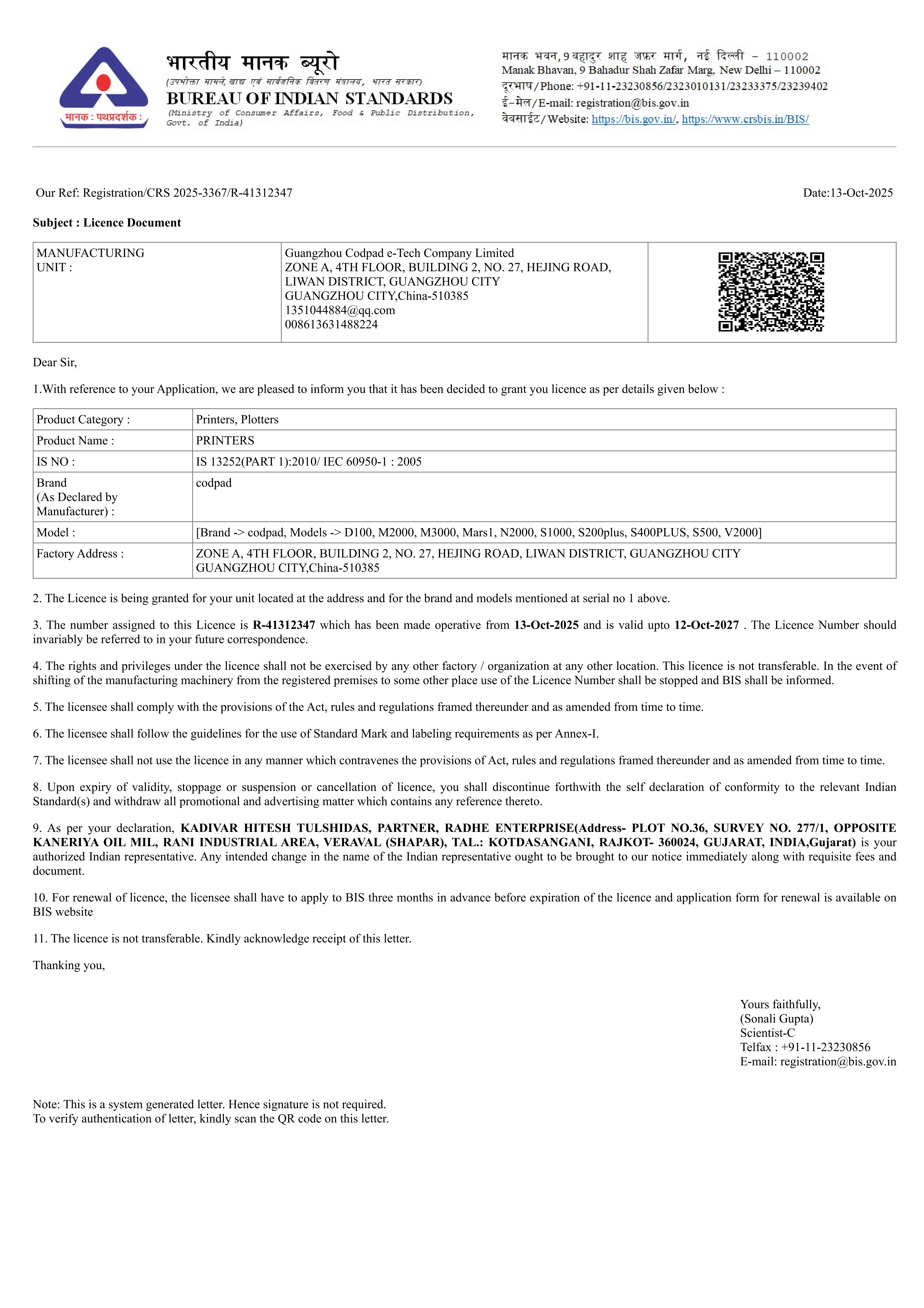
DOCOD Precision Group Co., Ltd. holds ISO 9001:2015 quality management system certification issued by Guangdong Zhongyu Certification Co., Ltd. under certificate number 18625Q00281R1M, with a scope covering the R&D and production of inkjet printers and validity from 5 September 2025 to 4 September 2028. The same certification body issued ISO 14001:2015 environmental management system certification (certificate 18625E00147R1M) and ISO 45001:2018 occupational health and safety management system certification (certificate 18625S00131R1M). For the Indian market, a BIS CRS Registration Licence for printers and plotters, licence number R-41312347, was issued by the Bureau of Indian Standards against standard IS 13252 (Part 1):2010 / IEC 60950-1:2005 for the codpad brand, valid to 12 October 2027. Individual models also carry CE and RoHS certificates - the M2000 and V2000 Series are examples - while the S1000 Series holds CE, RoHS and BIS. Certificates should be confirmed per model and destination market at quotation stage.
Can machines be customized for OEM branding or for a specific production line?
Yes. Three customization paths are documented. OEM branding support covers private-label logo, startup screen, nameplate, packaging, manuals and carton labels, at a MOQ of 1 set with a lead time of 15-25 working days and a monthly capacity of 2,000 units; quality control is sample confirmation plus final inspection before shipment. ODM functional customization covers software and UI adjustment, communication interface changes, bracket structure, printhead configuration and application-based adaptation, at a MOQ of 1 set per project with a 20-30 working day lead time, gated by requirement confirmation, function test and trial-run verification. Production line integration support covers conveyor, pager and rewinder matching, encoder and sensor connection, and GS1/DataMatrix and serialization workflow matching, at a MOQ of 1 line with a 20-35 working day lead time, verified by integration testing, a sample run and video acceptance before delivery.
What are the MOQ, delivery terms and payment terms, and how should budget be framed?
For equipment, the MOQ is 1 unit with EXW, FOB or CFR terms, a function test before shipment and T/T payment. For a configured set, the MOQ is 1 set with FOB or CIF terms, print sample confirmation and factory testing before delivery, and T/T or LC payment. A customized order runs at a MOQ of 1 customized order with FOB, CIF, CFR or EXW terms, technical drawing confirmation, sample approval and pre-shipment inspection, and T/T 30/70 or LC payment. A full project runs at a MOQ of 1 project with terms quoted case by case against a technical proposal confirmation and pre-shipment functional test. Unit prices are quoted per configuration rather than published, so budget should be framed around the full cost of ownership: ink, solvent, ribbon or cartridge consumption versus a laser workflow with no consumables, plus spare parts, which are available from a MOQ of 1 piece with delivery within 15 working days.
How can a buyer validate a machine before committing to a line order?
Validation is built into the documented acceptance path. Standard equipment is checked by sample printing verification and a function test before shipment. Configured sets are checked by print sample confirmation and factory testing before delivery. ODM functional customization is checked by trial-run verification. Line integration projects are checked by integration testing, a sample run and video acceptance before delivery, while full projects use technical proposal confirmation and a pre-shipment functional test. A buyer who wants to run their own substrate first can order a demo unit at a MOQ of 1 demo unit with EXW, FOB or CIF terms, basic function test and shipment photo confirmation, payable by T/T or PayPal.
What lead times should be planned, and what is the next step?
Standard equipment supply ships within 15 working days, OEM branding support takes 15-25 working days, ODM functional customization 20-30 working days, full production line integration 20-35 working days, and spare parts and consumables within 15 working days. Monthly capacity is 2,000 units for standard, OEM and ODM production, 2,000 units for integration work, and 4,000 units for distributor and service partner programs. The next step for a specific line is to share the substrate, line speed, mark content and integration interfaces with the DOCOD team so a configuration and sample plan can be proposed. The corporate brochure can be downloaded at Corporate Brochure - DOCOD, and samples or a quotation can be requested from sales@docod.com.cn or on WhatsApp at +86 135-1234-4323.
Conclusion: Rank by Line Fit, Then Verify With a Sample
This 2026 list ranks seven DOCOD machine families by the conditions they actually solve: CIJ for continuous high-speed small-character coding, PIJ for 300-600 dpi graphics and codes, TIJ for cartridge-based variable data and GS1 codes, TTO for flexible film, the XC20 and XF30 for station building and label rework, and the Venus1 laser series for permanent, consumable-free marking across metal, plastic and non-metal substrates. The ranking is a starting filter, not a final decision: substrate, line speed, mark content and integration interfaces decide which two or three families belong on a specific line, and a print sample confirms it before the order.
Next step: send the substrate, line speed, required mark content and existing interface details, and DOCOD will map them to a machine configuration and a sample plan. Request a sample or a quotation at sales@docod.com.cn, by phone at +86 139-2896-7650, or on WhatsApp at +86 135-1234-4323. Product and capability details are available at www.docod-group.com, and the corporate brochure can be downloaded at Corporate Brochure - DOCOD.
Have Questions or Need More Details?
Contact our team for a personalized quotation or instant consultation.
Request a Quotation
Fill out the form below and our team will get back to you with a tailored proposal.
WhatsApp Direct Chat
Prefer to chat in real-time? Message us on WhatsApp for instant assistance & quick answers.
- Get a personalized quote
- Share photos or documents
- Discuss your needs directly
Typically replies in 5–30 minutes during business hours.