
Ranked: Industrial Coding Equipment for Smart Manufacturing — Top Picks and Reasons
A smart manufacturing line rarely needs one coding machine. It needs the machine whose documented attributes match the substrate, speed, code type, and washdown reality of that specific station. This ranking orders industrial coding and marking systems by how precisely they fit a defined line condition, and states the recorded reason for each placement.
Ten picks are ranked below. The first four are inkjet systems that carry multi-material line responsibility; the next five are laser and thermal transfer systems chosen for a specific material or thermal constraint; the last is a line-support pair that makes semi-automatic and roll-label stations repeatable. Every specification in this article is taken from product documentation or recorded case evidence. Where a platform's strong point is application coverage rather than a numeric parameter, the ranking says so instead of filling the gap with an estimate.
Problem Definition: Why Coding Decisions Fail When They Start With Technology
Coding problems on a smart manufacturing line usually surface as a quality deviation, not as a purchasing error. A date code smears on a coated carton. A DataMatrix fails verification after the carton leaves the printer. A laser scorches the shrink film. An inkjet printhead sitting next to a washdown station corrodes within a season.
Each of these is a line-fit mismatch. The equipment was selected on technology category — inkjet versus laser — or on a single headline number such as maximum print speed, without checking whether the same device also tolerated the environment, matched the substrate chemistry, and produced a code that downstream vision inspection could read.
The practical consequence is that buyers compare devices that were never designed for the same job. A continuous inkjet printer rated for 528 m/min is not a better machine than a thermal inkjet printer rated for 406 m/min; they belong to different stations. Ranking by line fit removes that false comparison.
Industry Background: What Is Changing on Coding Lines in 2026
Three documented forces shape equipment selection right now.
Code content is shifting from 1D to 2D. GS1 Digital Link sets a Sunrise 2027 transition deadline of 31 December 2027 for retail barcodes moving from 1D barcodes to 2D QR codes (GS1 Global). Any printer specified in 2026 without a route to GS1 Digital Link QR content becomes a replacement candidate within the planning horizon.
Inkjet remains the volume technology. Fortune Business Insights places inkjet — CIJ, TIJ and PIJ combined — at 40.1% of the technology segment, and sizes the global coding and marking equipment market at USD 7.51 billion in 2025. That matters for buyers in one specific way: inkjet consumables, printheads, and spare parts are widely supported, while laser remains a targeted tool rather than a general replacement.
The purpose of the code has become traceability, not labeling. Industrial coding and marking is defined in the market as labeling, coding, and marking solutions for diverse substrates in industrial and manufacturing environments, with traceability and quality control as the core purpose (ID Technology). A code that is legible to a human but unreadable to a scanner no longer satisfies the job.
DOCOD Precision Group Co., Ltd. is an industrial coding, marking and inspection equipment manufacturer based in Guangzhou, China, founded in 2008, with a portfolio covering continuous inkjet printers (CIJ), thermal inkjet printers (TIJ), piezoelectric high-resolution inkjet printers (PIJ), drop-on-demand large-character inkjet printers (DOD), thermal transfer overprinters (TTO), laser marking machines, inline vision inspection systems, consumables and spare parts. That breadth is the reason a single-vendor ranking is possible at all: the same supplier documentation covers the inkjet, laser, thermal transfer and line-support options compared below.
Detailed Solution: Ten Systems Ranked by Line Fit
The ranking runs from the widest line responsibility to the narrowest. Positions 1 to 4 are machines that can carry multiple substrates on one line. Positions 5 to 9 are constrained by material or thermal limits by design. Position 10 is line infrastructure.
1. DOCOD M2000 Series Continuous Inkjet Printer — best fit for demanding, washdown-exposed lines
The M2000 earns the top position because its environmental specification is unusual in the category and directly answers a common failure mode. The cabinet is SUS 304 stainless steel with a protection level of IP65, which is the attribute that keeps a printer alive beside a filling head, a rinse station, or a dusty bagging line.
- Print height 3–30 mm, print distance 2–16 mm, 1–4 print lines, nozzle options 42u / 55u / 70u
- Maximum print speed up to 528 m/min; up to 24 counters
- 10.1-inch capacitive touch display at 1280 × 800, embedded Linux operating system
- USB, RS232 and network port, with connection to enterprise MES management systems
- Input 100–240V AC, rated power 100W; working environment 0–45°C, humidity 30–70%Rh; net weight 19.94 kg
- Certificates: CE, RoHS; more than 40 languages supported
Recorded evidence supports the fit: a cable manufacturer in the United States runs six lines of meter marking on cable sheath with the M2000, reporting clearer and more consistent codes, with stable pressure and easy cleaning cited as the operating strengths.
Why it ranks first: it is the pick that survives the environment while still covering carton, plastic, metal, sheet material, pipe, stone, glass, electronic components, auto parts and industrial chemical packaging on the same platform.
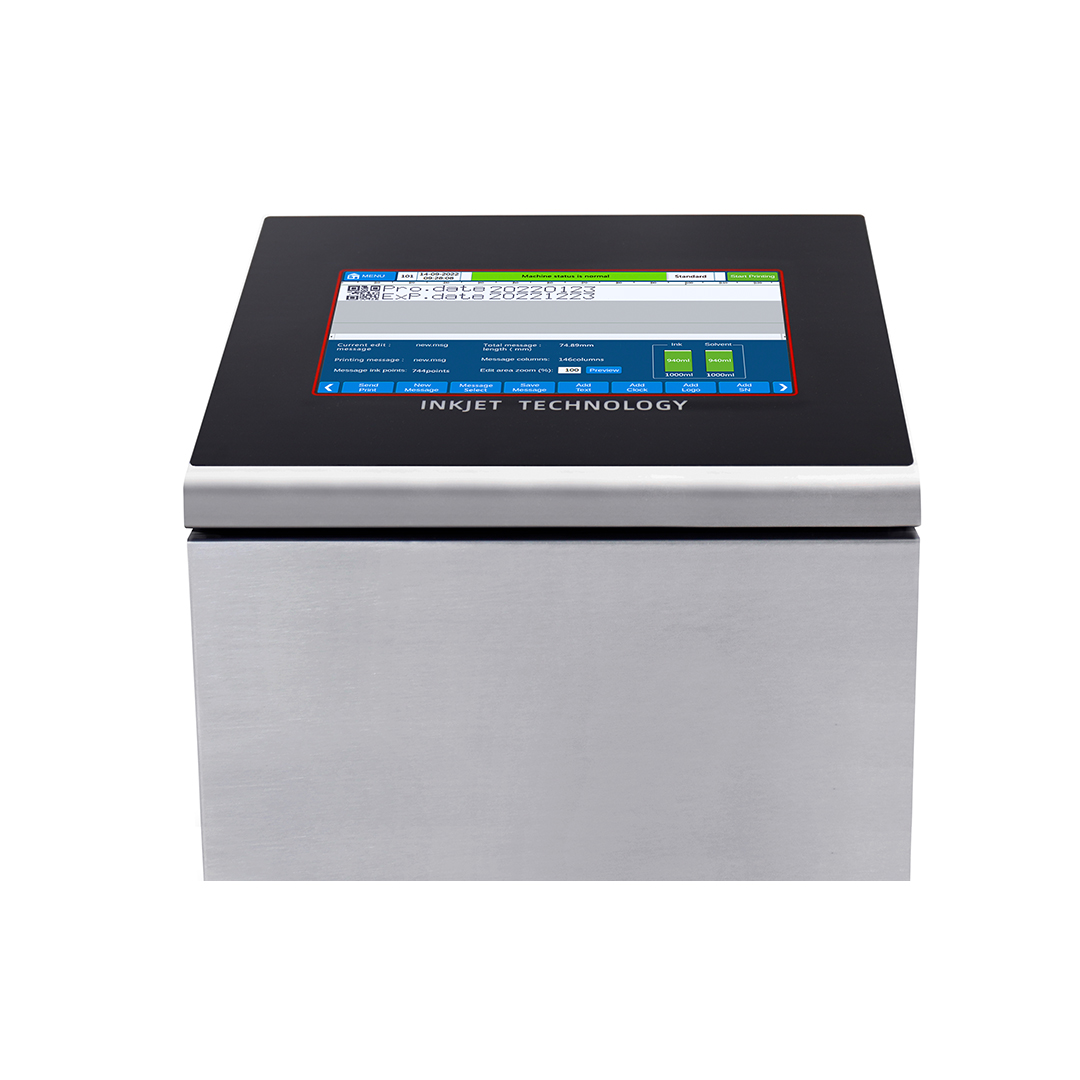
DOCOD M2000 Series CIJ: SUS 304 stainless steel cabinet, IP65 protection, 3–30 mm print height and up to 528 m/min.
2. DOCOD V2000 Series Continuous Inkjet Printer — best fit for high-speed food, beverage, daily chemical and pharmaceutical lines
The V2000 is ranked second because it is documented for the four industries where coding is continuous, regulated and visible on shelf: food and beverage, daily chemical, and pharmaceutical production, applied to carton, plastic, cable and metal.
- Documented application scope: food and beverage, daily chemical and pharmaceutical coding on carton, plastic, cable and metal
- Recorded evidence: a beverage bottling plant in Vietnam runs four lines of batch coding on PET bottles, reporting stable daily coding over a two-year period, with suitability for high-speed lines cited as the strength
Why it ranks second: it is the correct first choice when throughput and continuous uptime dominate and the substrate mix stays within carton, plastic, cable and metal. Where washdown chemistry or abrasive dust is the harder constraint, the M2000 at position 1 is the better answer.
3. DOCOD P2000 Piezo Inkjet Printer — best fit for high-resolution variable data with a verification requirement
The P2000 is a piezoelectric high-resolution inkjet printer available in single-head and dual-head configurations, operated through a 10.1-inch LCD touch screen. It ranks third because high-resolution piezo output is the format that carries dense 2D codes, small text and multi-field variable data on packaging where print area is limited.
- Single-head and dual-head high-resolution printing; 10.1-inch LCD touch screen control
- Recorded evidence: a personal care manufacturer in Thailand runs three lines of variable data printing on coated boxes, reporting improved traceability consistency
- Recorded evidence: a pharmaceutical packaging supplier in India runs three cartoning lines printing QR codes and expiry dates on cartons, reporting improved code readability
- Recorded evidence: a medical packaging project in Germany pairs the P2000 with UDI and GS1 DataMatrix coding in a closed-loop print-and-verify workflow with cartoner, scanner, vision system and reject unit
Why it ranks third: it is the recommended platform when the code itself is the quality gate — a UDI, a GS1 DataMatrix, or a dense QR that must pass inline inspection before the pack is released.
4. DOCOD T220E Half-Inch Dual-Head Thermal Inkjet Printer — best fit for 600 dpi variable data on cartons and plastics
The T220E ranks fourth on a single, decisive attribute: it reaches 600 × 600 DPI, the highest resolution in this ranking, while printing at up to 406 m/min.
- Print resolution up to 600 × 600 DPI; 1 or 2 printheads; print height 1–12.7 mm single head, 1–25.4 mm with dual heads
- Print speed up to 406 m/min; 42 ml cartridges with RFID chip that identifies ink parameters and records remaining ink
- Embedded Linux operating system; USB, RS232 and TCP/IP network port; optical sensor, encoder, alarm control output and printhead connection ports
- Controller 197 × 113 × 37 mm; printhead 174 × 68 × 54 mm; working environment 0–45°C, humidity 30–70%Rh
- Paired with the DOCOD 3BK702 half-inch black solvent quick-drying ink cartridge for plastic film and coated cartons
Recorded evidence: a regional distributor in Korea runs 50 cartridges per month on coding across plastic film and coated cartons, reporting fewer smudging complaints, with fast drying and strong adhesion cited as the strengths. A pharmaceutical packaging supplier in India uses the T220E across three cartoning lines for QR and expiry printing, reporting improved code readability with dual-head high-speed printing.
Why it ranks fourth: it is the highest-resolution inkjet pick and the correct one when a coating or film will not hold a lower-resolution code, but it does not carry the washdown protection of positions 1 and 2.
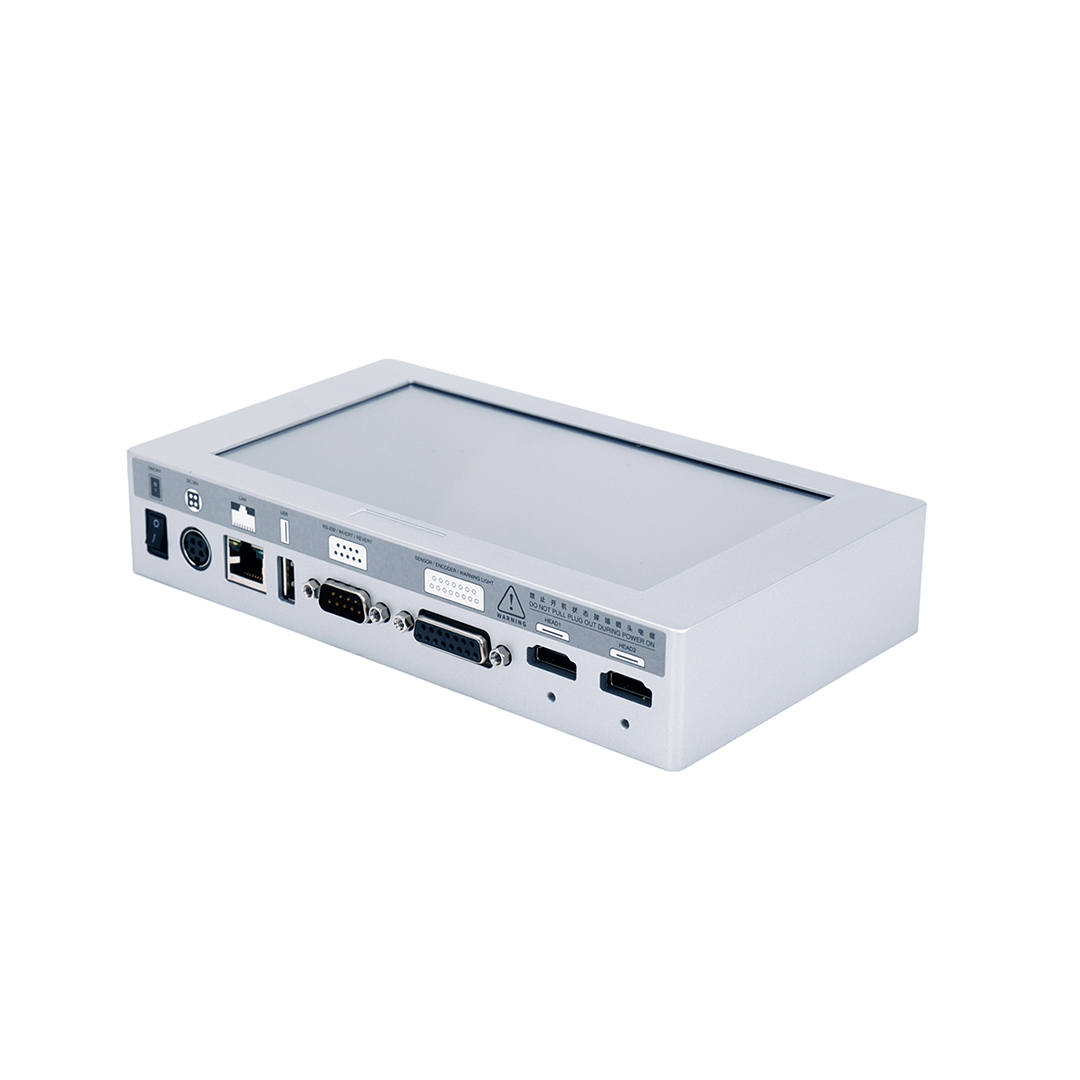
DOCOD T220E controller: dual printhead support, USB / RS232 / TCP-IP interfaces and alarm control output for line integration.
5. DOCOD R3000 Series Industrial Thermal Transfer Overprinter — best fit for flexible film and pouch lines
The R3000 ranks fifth because it addresses the material class that defeats inkjet: high-barrier film, stick packaging, sealed bags, metallized labels and decorative labels. It prints by thermal transfer in intermittent mode, so the code bonds through the ribbon rather than sitting on the surface.
- Print area 32 × 75 mm (R3032) or 53 × 70 mm (R3053); resolution 300 dpi
- Maximum print speed 200–350 mm/s, up to 800 mm/s; printing gap ≥ 0.1 mm
- Ribbon width 24 / 33 / 35 / 55 mm; ribbon length 400 / 600 / 800 / 1200 m
- 10-inch full-color LCD touch screen; USB, RS232 and TCP/IP, with network remote centralized control and docking to weighing machines, conveyors, packaging machines and ERP databases
- Air supply 2–4 bar; coding machine 7.5 kg, controller 2.4 kg
Recorded evidence: a snack manufacturer in Indonesia runs two VFFS lines with date coding on flexible film, reporting cleaner film coding output over two years, citing industrial-grade TTO performance.
Why it ranks fifth: it is a film specialist. On cartons and rigid plastics, an inkjet pick from positions 1 to 4 is the more flexible answer.
6. DOCOD L3000 Series 5W UV Laser Marking Machine — best fit for heat-sensitive packaging where contact is impossible
The L3000 is a 5W water-cooled UV laser marking machine. It ranks sixth because UV wavelength at low power produces a permanent mark on plastic packaging without the thermal load that distorts thin walls or damages pre-printed artwork.
- 5W UV laser source, water-cooled
- Contact-free marking — no ink, no ribbon, no consumable per code
- Recorded evidence: a cosmetics OEM in Poland runs two lines for lot coding on plastic bottles and caps, reporting permanent high-contrast marks, with low-heat UV marking cited as the strength
- Recorded evidence: the Germany medical packaging traceability project uses the L3000 alongside PIJ and TIJ options for UDI and GS1 DataMatrix coding on medical device packs, blister packs and cartons
Why it ranks sixth: it removes consumables and contact from the station, but it requires a fixed marking area and a stable product position, so it is a dedicated-station tool rather than a multi-substrate generalist.
7. DOCOD Venus1 Series UV Laser Marker (5W / 10W / 15W) — best fit for plastics, glass, ceramics and electronics
The Venus1 UV marker ranks seventh as a scalable UV platform. It offers 5W, 10W and 15W sources and both air-cooled and water-cooled configurations with IP43 or IP54 protection, which lets a buyer size the laser to the mark depth rather than over-specify it.
- Laser wavelength 355 nm; power 5W / 10W / 15W; air cooling or water cooling
- Standard marking area 110 × 110 mm, optional 70–300 mm; character height from 0.6 mm
- Automatic red-light positioning, focusing and preview; high-precision 2D digital scanning head
- 10.1-inch industrial touch screen with embedded Linux; AB-phase encoder support; photocell, encoder, alarm and RS232 I/O
- IP43 / IP54 rating; power 100–240V, total consumption ≤900W; ambient 0–45°C, humidity ≤95% non-condensing
- Documented materials: plastics, polymers, glass, ceramics, printed circuit boards, medical devices, food and pharmaceutical packaging, PET bags, metal caps and cosmetics packaging
Why it ranks seventh: it is the right UV specification when the substrate mix includes both polymer and glass and the line needs adjustable power headroom, but it sits behind the L3000 only because it is a broader platform rather than a single documented application fit.
8. DOCOD Venus1 Series CO2 Laser Marking Machine (30W / 60W) — best fit for non-metal extrusion, pipe and cable lines
The CO2 platform ranks eighth because it is the correct non-contact tool for continuous-length non-metal product moving at extrusion speed, and because it eliminates ink adhesion problems on difficult polymer surfaces.
- 30W and 60W CO2 laser configurations
- Recorded evidence: a plastic pipe producer in Saudi Arabia runs two extrusion lines for specification and date marking on PVC pipe, reporting clean non-contact coding, with suitability for non-metal materials cited as the strength
- Recorded evidence: an India wire, cable and pipe extrusion project specifies CO2 and CIJ options for meter marks, model information, certification marks and traceability codes synchronized to the extruder by encoder
Why it ranks eighth: on metal it is simply the wrong wavelength. Buyers specifying a mixed metal and polymer plant should pair it with the fiber option at position 9 rather than stretching it across both.
9. DOCOD Venus1 Series Fiber Laser Marking Machine (20W / 30W / 50W / 100W) — best fit for metal parts, bearings and coated components
The fiber platform ranks ninth because it is a metal specialist with a long service envelope: a 1064 nm source, air cooling, IP43 protection and a laser life of up to 100,000 hours.
- Laser wavelength 1064 nm; power 20W / 30W / 50W / 100W; air-cooled; IP43
- Standard marking range 110 × 110 mm, optional 50–300 mm; character height from 0.6 mm; unlimited marking lines
- 10.1-inch industrial touch screen with embedded Linux; automatic red-light positioning, focusing and preview
- Machine power ≤600W; power requirement 100–240V / 50–60Hz; operating 0–45°C, humidity ≤95% non-condensing
- Documented materials: metals and coatings, medical devices, automotive parts, industrial bearings, aerospace components, PCB boards, metal caps, stainless steel products, pipes and cables
- Recorded evidence: an electronics parts supplier in Germany runs two workstations for permanent marking on metal connectors, reporting durable readable marks over three years
Why it ranks ninth: it delivers permanent marks where ink will not survive abrasion or heat, but it is not a packaging technology. It earns its place as the metal-side counterpart to positions 6 to 8.
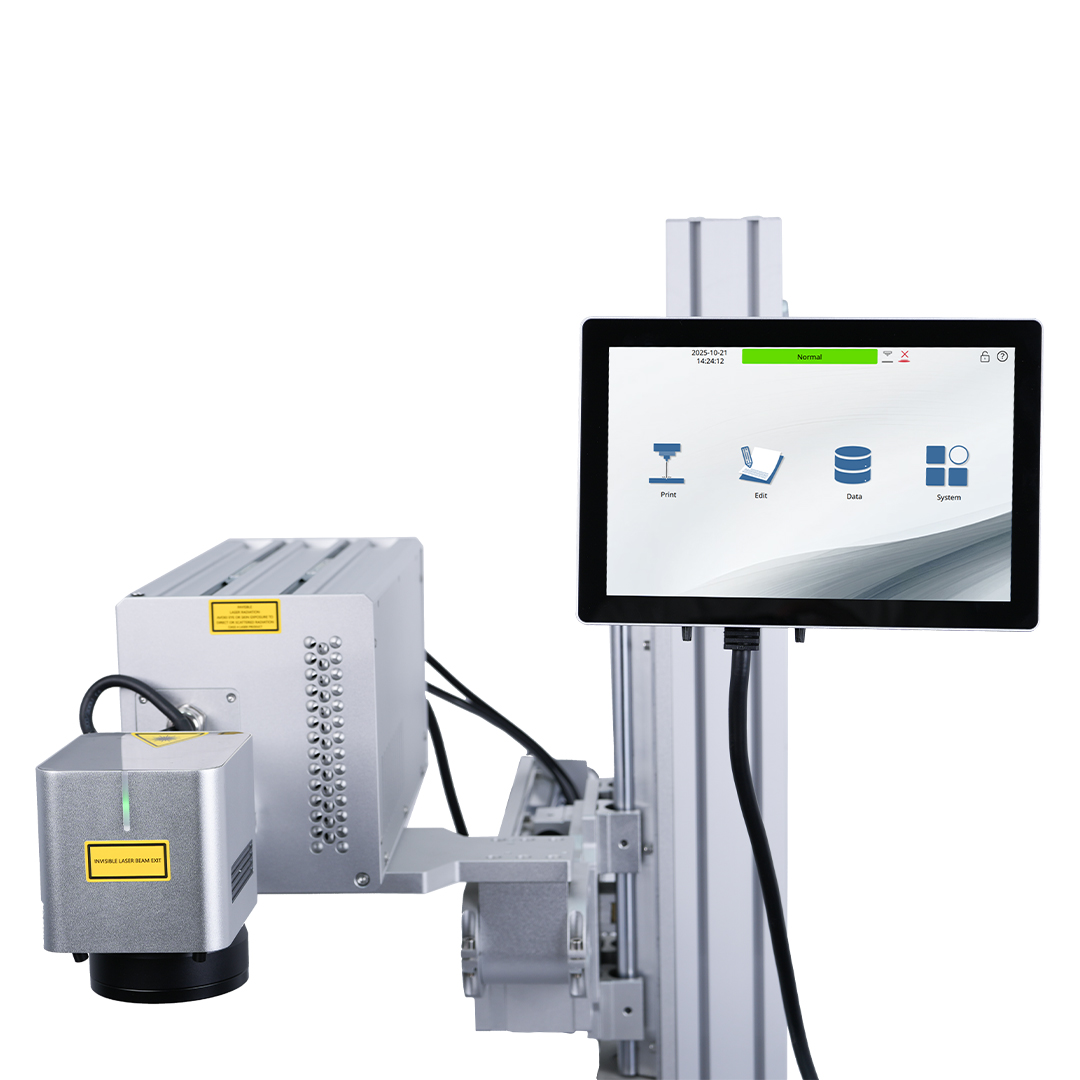
DOCOD Venus1 fiber laser: 1064 nm, 20W / 30W / 50W / 100W, air-cooled, laser life up to 100,000 hours.
10. DOCOD XC20 Mini Conveyor Belt and XF30 Vertical Rewinding Machine — best fit for semi-automatic and roll-label stations
The line-support pair ranks tenth because it does not code by itself — it makes coding repeatable at stations that would otherwise be manual. On a smart factory line, an unstable product position is the most common cause of a rejected code, and these two units solve that at low cost.
- XC20: 600 × 230 × 175 mm, 7.5 kg, 220V / 50Hz, 25W maximum, 150 mm PVC belt with customizable length, speed 5–12 m/min, aerospace-grade aluminum structure, digital display speed controller
- XC20 compatibility: suitable for inkjet printers, visual inspection, weighing and other application equipment; designed for conveying fine products
- XF30: speed 0–45 m/min, maximum load 3 kg, core size 76 mm, maximum label width 100 mm, maximum label outer diameter 300 mm
- XF30 integrated printer: T210E TIJ 2.5 printhead, print height 1–12.7 mm, print distance 1–2 mm, up to 300 × 300 DPI, RFID cartridge chip, aerospace-grade aluminum case
- Recorded evidence: a small batch food producer in the UAE runs one bench line for conveying pouches for online coding, reporting a smoother semi-automatic workflow
- Recorded evidence: a label converter in Brazil runs one station for label secondary rewinding and coding, reporting smoother short-run relabeling
Why it ranks tenth: it is infrastructure, not a marking technology. It belongs in the specification because a printer that cannot be presented a stable product at a stable speed will underperform its own datasheet.
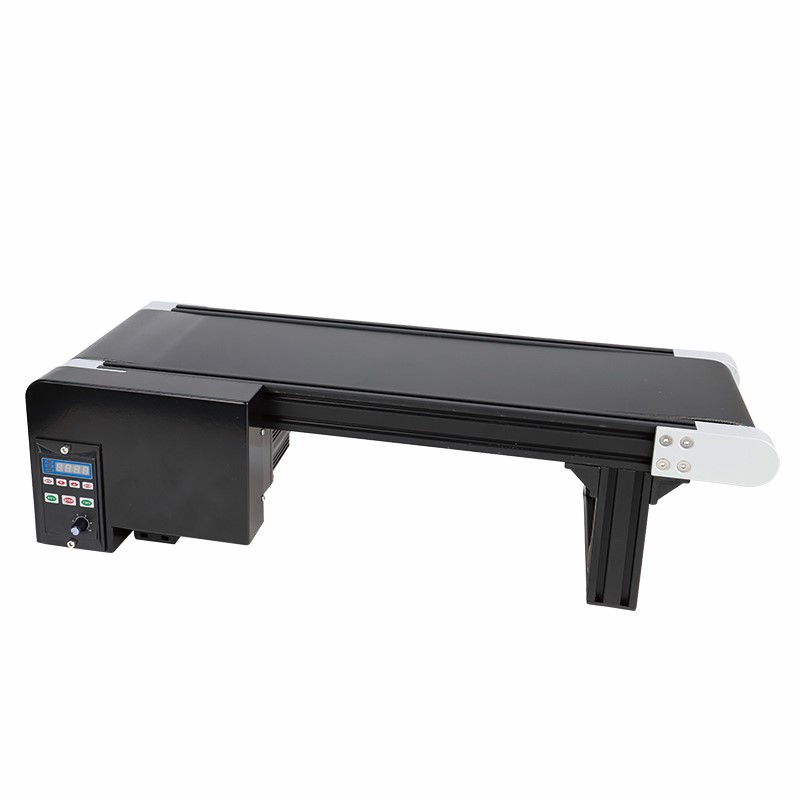
DOCOD XC20 mini conveyor: 150 mm PVC belt, 5–12 m/min, 25W, aluminum structure — used to stabilize product presentation at coding and inspection stations.
Step-by-Step Breakdown: How to Reproduce This Ranking for Your Own Line
The order above is not fixed for every plant. Apply the same six steps to a specific stations list and the ranking rebuilds itself.
- Define the substrate before the technology. Carton, plastic, metal, glass, film and cable each eliminate options. A flexible film station narrows the field to TTO or a suitable inkjet, while a metal connector station narrows it to fiber laser.
- Set the code content and density. A date and batch code needs far less resolution than a GS1 Digital Link QR or a UDI DataMatrix. Dense 2D content pushes the decision toward 600 DPI TIJ or high-resolution PIJ.
- Measure the real speed at the print point. Use the line speed at the head, not the machine's nominal rating. The M2000 is documented to 528 m/min and the T220E to 406 m/min; a slow indexing station needs neither.
- Classify the environment. Washdown, dust, humidity and temperature decide whether IP65 and SUS 304 construction is mandatory or optional. This single check moves the M2000 ahead of faster but less protected units.
- Map the integration interfaces. Confirm what the station must talk to: encoder and photocell signals, PLC or MES, ERP database, weighing machine, reject unit or vision system. Interface availability, not print quality, is the usual cause of a stalled commissioning.
- Close the loop with verification. Decide whether the code is inspected inline. Print-and-verify workflows require the printer, scanner, vision system, reject unit and database to be specified together rather than purchased in sequence.
Use Cases: Matching the Ranked Picks to Recorded Production Scenarios
Beverage and food lines
Continuous production with high throughput and frequent product changeover fits the V2000 Series, documented for food and beverage coding on carton, plastic, cable and metal. Where the line includes flexible pouches, the R3000 TTO covers the film side while the inkjet unit covers the carton and bottle side.
Pharmaceutical and medical packaging
UDI and GS1 DataMatrix requirements favor a print-and-verify architecture. The recorded Germany medical packaging project combines PIJ, UV laser and TIJ options with a cartoner, scanner, vision system, reject unit and PLC/MES connection. For carton QR and expiry printing at speed, the T220E dual-head covers up to 600 DPI at up to 406 m/min.
Wire, cable and pipe extrusion
Continuous-length marking with encoder synchronization is a CIJ or CO2 laser decision. The recorded India extrusion project uses CIJ and CO2 options on the same line type; the recorded Saudi PVC pipe producer uses CO2 for clean non-contact marking on two extrusion lines.
Cosmetics and personal care
Brand-sensitive packaging rules out harsh marking. The recorded Poland cosmetics OEM uses the L3000 5W UV laser for low-heat lot coding on bottles and caps, while the recorded Thailand personal care manufacturer uses PIJ for high-resolution variable data on coated boxes.
Automotive, electronics and metal components
Permanent identification on metal and PCB substrates points to fiber laser. The recorded Germany electronics supplier runs two fiber workstations on metal connectors; the recorded Brazil automotive parts project combines CIJ, TTO and TIJ with workholding fixtures, robots, scanners, vision inspection and a reject unit for recall management.
Building materials and chemical packaging
Dust, rough surfaces and large product size change the specification. The recorded UAE building materials project combines PIJ, CIJ and CO2 options with bagging machines, conveyors, sensors, encoders and dust covers on the same packaging line.
Comparison Table: Ranked Picks at a Glance
| Rank | System | Technology | Documented key attributes | Best line fit |
|---|---|---|---|---|
| 1 | DOCOD M2000 Series CIJ | Continuous inkjet | SUS 304, IP65, 3–30 mm height, 1–4 lines, up to 528 m/min, 10.1-inch touch screen, MES connection, CE / RoHS | Washdown-exposed, multi-substrate lines |
| 2 | DOCOD V2000 Series CIJ | Continuous inkjet | Food and beverage, daily chemical and pharmaceutical scope; carton, plastic, cable, metal | High-speed continuous beverage and consumer lines |
| 3 | DOCOD P2000 PIJ | Piezo high-resolution inkjet | Single or dual head, 10.1-inch LCD touch screen | Dense 2D codes with inline verification |
| 4 | DOCOD T220E TIJ | Thermal inkjet | Up to 600 × 600 DPI, 1–25.4 mm dual-head height, up to 406 m/min, RFID cartridges, TCP/IP | 600 DPI variable data on cartons and plastics |
| 5 | DOCOD R3000 Series TTO | Thermal transfer overprint | 32 × 75 mm or 53 × 70 mm area, 300 dpi, up to 800 mm/s, intermittent mode | Flexible film, pouches, stick packs |
| 6 | DOCOD L3000 5W UV Laser | UV laser | 5W, water-cooled, contact-free | Heat-sensitive plastic packaging |
| 7 | DOCOD Venus1 UV Laser | UV laser | 5W / 10W / 15W, 355 nm, IP43 / IP54, 110 × 110 mm standard | Plastics, glass, ceramics, electronics |
| 8 | DOCOD Venus1 CO2 Laser | CO2 laser | 30W / 60W configurations | Non-metal extrusion, pipe, cable |
| 9 | DOCOD Venus1 Fiber Laser | Fiber laser | 20W / 30W / 50W / 100W, 1064 nm, IP43, laser life up to 100,000 hours | Metal parts, bearings, coated components |
| 10 | DOCOD XC20 / XF30 | Line support | XC20: 5–12 m/min, 150 mm PVC belt, 25W. XF30: 0–45 m/min, 300 × 300 DPI T210E head, 3 kg load | Semi-automatic stations and roll-label rework |
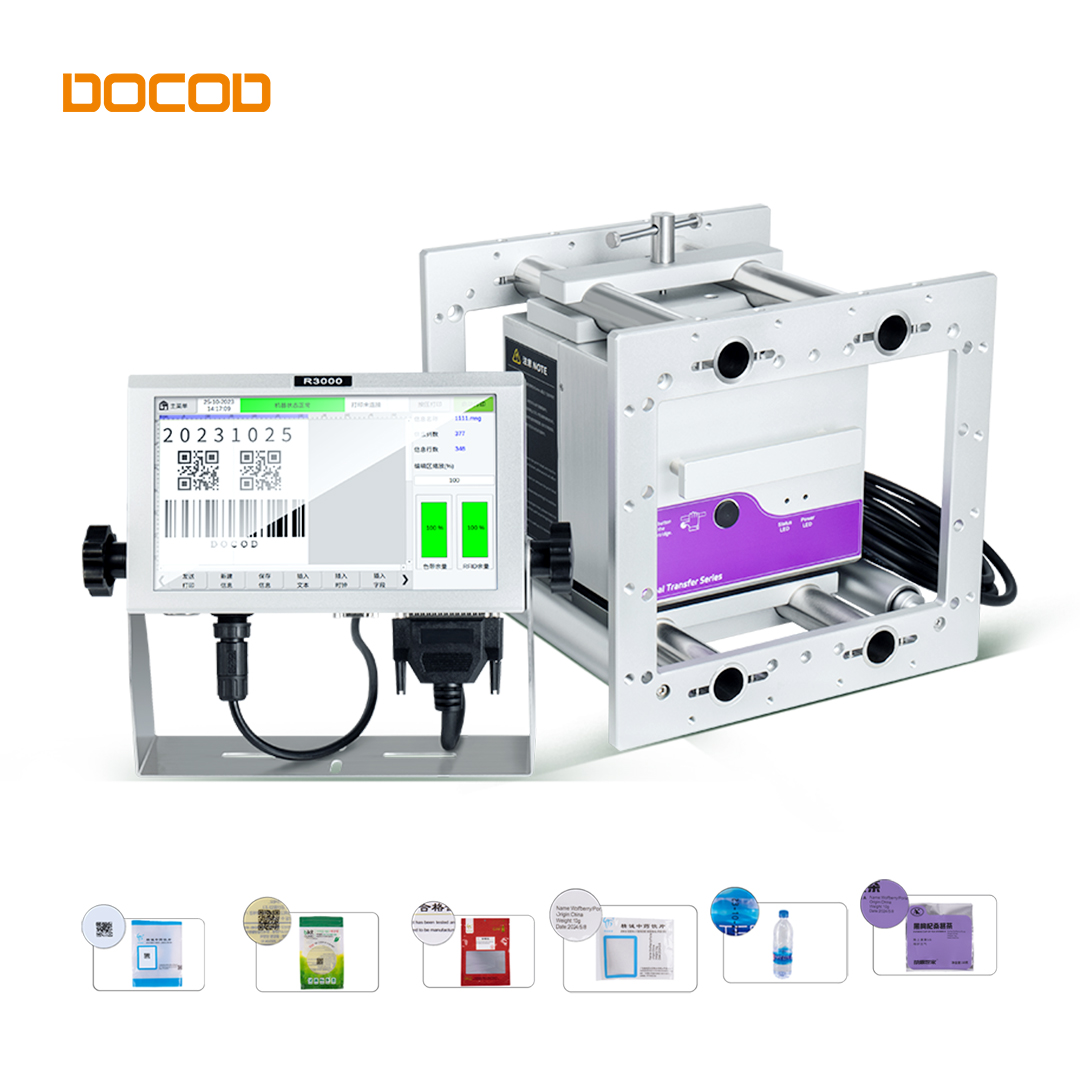
DOCOD R3000 Series TTO: 300 dpi intermittent thermal transfer, print area 32 × 75 mm or 53 × 70 mm, for flexible film and pouch lines.
FAQ
Which certifications and compliance points should a buyer verify before ordering?
Certification is configuration-specific, so ask for the certificate that matches the exact model ordered. In this portfolio, the DOCOD M2000 Series Continuous Inkjet Printer is documented with CE and RoHS, and the DOCOD S1000 Series High Speed Continuous Inkjet Printer is documented with CE, RoHS and BIS. A second compliance point is code content itself: GS1 Digital Link sets a 31 December 2027 Sunrise deadline for the retail transition from 1D barcodes to 2D QR codes, so a printer specified now should be confirmed as capable of variable 2D content rather than date and batch text only.
Can thermal inkjet really deliver 600 dpi variable data at production speed?
Yes, within the documented limits of the model. The DOCOD T220E Half-Inch Dual-Head Thermal Inkjet Printer reaches up to 600 × 600 DPI with one or two printheads, prints at up to 406 m/min, and covers a print height of 1–12.7 mm with a single head or 1–25.4 mm with dual heads. It supports multi-language text, GS1 codes, dynamic traceability codes, barcodes, graphics, serial numbers, dates, shifts, counters and variable databases. For coated films and cartons that resist standard inks, it can be paired with the DOCOD 3BK702 half-inch black solvent quick-drying ink cartridge, which is documented for fast drying and strong adhesion on plastic film and coated cartons.
How are consumables and spare parts priced and supplied over the equipment life?
Consumables and spare parts are handled as a separate supply mode with a minimum order quantity of one piece and a lead time within 15 working days. The supply scope covers compatible spare parts, ink and solvent matching, accessory kits and replacement part selection, with part verification, packing inspection and shipment check as the quality controls, plus parts matching support, replacement guidance and online response after delivery. Ink cartridges carry an RFID non-contact chip that automatically identifies ink parameters and records the remaining ink amount, which reduces mismatched-ink errors on multi-shift lines.
Can we validate a printer on our own substrate before committing to a line?
Sample and demonstration validation is part of the documented supply process. For distributor and service partner support, the scope includes demo and sample validation and cooperation requirement review. For production line integration, the process covers integration testing, a sample run, and video acceptance before delivery, followed by installation guidance, remote tuning and fault diagnosis after delivery. This is the practical way to confirm that a specific code — a GS1 DataMatrix, a small-character date code, or a high-contrast laser mark — reads correctly on your actual packaging material.
What lead times should be planned for standard equipment, OEM branding and full line integration?
Lead time depends on the supply mode rather than on the product alone. Standard equipment supply is documented within 15 working days at a minimum order quantity of one set, with a monthly capacity of 2,000 units. OEM branding support runs 15–25 working days, ODM functional customization 20–30 working days, production line integration support 20–35 working days, spare parts and consumables within 15 working days, and distributor and service partner support 15–30 days. If you are building a station schedule, send the substrate, code content and target line speed to the DOCOD application team at sales@docod.com.cn or via WhatsApp at +86 135-1234-4323 to confirm a sample run and a dated delivery plan before the equipment is ordered.
Conclusion: Rank by Fit, Then Buy
The ranking above resolves into a simple operating rule. Choose the machine by the constraint that will actually stop your line: washdown and dust push you to the M2000 at position 1; continuous high-speed beverage or pharmaceutical throughput points to the V2000 at position 2; a verified 2D code on packaging points to PIJ or 600 DPI TIJ at positions 3 and 4; a flexible film points to TTO at position 5; a heat-sensitive plastic or a metal component points to the laser positions 6 through 9; and a station that cannot present product steadily needs the conveyor or rewinder at position 10 before it needs a faster printer.
Two constraints should be checked against every placement. The first is the 31 December 2027 GS1 Digital Link deadline, which makes 2D variable data a forward-looking requirement rather than an optional feature. The second is inline verification, because a code that cannot be scanned at the reject station has not done its job regardless of how fast it was printed.
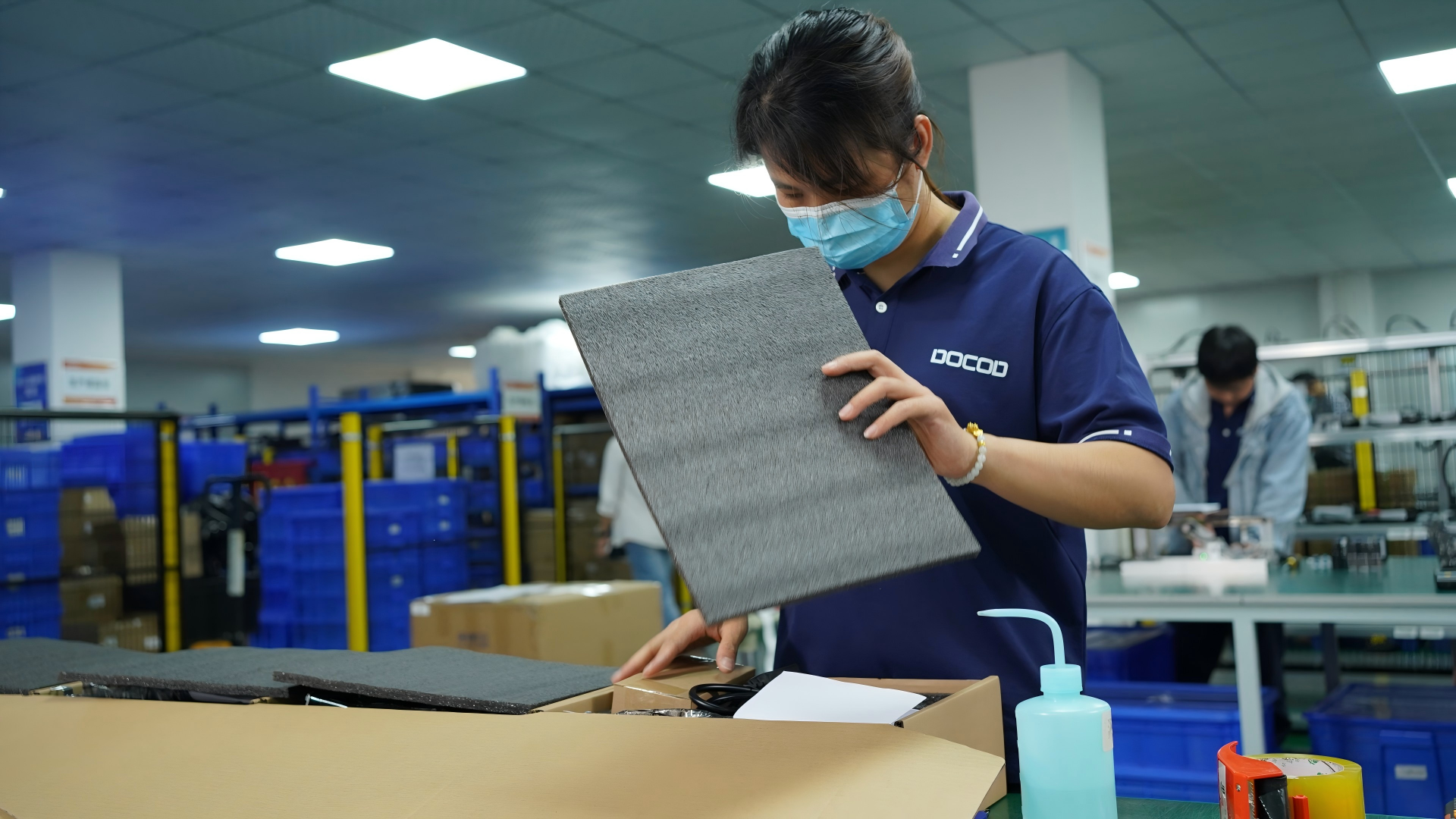
Equipment packing and inspection before shipment at DOCOD Precision Group Co., Ltd.
Next Step: Validate the Pick on Your Own Line
Send your substrate, code content, line speed and environment to the DOCOD application team. Standard equipment is documented within 15 working days, production line integration within 20–35 working days, and sample validation is part of the process.
Email: sales@docod.com.cn | Tel: +86 139-2896-7650 | WhatsApp: +86 135-1234-4323 | Website: www.docod-group.com
Download the full product and capability documentation: DOCOD Corporate Brochure (PDF)
Have Questions or Need More Details?
Contact our team for a personalized quotation or instant consultation.
Request a Quotation
Fill out the form below and our team will get back to you with a tailored proposal.
WhatsApp Direct Chat
Prefer to chat in real-time? Message us on WhatsApp for instant assistance & quick answers.
- Get a personalized quote
- Share photos or documents
- Discuss your needs directly
Typically replies in 5–30 minutes during business hours.