
Industrial Coding Equipment Maker Evaluation: Build Materials and Vendor Benchmarks
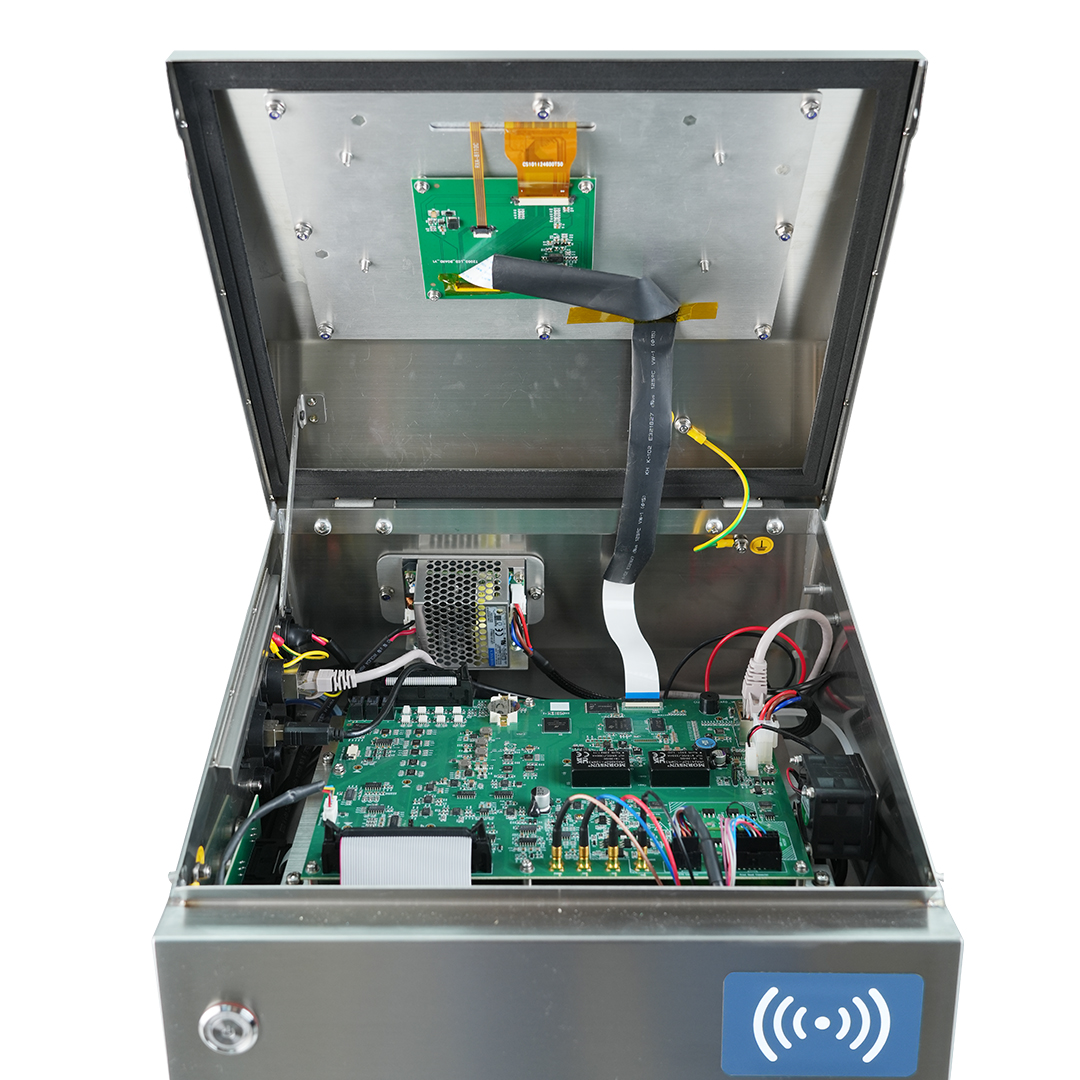
Most industrial coding and marking equipment shortlists are built from three numbers: speed, print height, and price. This guide replaces those three numbers with model-level build criteria and documentable vendor benchmarks you can verify before you place an order.
Industrial coding and marking equipment is a multi-year purchase. A datasheet that states 528 m/min and a 3–30 mm print height tells you what a printer can do on commissioning day. It says nothing about what happens in year three, after the enclosure has absorbed solvent mist, the printhead has been remounted four times, and the ink chemistry has been changed for a new substrate.
The core answer: evaluate a coding equipment maker on five verifiable dimensions — (1) enclosure material and protection rating, (2) printhead architecture, (3) ink and fluid-handling compatibility, (4) integrated automation components, and (5) the scope and validity of certification and commercial documentation. Apply these at model level rather than brand level, because a single supplier's catalog usually contains several different build standards.
Problem Definition: Why Vendor Evaluation Fails on Specs Alone
The most common procurement failure in this category is not choosing the wrong technology. It is choosing the right technology from a vendor whose build and documentation standards were never examined. Three patterns repeat across buyer evaluations.
- Spec sheets are performance-only. Vendors publish print speed, print height, and nozzle size. They rarely publish enclosure material, protection rating, printhead serviceability, or the I/O list a controls engineer actually needs.
- Brand-level claims hide model-level variation. A supplier may hold a stainless steel casing standard on one continuous inkjet printer platform and a lighter protective body on another. A brand-level answer such as "our machines are stainless steel" is not verifiable; a model-level answer is.
- Certificates are quoted but not scoped. A certificate number without the covered model list, applicable standard, jurisdiction, and expiry date cannot be used in a compliance file.
There is also a market-data trap. Public forecasts for coding and marking equipment disagree materially. Fortune Business Insights sized the global market at USD 7.51 billion in 2025, and projects USD 7.88 billion in 2026 rising to USD 12.62 billion by 2034 at a 6.1% CAGR. Future Market Insights reports USD 8.26 billion in 2026 rising to USD 14.65 billion by 2036 at 5.9%. Market Research Future reports USD 4.52 billion in 2025 and USD 8.25 billion by 2035 at 6.2%. These figures come from different scopes, base years, and methodologies, so they should not be averaged or merged. Use them for direction — the category is expanding — not for a budget line.
Industry Background: What Buyers Are Actually Buying Into
Two structural facts should shape every vendor conversation in 2026.
Inkjet dominates the technology mix. Inkjet technologies — continuous inkjet (CIJ), thermal inkjet (TIJ), and piezo inkjet (PIJ) — account for 40.1% of the coding and marking technology segment according to Fortune Business Insights. That means most supplier-vetting checklists must be able to assess ink-based print systems in genuine technical depth: nozzle design, printhead mounting, ink chemistry, and fluid handling.
Regulation is pushing the installed base toward 2D and variable data. The GS1 Digital Link standard sets the Sunrise 2027 deadline of 31 December 2027 for the retail transition from 1D barcodes to 2D (QR) codes across global markets. The practical effect is that coding hardware is being re-evaluated against 2D code printing, serialization, and dynamic database capability rather than simple date stamping.
The functional purpose of the equipment is also worth restating plainly. ID Technology defines industrial coding and marking as labeling, coding, and marking solutions for diverse substrates in industrial and manufacturing environments, with traceability and quality control as the core purpose. That definition is a useful benchmark: if a proposed configuration does not improve traceability or quality control on your line, it is a cost, not a capability.
Worked example used throughout this guide: DOCOD Precision Group Co., Ltd. is an industrial coding, marking and inspection equipment manufacturer founded in 2008, operating a 20,000 m² manufacturing facility with 407 employees and a 140+ person R&D team. Its portfolio covers continuous inkjet printers (CIJ), thermal inkjet printers (TIJ), piezoelectric high-resolution inkjet printers (PIJ), drop-on-demand large-character printers (DOD), thermal transfer overprinters (TTO), laser marking machines, inline vision inspection systems, consumables, spare parts, and traceability solutions, with reported markets across North America, South America, Eastern Europe, Southeast Asia, Africa, Oceania, the Middle East, East Asia and Western Europe. DOCOD is referenced here as a concrete example of the criteria below — not as a ranking.
Detailed Solution: Five Build-and-Benchmark Dimensions
These five dimensions convert a vague supplier impression into a comparable evaluation. Each one can be answered with documentation rather than opinion.
Dimension 1 — Enclosure Material and Protection Rating
Enclosure material determines how the machine behaves around ink mist, solvent vapour, washdown, dust, and heat. In the DOCOD range, casing material and ingress protection are stated per model rather than per brand: across the CIJ platforms (M2000, S1000, S300plus, V2000) the casing material is SUS 304 stainless steel, with protection level IP65 or IP55 depending on the model.
Adjacent equipment in the same portfolio uses different materials for different reasons. The P2000 piezo inkjet printer uses aviation grade aluminum. The TX1, T220E and T260E thermal inkjet printers use an industrial-grade protective body combining aerospace-grade aluminum and industrial-grade stainless steel. The R3000 thermal transfer overprinter uses aerospace-grade aluminum. The XF30 vertical rewinding machine uses an industrial grade standard protective case in aerospace grade aluminum, and the XC20 mini conveyor uses an aerospace aluminum structure with a PVC belt. Laser systems use aluminum alloy bodies, with the L3000 UV laser using a stainless steel host and an aluminum alloy controller.
Buyer action: request a written material and IP rating declaration for each specific model in your shortlist, and confirm which standard the IP rating is tested against.
Dimension 2 — Printhead Architecture and Print System Design
The printhead is the component most likely to determine maintenance cost and code consistency. Evaluate it on three questions: how many heads, how wide can it print, and can it be serviced or replaced without dismantling the line?
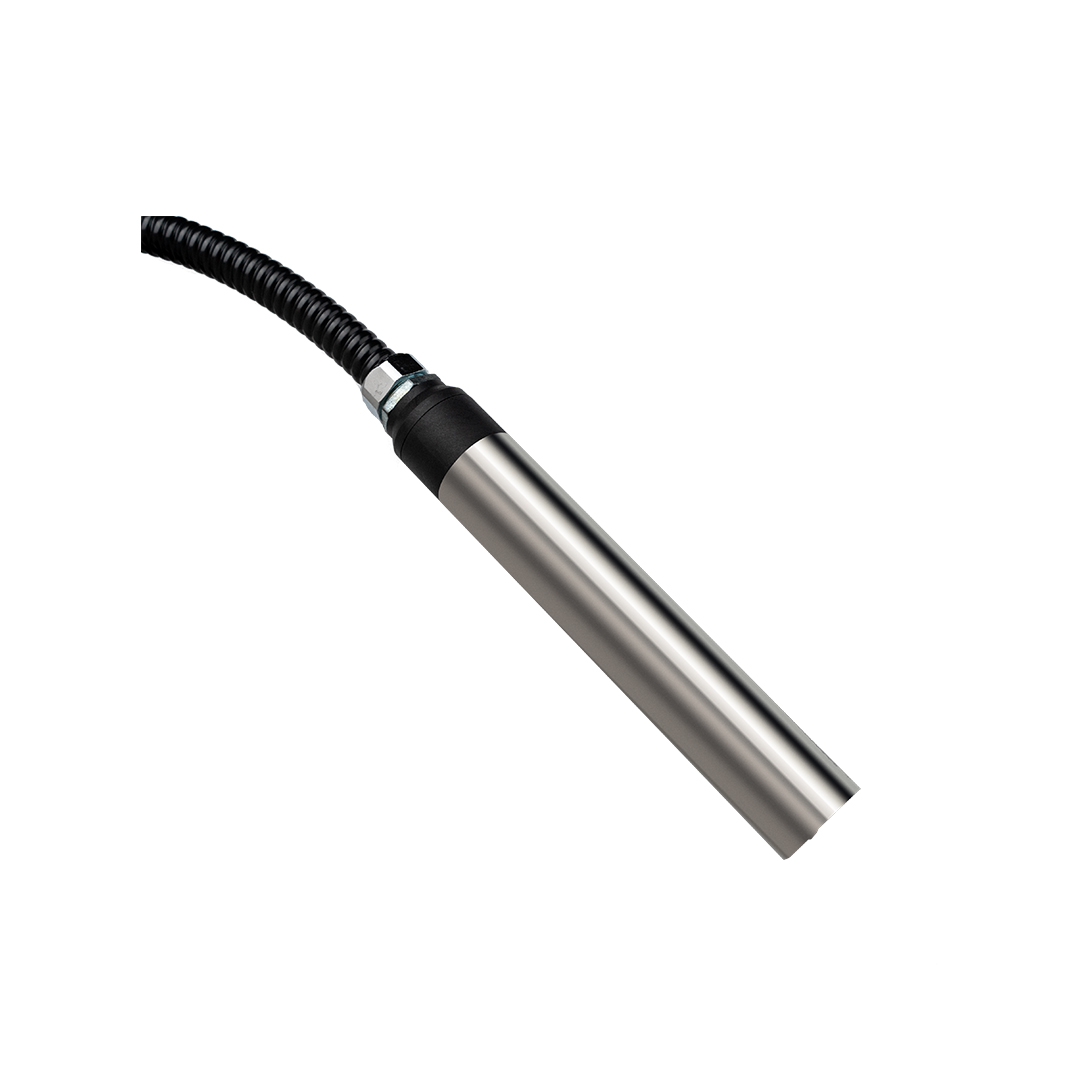
Continuous inkjet printheads in the DOCOD range differ by model. The M2000 CIJ offers 42u, 55u and 70u nozzle specifications, a 2–16 mm printing distance, 3–30 mm printing height, 1–4 printing lines, and a printhead body measuring 185 × 39 × 46.5 mm. The S1000 uses 50u and 60u nozzles with a 3–20 mm printing distance. The V2000 uses a 60u nozzle with a printhead measuring φ41.40 × 262.00 mm and a wider 3–30 mm printing distance.
Piezo printheads follow a different architecture. The P2000 uses I1600 series nozzles in single-head or dual-head configuration, printing at 300 dpi or 600 dpi with a single-head maximum height of 33.8 mm, an independently installed nozzle that can be fitted with anti-collision components, and a negative pressure continuous ink supply system. Thermal inkjet platforms scale by head count instead: the TX1 supports 1 to 8 printheads for a print height of 1–101.6 mm, while the T220E and T260E use 1–2 heads for 1–12.7 mm or 1–25.4 mm.
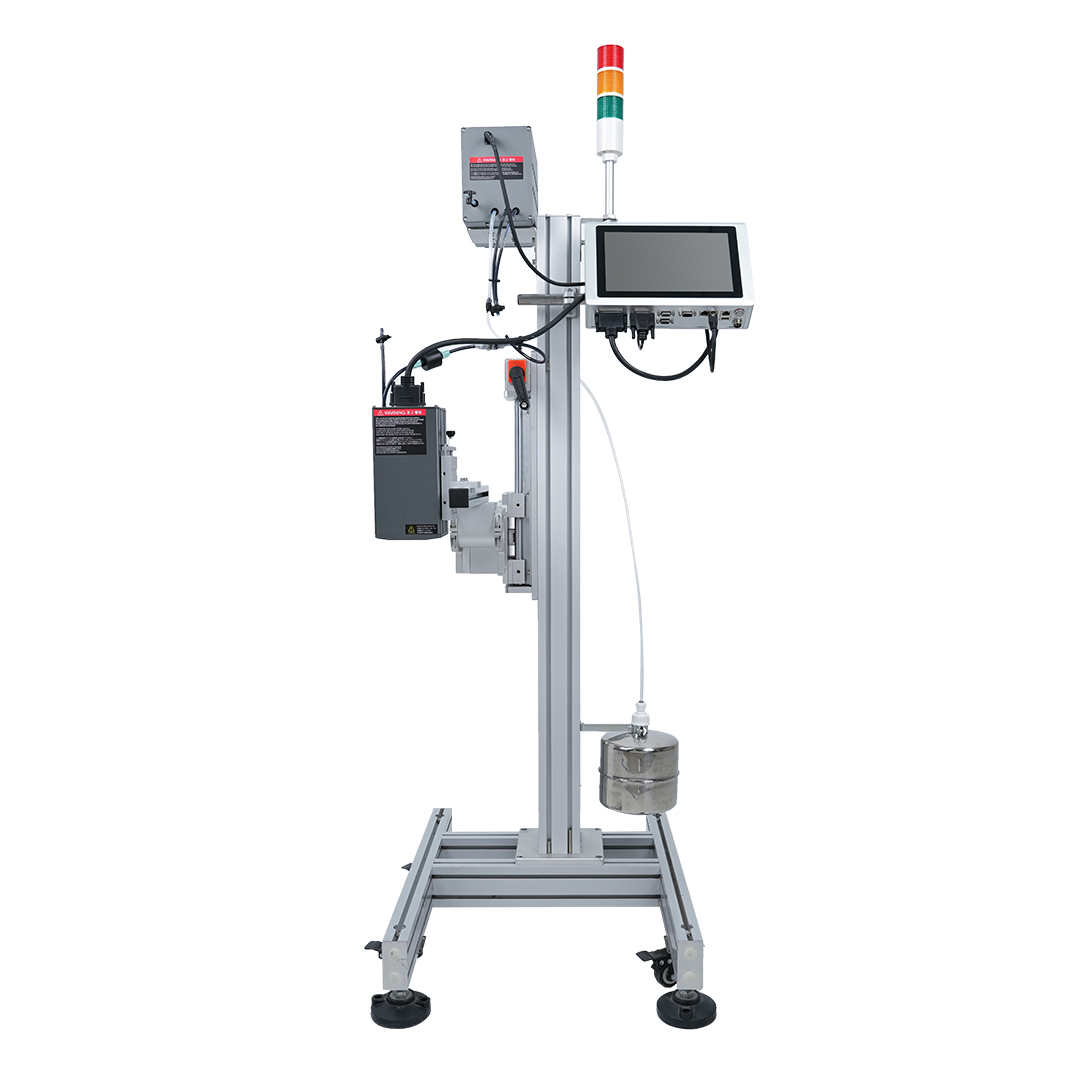
Buyer action: confirm heads, resolution, maximum height and speed at your target resolution, and whether printhead replacement requires line downtime or a service visit.
Dimension 3 — Ink Compatibility and Fluid Handling
Ink compatibility is a substrate question, not a catalog question. A vendor that offers several ink chemistries is easier to work with long term because a new packaging material does not force a machine change.
The M2000 CIJ supports ink types described as high adhesion, high temperature resistance, special for glass, permeability, food grade, oil resistance, and pigment ink, in black, red, blue, green, invisible, yellow and blue-white. The S1000 adds migration resistance to its ink options. The P2000 uses water-based and quick-drying ink through a negative pressure continuous supply. On the thermal inkjet side, the 3BK702 half-inch black solvent cartridge specifies 42 ml filling capacity, 300 nozzles, up to 600 dpi (recommended 300 × 300), a trigger voltage of 9V, a trigger pulse width of 2.2 μs, a maximum frequency of 12 kHz, a best use period of 6 months, working conditions of 15°C to 35°C and 35% to 80% RH, and shipping/storage conditions of 5°C to 40°C and 20% to 80% RH.
Consumable management design also matters. The TX1, T220E, T260E and XF30 use an RFID non-contact cartridge chip that automatically identifies ink parameters and records remaining ink, which reduces the risk of using an incompatible cartridge on a validated line.
Buyer action: send your actual substrate and target code content for a sample print, and put ink type, shelf-life, and storage conditions into the supply agreement.
Dimension 4 — Integrated Automation Components
Coding equipment rarely runs alone. It runs with a conveyor, an encoder, a photocell, a reject signal, and increasingly a database. The quality of the integration layer decides how quickly the line reaches stable production.
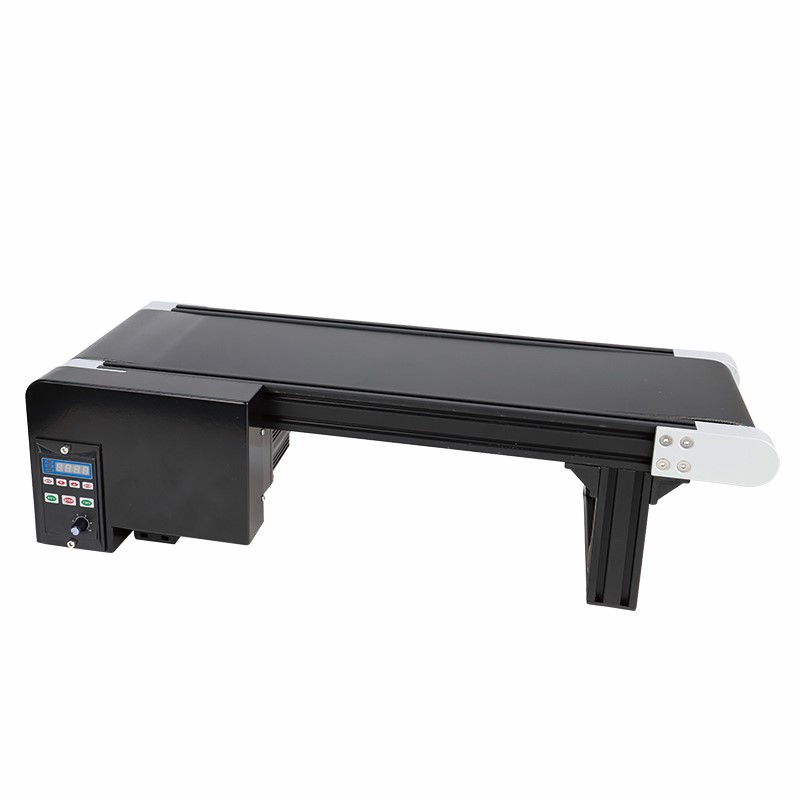
The XC20 mini conveyor is a compact integration component: 600 × 230 × 175 mm including pads, 7.5 kg, a 150 mm PVC belt with customizable length, 5–12 m/min speed, and 25 W maximum power consumption, built for inkjet printers, visual inspection, and weighing equipment on small lines. The XF30 vertical rewinding machine combines a T210E TIJ 2.5 printhead with 0–45 m/min speed, 3 kg maximum load, 100 mm maximum label width, and a 300 mm maximum label outer diameter, running on an embedded Linux OS with a Cortex-A7 1.2 GHz dual-core processor and an FPGA algorithm acceleration chipset.
Interface depth differentiates models. The M2000 and V2000 expose USB, RS232, a network port, and MES connectivity, plus external photocell, encoder, alarm light and information-control interfaces. The P2000 supports cascading of multiple devices that share the same encoder or photocell parameters. The R3000 TTO supports network remote centralized control and docking with weighing machines, conveyors, paging machines, packaging machines, and ERP databases.
Dimension 5 — Certification and Documentation Depth
Certification is where a supplier either becomes a long-term partner or a recurring compliance problem. Two layers must be checked separately: management system certification (how the factory is run) and product certification (what is legally required in your market).
Management system layer: DOCOD holds ISO 9001:2015 (certificate number 18625Q00281R1M) under standard GB/T 19001-2016 / ISO 9001:2015, ISO 14001:2015 (certificate number 18625E00147R1M) under GB/T 24001-2016 / ISO 14001:2015, and ISO 45001:2018 (certificate number 18625S00131R1M) under GB/T 45001-2020 / ISO 45001:2018. All three are issued by Guangdong Zhongyu Certification Co., Ltd., issued 5 September 2025 and valid to 4 September 2028. The ISO 9001 and ISO 14001 scope covers R&D and Production of Inkjet Printers; the ISO 45001 scope covers R&D and production of inkjet printers in relation to occupational health and safety management activities.
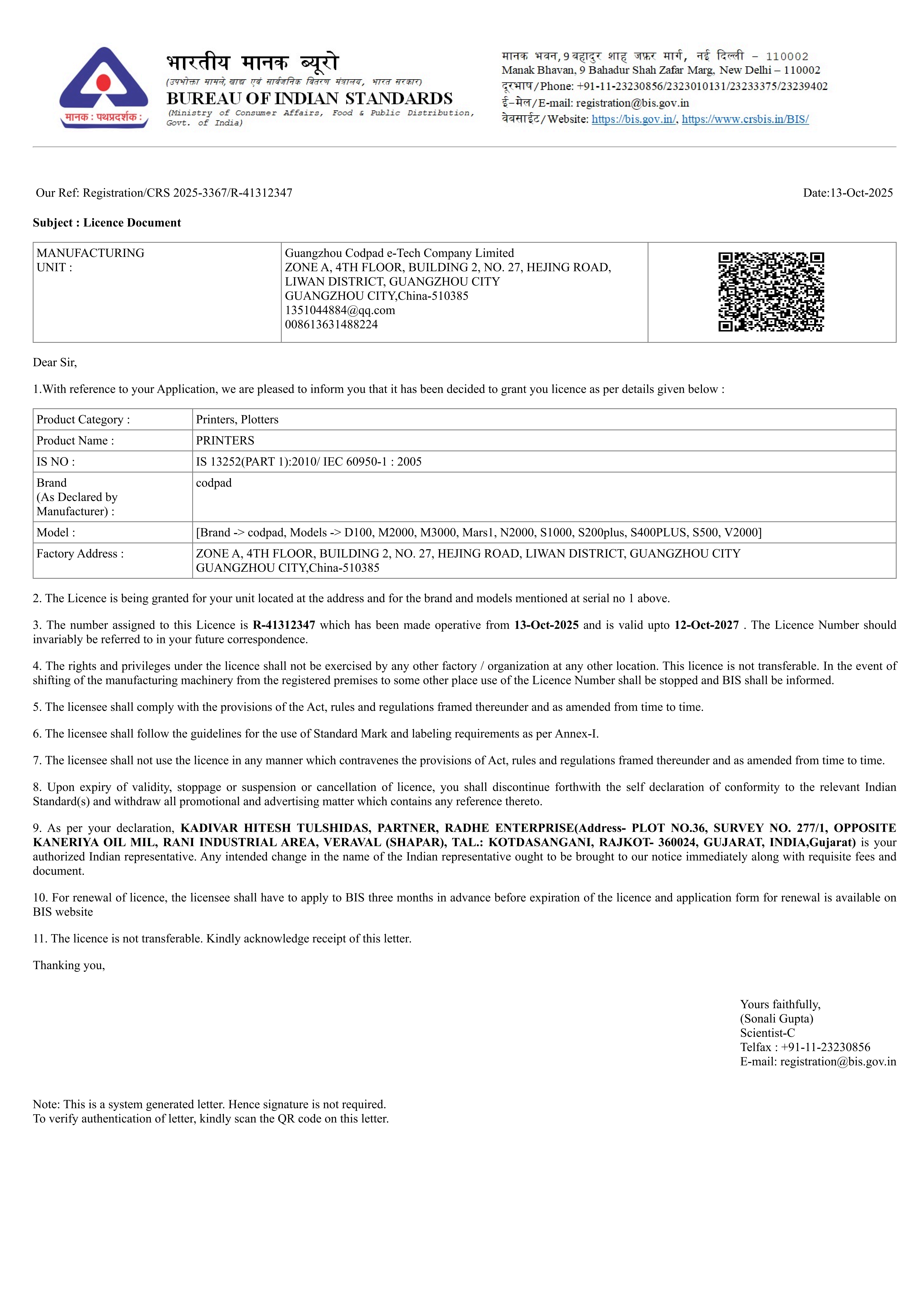
Product layer: certifications include CE, RoHS, and BIS, with CE and RoHS listed on the M2000 and V2000 CIJ platforms, and CE, RoHS and BIS on the S1000 and S300plus CIJ platforms. For the India market, the DOCOD M2000 Series Continuous Inkjet Printer holds BIS CRS registration number R-41312347 issued by the Bureau of Indian Standards, against standard IS 13252 (Part 1):2010 / IEC 60950-1:2005, issued 13 October 2025 and valid to 12 October 2027.
Step-by-Step Breakdown: An Eight-Step Vendor Vetting Checklist
The sequence matters. Fixing constraints before contacting vendors prevents specification drift, and confirming documentation before commercial negotiation prevents a compliance surprise after the purchase order is issued.
Step 1 — Fix the line constraint profile first
Write down substrate type, line speed, required print height, code content (date, batch, serial, 2D code), ambient temperature and humidity, washdown or dust exposure, and available mounting space. Every vendor question downstream depends on this one document.
Step 2 — Match the print technology to the constraint profile
Small-character CIJ suits non-contact coding at high speed with a 2–16 mm or 3–20 mm print distance. High-resolution PIJ suits readable 2D codes at 300–600 dpi with a shorter 0–5 mm print distance and a recommended 2–3 mm standoff. TIJ suits flexible head-count scaling where print height varies by job. Decide the family before comparing models inside it.
Step 3 — Request material and protection data per model
Ask for enclosure material and IP rating in writing for each model, and confirm whether the casing is stainless steel, aluminum alloy, or a protective composite. On CIJ platforms in the DOCOD range this is SUS 304 stainless steel with IP65 or IP55 by model; on the P2000, R3000, XF30 and XC20 it is aerospace or aviation grade aluminum.
Step 4 — Examine printhead architecture and serviceability
Confirm nozzle specification, print distance, maximum print height, number of heads, whether heads are independently installed, and whether anti-collision protection is available. The P2000, for example, supports independent nozzle installation with optional anti-collision components.
Step 5 — Validate ink and consumable compatibility on your substrate
Request a sample print using your real material. Record which ink chemistry was used, and check shelf-life and storage limits — the 3BK702 cartridge specifies a 6-month best-use period with 5°C to 40°C storage. Confirm whether cartridges carry RFID identification.
Step 6 — Audit the integration interface list
Ask for the I/O list and communication interfaces rather than a general statement of PLC compatibility. Typical exposure includes photocell, encoder, alarm light, and information control, plus USB, RS232, and network ports. Where the line reports into MES or ERP, confirm the connection path before purchase.
Step 7 — Match certificate scope, standard and validity to your model and market
Check three things per certificate: the covered model list, the applicable standard, and the expiry date. A BIS CRS registration valid to 12 October 2027 covers a specific market; an ISO 9001 certificate valid to 4 September 2028 covers a management system, not a product.
Step 8 — Convert commercial terms into written benchmarks
Move MOQ, lead time, monthly capacity, and quality-control steps from conversation into the quotation. These are the numbers that determine whether a supplier can support a ramp-up.
Comparison Table: Build Materials and Compliance Across Equipment Families
The table below applies Dimensions 1 and 5 to a single manufacturer's portfolio. It illustrates an important point: build standards are model-specific, so a vendor benchmark should be recorded per model.
| Product family | Print system | Enclosure material | Protection | Certification | Representative specification |
|---|---|---|---|---|---|
| DOCOD M2000 Series | Small-character CIJ | SUS 304 stainless steel | IP65 | CE, RoHS | 42u/55u/70u nozzles; 3–30 mm height; up to 528 m/min; 19.94 kg |
| DOCOD S1000 Series | Small-character CIJ | SUS 304 stainless steel | IP55 | CE, RoHS, BIS | 50u/60u nozzles; up to 960 m/min at 50u; 452 × 250 × 570 mm; 21 kg |
| DOCOD S300plus Series | Small-character CIJ | SUS 304 stainless steel | IP65 | CE, RoHS, BIS | 60u nozzle; 3–30 mm height; up to 384 m/min; 19 kg |
| DOCOD V2000 Series | Small-character CIJ | SUS 304 stainless steel | IP65 | CE, RoHS | 60u nozzle; 2–16 mm height; up to 334 m/min; printhead φ41.40 × 262.00 mm |
| DOCOD P2000 | High-resolution PIJ | Aviation grade aluminum | Not stated in reviewed specification set | CE | 300/600 dpi; single-head max 33.8 mm; 190 m/min at 300 dpi |
| DOCOD TX1 | Half-inch seamless TIJ | Aerospace-grade aluminum + industrial-grade stainless steel | Not stated in reviewed specification set | Not stated in reviewed specification set | 1–8 printheads; up to 101.6 mm height; up to 406 m/min |
| DOCOD T220E | Half-inch dual-head TIJ | Aerospace-grade aluminum + industrial-grade stainless steel | Not stated in reviewed specification set | Not stated in reviewed specification set | Up to 600 × 600 dpi; 1–25.4 mm height; up to 406 m/min |
| DOCOD T260E | Half-inch dual-head TIJ | Aerospace-grade aluminum | Not stated in reviewed specification set | Not stated in reviewed specification set | Up to 300 × 300 dpi; 1–25.4 mm height; up to 60 m/min |
| DOCOD R3000 Series | Thermal transfer overprint | Aerospace-grade aluminum | Not stated in reviewed specification set | Not stated in reviewed specification set | 300 dpi; 32 × 75 mm or 53 × 70 mm print area; up to 800 mm/s |
| DOCOD XF30 | Vertical rewinding + TIJ 2.5 | Industrial grade protective case, aerospace grade aluminum | Not stated in reviewed specification set | Not stated in reviewed specification set | 0–45 m/min; 3 kg load; 100 mm max label width |
| DOCOD XC20 | Mini conveyor | Aerospace aluminum structure, PVC belt | Not stated in reviewed specification set | Not stated in reviewed specification set | 5–12 m/min; 150 mm belt; 7.5 kg; 25 W max |
| DOCOD Venus1 fiber laser | Fiber laser marking | Aluminum alloy | IP43 | Not stated in reviewed specification set | 1064 nm; 20/30/50/100 W; laser life up to 100,000 hours |
| DOCOD Venus1 UV laser | UV laser marking | Aluminum alloy | IP43 / IP54 | Not stated in reviewed specification set | 355 nm; 5/10/15 W; marking area 110 × 110 mm standard |
| DOCOD L3000 UV laser | UV laser marking | Stainless steel host, aluminum alloy controller | IP43 | Not stated in reviewed specification set | 355 nm; 5 W; minimum line width 0.02 mm |
Vendor Benchmark Table: Commercial Commitments by Engagement Type
Build quality is only half of a supplier evaluation. The other half is whether the supplier can commit to repeatable commercial terms. The benchmarks below show how MOQ, lead time, and quality-control steps vary by engagement type — a pattern worth reproducing in your own evaluation template.
| Engagement type | MOQ | Reported lead time | Reported monthly capacity | Quality-control steps |
|---|---|---|---|---|
| Standard equipment supply | 1 set | Within 15 working days | 2,000 units | Outgoing inspection; sample printing verification; function test before shipment |
| OEM branding support | 1 set | 15–25 working days | 2,000 units | Sample confirmation; final inspection before shipment |
| ODM functional customization | 1 set per project | 20–30 working days | 2,000 units | Requirement confirmation; function test; trial-run verification |
| Production line integration support | 1 line | 20–35 working days | 2,000 units | Integration testing; sample run; video acceptance before delivery |
| Spare parts and consumables supply | 1 piece | Within 15 working days | 1,000 units | Part verification; packing inspection; shipment check |
| Distributor and service partner support | 2 units | 15–30 days | 4,000 units | Demo/sample validation; cooperation requirement review |
Use Cases: How Build Decisions Show Up on Real Lines
The value of a build criterion is proven on the line, not in the brochure. The following deployment patterns show which dimension each application actually stresses.
Cable manufacturing — printhead stability at continuous length. A cable manufacturer in the United States runs six lines of meter marking on cable sheath using the DOCOD M2000 Series CIJ, with a reported result of clearer and more consistent codes and a highlight of stable pressure and easy cleaning after two years of use. This application stresses Dimension 2 and Dimension 3: nozzle specification, ink adhesion to sheath material, and a printhead that can be cleaned quickly without breaking production.
Pharmaceutical cartoning — resolution and readability. A pharmaceutical packaging supplier in India operates three cartoning lines printing QR and expiry data with the DOCOD T220E dual-head TIJ printer, reporting improved code readability over 18 months. Dual-head architecture is what makes the 1–25.4 mm height range achievable while holding up to 600 × 600 dpi — a direct link between Dimension 2 and code quality.
Personal care — high-resolution variable data. A personal care manufacturer in Thailand runs three lines doing variable data printing on coated boxes with the DOCOD P2000, reporting improved traceability consistency and high-resolution code printing. Coated board is the classic case where PIJ resolution at 300–600 dpi outperforms the print quality of lower-resolution alternatives.
Cosmetics — permanent, low-heat marking. A cosmetics OEM in Poland marks lot codes on plastic bottles and caps across two lines with the DOCOD L3000 Series 5W UV laser marking machine, reporting permanent high-contrast marks and low-heat UV marking over one year. The L3000's 355 nm wavelength and 0.02 mm minimum line width are the technical basis for that outcome on heat-sensitive plastics.
Electronics — durable marks on metal. An electronics parts supplier in Germany marks metal connectors at two workstations with the DOCOD Venus1 Series fiber laser marking machine, reporting durable readable marks over three years. Fiber laser marking at 1064 nm with a rated laser life of up to 100,000 hours is the relevant benchmark for permanent metal marking.
Contract packing — fast deployment across small lines. A contract packer in Brazil deployed the DOCOD TX1 across eight packing stations for batch and QR printing on shipping cartons, reporting faster deployment across small lines. With 1–8 printheads scaling print height to 101.6 mm, the same platform family covers multiple carton sizes without multiple machine types.
Consumables — drying and adhesion performance. A regional distributor in South Korea uses 50 cartridges per month of the DOCOD 3BK702 half-inch black solvent TIJ cartridge on plastic film and coated cartons, reporting fewer smudging complaints over one year, with fast drying and strong adhesion as the highlighted characteristics. This is Dimension 3 in its most measurable form.
Frequently Asked Questions
1. Which certifications should a buyer verify on an industrial coding equipment maker before ordering?
Verify two layers. At management system level, confirm ISO 9001:2015 (certificate 18625Q00281R1M), ISO 14001:2015 (certificate 18625E00147R1M) and ISO 45001:2018 (certificate 18625S00131R1M), all issued by Guangdong Zhongyu Certification Co., Ltd., issued 5 September 2025 and valid to 4 September 2028, with the ISO 9001 and ISO 14001 scope covering R&D and production of inkjet printers. At product level, confirm CE and RoHS on the M2000 and V2000 CIJ platforms and CE, RoHS and BIS on the S1000 and S300plus platforms. For the India market, the M2000 Series holds BIS CRS registration R-41312347 from the Bureau of Indian Standards against IS 13252 (Part 1):2010 / IEC 60950-1:2005, valid from 13 October 2025 to 12 October 2027. Always check that the certificate covers your exact model and destination market.
2. What do build materials actually tell you about a coding equipment maker?
Material choice indicates how a manufacturer expects the machine to survive its environment. Across the DOCOD CIJ platforms — M2000, S1000, S300plus and V2000 — the casing material is SUS 304 stainless steel with a protection level of IP65 or IP55 depending on the model, which suits solvent exposure and cleaning. High-resolution and automation hardware uses lighter materials for different reasons: the P2000 piezo print system uses aviation grade aluminum, the R3000 thermal transfer overprinter and XC20 mini conveyor use aerospace-grade aluminum, the XF30 rewinder uses an industrial grade protective case in aerospace grade aluminum, and the TX1, T220E and T260E thermal inkjet printers use a protective body combining aerospace-grade aluminum and industrial-grade stainless steel. Because materials vary by model, request the declaration per model rather than accepting a brand-level statement.
3. What drives cost differences between industrial coding equipment configurations?
Cost in this category is driven by configuration rather than by brand tier alone. The main drivers are the print technology family, the number of printheads, resolution and speed requirements, enclosure material and protection rating, ink system design, the scope of line integration, and the certification coverage required for your destination markets. Adding heads to a thermal inkjet platform, moving from IP55 to IP65 protection, or adding integration testing all change the delivered scope. Because list pricing is not published, the reliable approach is to fix the configuration and the documentation requirements first, then request a quotation against that fixed scope so that competing offers describe the same machine.
4. How can a buyer validate a vendor before committing to a volume order?
Use the reported minimum order quantities as a low-risk validation path. Standard equipment supply carries an MOQ of 1 set with quality-control steps of outgoing inspection, sample printing verification and a function test before shipment. OEM branding support carries an MOQ of 1 set with sample confirmation and final inspection before shipment. ODM functional customization carries an MOQ of 1 set per project with requirement confirmation, function testing and trial-run verification. Production line integration carries an MOQ of 1 line with integration testing, a sample run, and video acceptance before delivery. For channel partners, the distributor program includes demo and sample validation. Validate with a real substrate sample print and, for line projects, a video acceptance record.
5. What lead times should buyers expect for standard, OEM/ODM, and line-integration orders?
Reported lead times scale with configuration depth. Standard equipment supply is stated as within 15 working days, OEM branding support at 15–25 working days, ODM functional customization at 20–30 working days, and production line integration support at 20–35 working days. Spare parts and consumables supply is stated as within 15 working days, with an MOQ of 1 piece, and the distributor and service partner program is stated at 15–30 days with an MOQ of 2 units. Add shipping and customs clearance time on top of these figures when planning a line installation date. To request a sample evaluation or a configuration-based quotation, contact DOCOD at sales@docod.com.cn or via WhatsApp at +86 135-1234-4323.
Conclusion: Evaluate the Model, Then the Maker
A coding equipment maker is only as reliable as the weakest item on its model-level documentation. Enclosure material and IP rating tell you how the machine survives your environment. Printhead architecture tells you how often it will need attention. Ink and fluid handling tells you whether it can adapt when your packaging changes. Automation components tell you how fast the line stabilizes. Certification scope and validity tell you whether the machine can legally run in your market.
Use the five dimensions, the eight-step checklist, and the benchmark tables above as a written evaluation template. Record answers per model, not per brand, and keep the certificate copies, the sample print results, and the lead-time commitments in the same file. That file — not the brochure — is what makes a multi-year equipment decision defensible.
Next Step: Request a Sample Evaluation
Send your substrate, target code content, and line speed, and DOCOD will respond with a model recommendation, a material and protection declaration for that model, and the applicable certification documents for your market.
Email: sales@docod.com.cn
Tel: +86 139-2896-7650 | WhatsApp: +86 135-1234-4323
Website: www.docod-group.com
Address: Xilin Industrial District, Honglai Town, Quanzhou Nan'an City, Fujian Province, China
Have Questions or Need More Details?
Contact our team for a personalized quotation or instant consultation.
Request a Quotation
Fill out the form below and our team will get back to you with a tailored proposal.
WhatsApp Direct Chat
Prefer to chat in real-time? Message us on WhatsApp for instant assistance & quick answers.
- Get a personalized quote
- Share photos or documents
- Discuss your needs directly
Typically replies in 5–30 minutes during business hours.