
OEM, ODM & Line Integration: Coding Equipment Capability Checklist
OEM, ODM & Line Integration: Coding Equipment Capability Checklist
Choosing industrial coding and marking equipment is a capability decision, not only a technology decision. Buyers at the evaluation or execution stage need to verify more than the print speed, resolution and substrate range of a continuous inkjet printer (CIJ), thermal inkjet printer (TIJ), piezoelectric inkjet printer (PIJ), drop-on-demand large-character printer (DOD), thermal transfer overprinter (TTO) or laser marking machine. They also need proof that the supplier can support OEM branding, ODM functional changes, production line integration, consumables supply and after-sales service.
This article provides a capability checklist built on the production service models of DOCOD Precision Group Co., Ltd., an industrial coding, marking and inspection equipment manufacturer founded in 2008, with a 20,000 m² factory, 407 employees and more than 140 R&D staff. Its product portfolio covers CIJ, TIJ, handheld coding equipment, PIJ, DOD, TTO, laser marking machines, inline vision inspection systems, coding consumables, spare parts and traceability solutions. The company exports around 50% of its output to North America, South America, Eastern Europe, Southeast Asia, Africa, Oceania, the Middle East, Eastern Asia and Western Europe.
Why Capability Verification Matters Before You Commit
A specification sheet describes what a printer can do. It does not prove what a manufacturer can do for you. When a project introduces private-label branding, a custom printhead bracket, a GS1 DataMatrix workflow, or connection to an existing conveyor, encoder and MES system, standard catalogs cannot answer the questions that determine project success.
Buyers commonly face these risks during evaluation:
- Private-label logo, startup screen, nameplate or packaging customization is not supported.
- Printhead mounting, bracket structure and encoder/photocell connections do not match the production line.
- Variable data, 2D code or serialization workflows require software or interface changes the supplier cannot make.
- Quality control gates before shipment are unclear, making acceptance difficult to verify.
- Spare parts and consumables become slow or unreliable after commissioning.
The practical answer is to review the supplier's production and support models, not just its product list. This is especially important for OEM/ODM buyers, system integrators and manufacturers that plan to deploy several lines or enter regulated markets.
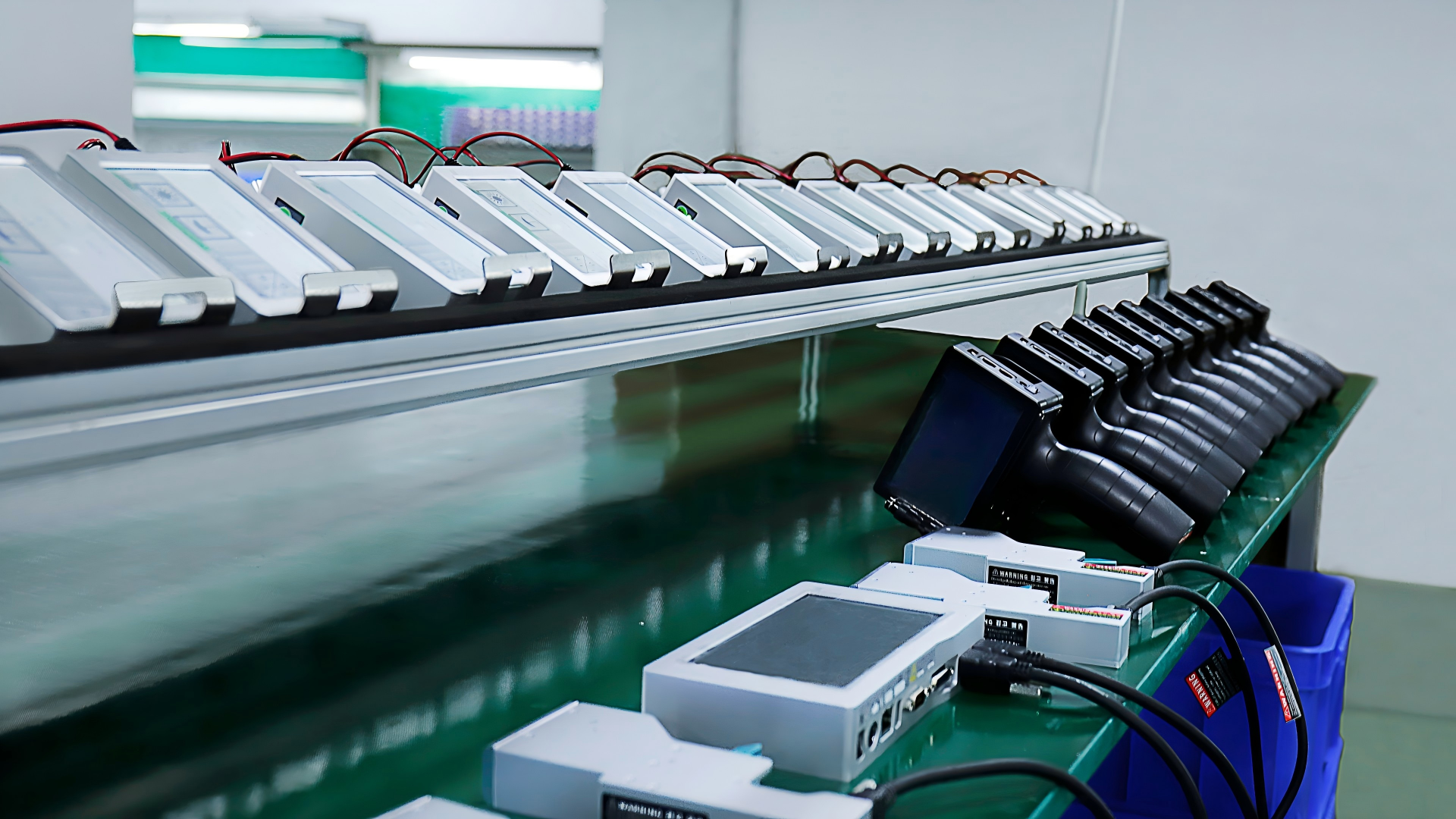
The Market Context: Growing Demand and Heavier Integration Load
The coding and marking equipment market was valued at USD 17.53 billion in 2024 and is projected to reach USD 27.11 billion by 2032, according to SkyQuest. Grand View Research estimates that continuous inkjet (CIJ) technology held the largest revenue share, at approximately USD 5.67 billion in 2024. Market Research Future estimates Asia-Pacific accounts for around 35% of the coding and marking market. Fortune Business Insights projects laser marking technology to grow at a 6.8% CAGR through 2030. In parallel, the GS1 Digital Link standard is being adopted globally to replace 1D barcodes with QR codes for point-of-sale and traceability by 2027, which increases the need for variable data printing, 2D codes and code verification on packaging lines.
Established global names in the sector include Videojet Technologies, Domino Printing Sciences, Markem-Imaje and Hitachi Industrial Equipment Systems. In this competitive environment, buyers increasingly evaluate suppliers on integration capability, customization depth and service response rather than on machine specifications alone.
Six Production Service Models to Verify with Any Coding Equipment Supplier
DOCOD organizes its manufacturing and support around six production service models. Each model has defined customization scope, monthly capacity, lead time, MOQ, quality control and after-sales support. For an OEM, ODM or integrator project, this is the framework to verify with any supplier before purchase.
| Production mode | Typical customization | Monthly capacity | Lead time | MOQ | Key quality control gates |
|---|---|---|---|---|---|
| Standard equipment supply | Language, UI setup, print content settings, mounting options, ink selection by substrate | 2,000 units | Within 15 working days | 1 set | Outgoing inspection; sample printing verification; function test before shipment |
| OEM branding support | Private label logo, startup screen, nameplate, packaging, manuals, carton labels | 2,000 units | 15–25 working days | 1 set | Sample confirmation; final inspection before shipment |
| ODM functional customization | Software/UI adjustment, communication interface, bracket structure, printhead configuration, application-based adaptation | 2,000 units | 20–30 working days | 1 set per project | Requirement confirmation; function test; trial-run verification |
| Production line integration support | Conveyor/pager/rewinder matching, encoder and sensor connection, GS1/DataMatrix and serialization workflow matching | 2,000 units | 20–35 working days | 1 line | Integration testing; sample run; video acceptance before delivery |
| Spare parts & consumables supply | Compatible spare parts, ink/solvent matching, accessory kits, replacement parts selection | 1,000 units | Within 15 working days | 1 piece | Part verification; packing inspection; shipment check |
| Distributor & service partner support | Training materials, demo support, product documents, localized market support, cooperation package | 4,000 units | 15–30 days | 2 units | Demo/sample validation; cooperation requirement review |
The distinction between the models matters. Standard equipment supply is appropriate when the printer will operate in a known configuration. OEM branding support adds identity-related changes without changing core hardware or software. ODM functional customization changes how the equipment behaves or is installed. Production line integration support connects the coding step to the surrounding line equipment, including GS1 and serialization workflows.
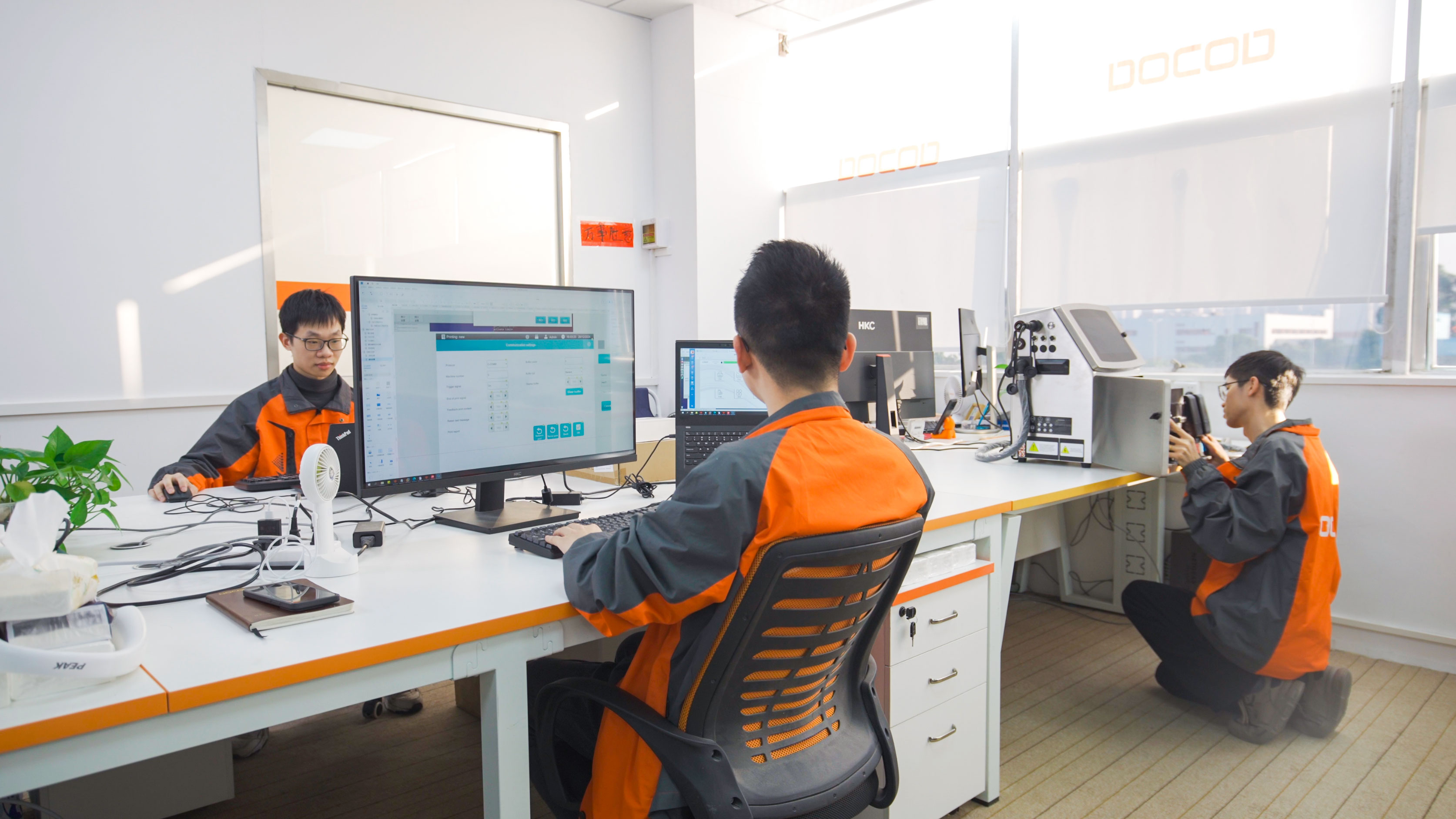
Step-by-Step: How to Qualify an OEM/ODM Coding Equipment Partner
Use the following seven steps to turn a capability review into a project plan. The steps combine buyer-side decisions with supplier evidence.
- Define the exact coding task. Start with the substrate (carton, plastic, film, cable, pipe, metal, glass), the print content (text, time, date, Julian date, logo, shift, serial number, dynamic barcode or QR code), and the line speed. DOCOD CIJ models, for example, support multiple barcode and QR code types including QRCode, DataMatrix, MicroQRCode, PDF417 and GS1-128 formats on several small-character printers.
- Map the technology to the job. CIJ is used for high-speed small-character coding: the DOCOD S1000 Series reaches 960 m/min with a 50u nozzle at 0.5 mm pitch, the M2000 Series reaches 528 m/min, and the V2000 Series reaches 334 m/min at 5 dots per line. TIJ gives higher resolution at shorter range: the T220E prints up to 600 × 600 DPI at up to 406 m/min, and the TX1 supports up to eight printheads for wider formats. PIJ is suitable for high-resolution variable data: the P2000 prints up to 600 DPI at 95 m/min. TTO suits flexible film: the R3000 Series prints intermittent codes with up to 800 mm/s. Laser is used for permanent marking on metal or non-metal materials: the Venus1 Series includes CO2, fiber and UV models, and the L3000 Series is a 5W water-cooled UV laser.
- Verify the customization scope. Ask which elements can be changed. Under OEM branding support, suppliers should confirm private-label logo, startup screen, nameplate, packaging, manuals and carton labels. Under ODM, they should confirm software/UI adjustment, communication interface, bracket structure and printhead configuration.
- Confirm integration points. Inquire about photocell, encoder, alarm output, conveyor, pager, rewinder and MES connection. Several DOCOD printers provide USB, RS232 and network port interfaces, and CIJ models such as the V2000 and M2000 can be connected to an enterprise MES management system.
- Lock the quality control gates. For a customized project, expect requirement confirmation, function test, trial-run verification, integration testing, sample run and video acceptance before delivery. Standard equipment should include outgoing inspection, sample printing verification and a function test before shipment.
- Plan the consumables and spare parts pipeline. Confirm MOQ, lead time and matching support for ink and solvent, replacement parts and accessory kits. DOCOD's spare parts and consumables model supports orders from 1 piece with lead time within 15 working days.
- Validate after-sales support. Remote debugging, installation guidance, remote tuning, fault diagnosis, training and service coordination are the services that keep OEM and line-integration projects stable after commissioning.
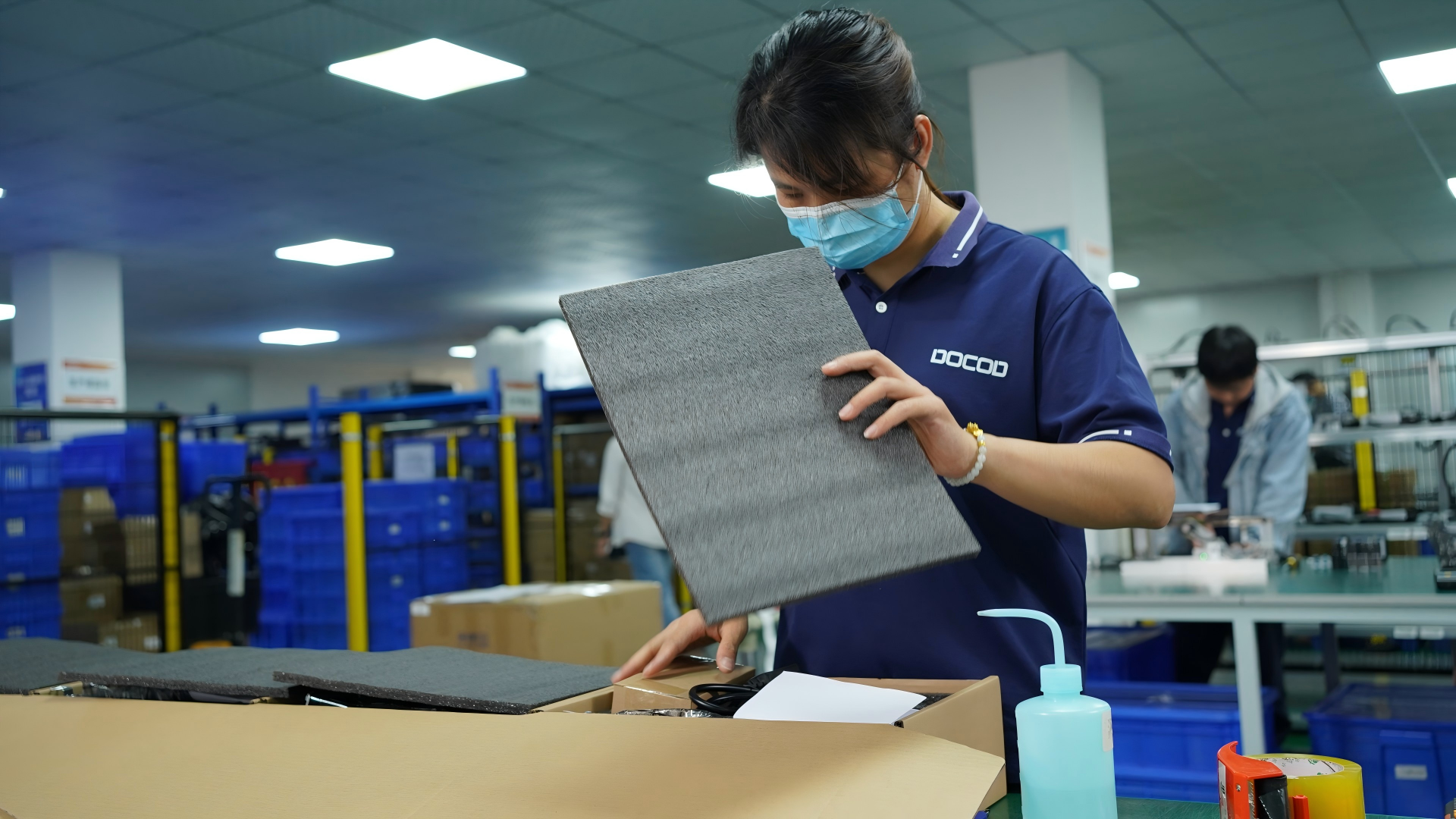
Field Use Cases: From OEM Cosmetic Lines to PVC Pipe Marking
The following deployments show how DOCOD equipment has been applied in OEM, ODM and production-scenario projects. The results reflect first-party reporting in DOCOD's case records.
| Region | Application | Equipment | Line setup | Reported result |
|---|---|---|---|---|
| Saudi Arabia | Specification and date marking on PVC pipe | Venus1 Series CO2 Laser Marking Machine (Model 5109) | 2 extrusion lines, 2 years in operation | Clean non-contact coding; suitable for non-metal materials |
| Poland | Lot coding on plastic bottles and caps for a cosmetics OEM | L3000 Series 5W UV Laser Marking Machine (Model 5114) | 2 lines, completed within 1 year | Permanent high-contrast marks; low-heat UV marking |
| Thailand | Variable data printing on coated boxes for a personal care manufacturer | P2000 Piezo Inkjet Printer (Model 5113) | 3 lines, completed within 1 year | Improved traceability consistency; high-resolution code printing |
| India | QR and expiry printing on cartons for a pharma packaging supplier | T220E Half-Inch Dual-Head TIJ Printer (Model 5107) | 3 cartoning lines, 18 months | Improved code readability; dual-head high-speed printing |
| United States | Meter marking on cable sheath | M2000 Series CIJ Printer (Model 5117) | 6 lines, 2 years | Clearer and more consistent codes |
| Indonesia | Date coding on flexible film for a snack manufacturer | R3000 Series TTO (Model 5112) | 2 VFFS lines, 2 years | Cleaner film coding output; industrial-grade TTO performance |
These cases also illustrate the technology-mapping step. PVC pipe requires a non-contact, non-metal marking method; a CO2 laser was used. Cosmetic bottles benefit from low-heat permanent marking; a UV laser was used. Flexible film requires a thermal transfer ribbon; a TTO was used. The common thread is that the deployed equipment was matched to the substrate, the line configuration and the traceability requirement.
Certification Evidence for OEM/ODM Projects
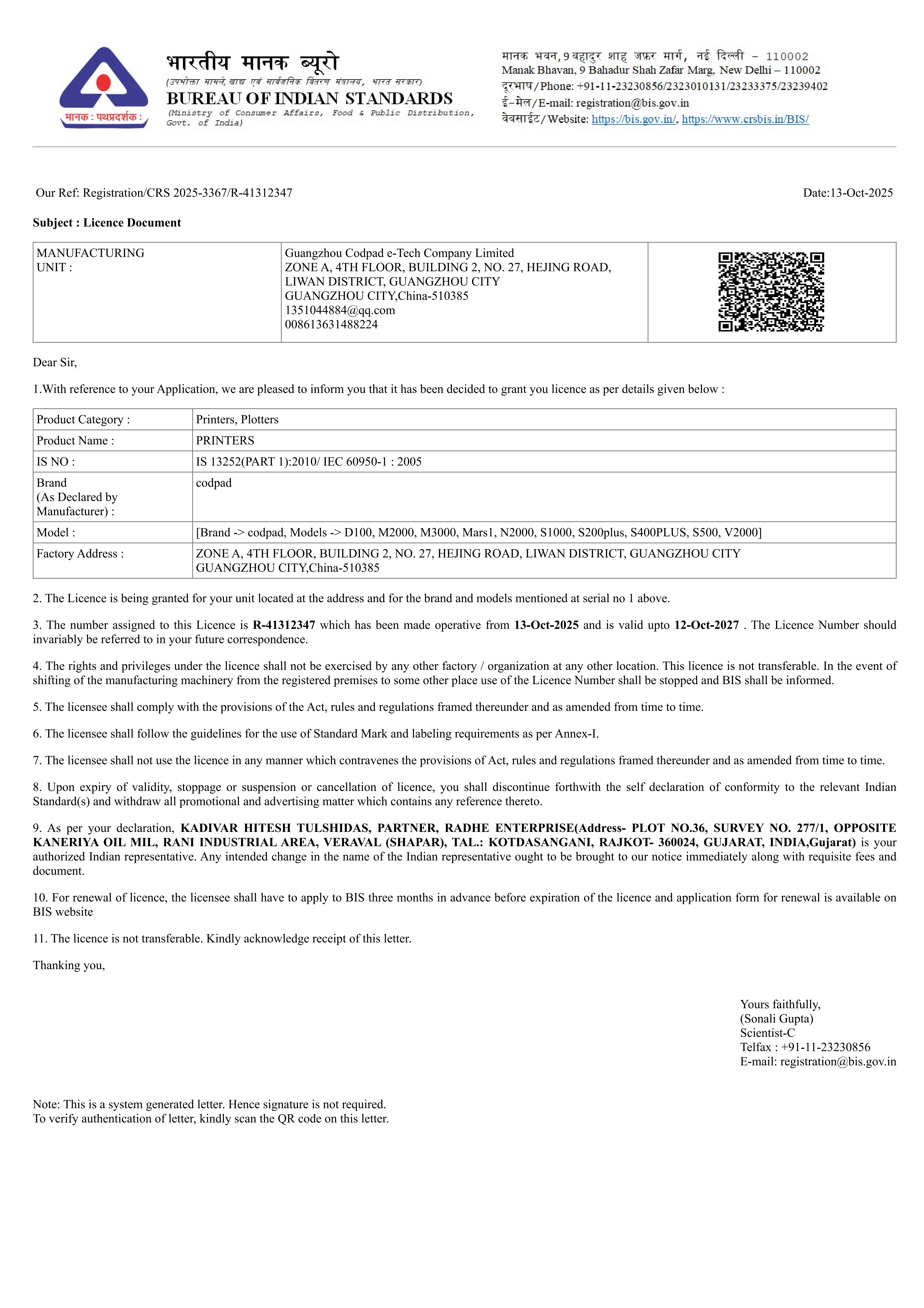
For exports and regulated industries, certificate scope is part of capability. DOCOD holds a BIS CRS Registration Licence for Printers/Plotters under the brand codpad, certificate number R-41312347, issued by the Bureau of Indian Standards. It covers listed models manufactured at the registered factory address under IS 13252 (Part 1):2010 / IEC 60950-1:2005, valid from 2025-10-13 to 2027-10-12. The related CIJ models include the V2000 Series, S1000 Series and M2000 Series Continuous Inkjet Printers. DOCOD also holds ISO 9001:2015 (certificate 18625Q00281R1M), ISO 14001:2015 (18625E00147R1M) and ISO 45001:2018 (18625S00131R1M), issued by Guangdong Zhongyu Certification Co., Ltd. for R&D and production of inkjet printers. CE and RoHS are listed on relevant models.
Frequently Asked Questions
1. What certifications should buyers verify before ordering OEM/ODM coding equipment?
Buyers should check product safety certification for the destination market and management system certificates for the factory. DOCOD holds BIS CRS Registration Licence R-41312347 for printers/plotters under the brand codpad, based on IS 13252 (Part 1):2010 / IEC 60950-1:2005, valid from 2025-10-13 to 2027-10-12, covering the V2000, S1000 and M2000 Series CIJ printers at the registered factory. The company also holds ISO 9001:2015 (18625Q00281R1M), ISO 14001:2015 (18625E00147R1M) and ISO 45001:2018 (18625S00131R1M) for R&D and production of inkjet printers, issued by Guangdong Zhongyu Certification Co., Ltd. CE and RoHS are listed on relevant models. For an OEM/ODM project, confirm the certificate scope against the exact model and destination country.
2. What OEM/ODM customization capabilities should an industrial coding equipment buyer look for?
OEM branding support typically covers private-label logo, startup screen, nameplate, packaging, manuals and carton labels, with sample confirmation and final inspection before shipment. ODM functional customization covers software/UI adjustment, communication interface, bracket structure, printhead configuration and application-based adaptation, with requirement confirmation, function test and trial-run verification. Buyers should ask whether the manufacturer can adapt bracket structure and printhead mounting to the line, and whether software supports interfaces such as USB, RS232 and network port, including MES connection on models such as the V2000 and M2000 CIJ printers.
3. What factors determine the cost of an OEM/ODM coding equipment project?
Cost depends on the production mode and customization depth rather than a single machine list price. Standard equipment supply has a MOQ of 1 set; OEM branding support also has a MOQ of 1 set; ODM functional customization starts at 1 set per project. DOCOD offers delivery terms including FOB, CIF, CFR and EXW, and customized orders are commonly paid by T/T 30/70 or LC. Because printhead configuration and integration scope vary by project, the practical way to scope cost is to send the supplier your print sample, packaging material and line layout for a formal quotation.
4. What sample validation and pre-shipment testing should buyers expect?
For standard equipment, DOCOD performs outgoing inspection, sample printing verification and a function test before shipment. For OEM branding, sample confirmation and final inspection are required before shipment. ODM projects follow requirement confirmation, function test and trial-run verification. Production line integration adds integration testing, a sample run and video acceptance before delivery. Distributor and service partner support uses demo/sample validation and cooperation requirement review. Buyers should always request a physical print sample on the actual substrate and, for line integration, a video acceptance test.
5. What lead times are realistic for an OEM/ODM coding equipment project?
Based on DOCOD's production service models, plan for the following: standard equipment supply within 15 working days; spare parts and consumables within 15 working days; OEM branding support 15–25 working days; ODM functional customization 20–30 working days; production line integration support 20–35 working days; and distributor/service partner support 15–30 days. These are planning references. Confirm the project-specific lead time during quotation with your selected model and line layout.
Next Step: Turn the Capability Checklist into a Project Plan
Capability verification reduces the gap between evaluation and execution. Instead of comparing only print speed and DPI, add the six production service models, the seven qualification steps, integration scope and certification evidence to your supplier scorecard. For OEM/ODM and production line integration projects, the difference is usually not the printhead alone; it is the manufacturer's ability to adapt the equipment, verify it and support it over the project lifecycle.
Request a capability review or product sample. DOCOD Precision Group Co., Ltd. supports standard equipment, OEM branding, ODM customization, production line integration, spare parts and channel partner programs. To start, send your print sample and line layout to sales@docod.com.cn, call or WhatsApp +86 135-1234-4323, or download the DOCOD corporate brochure to review the full product and service range.
Have Questions or Need More Details?
Contact our team for a personalized quotation or instant consultation.
Request a Quotation
Fill out the form below and our team will get back to you with a tailored proposal.
WhatsApp Direct Chat
Prefer to chat in real-time? Message us on WhatsApp for instant assistance & quick answers.
- Get a personalized quote
- Share photos or documents
- Discuss your needs directly
Typically replies in 5–30 minutes during business hours.