
Match Industrial Coding and Marking Equipment to Your Production Scenario
Match Industrial Coding and Marking Equipment to Your Production Scenario
Selecting industrial coding and marking equipment for a project is not only about choosing a printer model. The right match depends on the production scenario: the substrate, line speed, environment, code type, and how the coding system will connect to the existing line. This article explains how to match continuous inkjet (CIJ), thermal inkjet (TIJ), piezo inkjet (PIJ), thermal transfer overprinter (TTO), and laser marking systems to real production conditions, using scenario-based examples from DOCOD Precision Group Co., Ltd.
DOCOD Precision Group Co., Ltd. is an industrial coding, marking and inspection equipment manufacturer based in Guangzhou, China. Founded in 2008, the company designs and produces continuous inkjet printers (CIJ), thermal inkjet printers (TIJ), handheld and high-resolution inkjet coding equipment, drop-on-demand large-character inkjet printers (DOD), thermal transfer overprinters (TTO), laser marking machines, inline vision inspection systems, coding consumables, spare parts, and product traceability solutions. DOCOD serves manufacturers across North America, South America, Europe, Southeast Asia, Africa, Oceania, the Middle East, and Asia.
Why Project Scenario Matters in Coding and Marking
Production lines differ significantly. A beverage bottling line may need batch coding on PET bottles at high speed; a medical packaging line must print UDI/GS1 DataMatrix with online verification; a building material line may need large-character coding on dusty cement bags under hot or humid conditions; a cable extrusion line may need meter marks on curved surfaces. Using one technology across all these scenarios would create failures in adhesion, readability, speed, or integration.
In practice, the decision is shaped by several variables: substrate and surface condition, production speed, print content and symbology, environmental factors such as dust and temperature, available mounting space, and connection to sensors, encoders, PLCs, or MES systems.
Industry Context: Data-Driven Demand for Flexible Coding Systems
The coding and marking equipment market is expanding. According to SkyQuest, the global coding and marking equipment market was valued at USD 17.53 billion in 2024 and is projected to reach USD 27.11 billion by 2032. Grand View Research reports that continuous inkjet (CIJ) technology held the largest revenue share in the coding and marking market, accounting for approximately USD 5.67 billion in 2024. Market Research Future estimates that Asia-Pacific accounted for the largest geographical market share, around 35% in 2024. Laser marking technology is projected to grow at a CAGR of 6.8% through 2030, according to Fortune Business Insights.
At the same time, supply-chain traceability standards are moving toward 2D codes. The GS1 Digital Link standard is being globally adopted to replace 1D barcodes with QR codes for point-of-sale and traceability by 2027. That shift increases the need for printers and laser markers capable of producing variable data, serialized codes, and GS1 DataMatrix symbols in production. Major market participants identified in current industry research include Videojet Technologies, Domino Printing Sciences, Markem-Imaje, and Hitachi Industrial Equipment Systems.
Scenario-First Matching Framework
One practical way to select coding equipment is to start with the project scenario instead of starting with a technology list. Describe the line, the product, the code requirement, and the verification requirement. Then match the scenario to the equipment family that can physically and digitally support it. DOCOD’s application records include scenario mappings across multiple industries; the table below summarizes common project scenarios.
| Industry / Project Type | Working Condition | Coding Task | Typical DOCOD Equipment |
|---|---|---|---|
| Automotive Parts (Brazil) | Metal stampings, plastic/rubber parts, filters, bearings, brake discs, wire harnesses; surfaces may carry oil or be rough | Part numbers, batch codes, QR/DataMatrix, production dates, supplier codes for traceability | M2000 CIJ, R3000 TTO, TX1 TIJ |
| Electronics Manufacturing (Mexico) | PCBs, batteries, charger housings, compact parts, short takt times | Serial numbers, QR/DataMatrix, batch numbers, brand marks | Venus1 UV laser, Venus1 fiber laser, T220E TIJ |
| Wire, Cable & Pipe Extrusion (India) | High line speed, long/narrow or curved print area, limited space, adhesion on difficult substrates | Meter marks, model information, brand names, batch numbers, certification marks | M2000 CIJ, Venus1 CO2 laser |
| Tobacco Packaging (Turkey) | High-speed cigarette packs/cartons, dusty conditions, limited installation space | Batch codes, tax-control codes, DotCode/DataMatrix, QR codes, supply-chain traceability | M2000 CIJ, T260E TIJ, Venus1 CO2 laser |
| Building Materials & Chemicals (UAE) | Bags, pails, drums, PVC pipes, wood boards; dusty, hot, humid, rough surfaces | Batch numbers, production dates, model information, brand marks, QR codes, logistics codes | P2000 PIJ, M2000 CIJ, Venus1 CO2 laser |
| Medical Packaging (Germany) | Tyvek, blister packs, cartons, plastic bottles, flexible films; UDI/GS1 DataMatrix with online verification | UDI, GS1 DataMatrix, lot numbers, expiry dates, serial numbers | P2000 PIJ, L3000 UV laser, TX1 TIJ |
| Cosmetics & Personal Care (Indonesia) | HDPE/PET/PP/PE bottles, tubes, labels, cartons; brand appearance matters | Batch numbers, production dates, expiry dates, QR codes, anti-counterfeit codes | M2000 CIJ, L3000 UV laser, Venus1 UV, T220E TIJ |
| Food & Beverage (Vietnam) | Flexible pouches, cartons, PET and glass bottles; continuous lines, varied temperature and humidity | Production dates, expiry dates, batch numbers, QR/barcodes | M2000/S1000/V2000 CIJ, T220E/TX1 TIJ, R3000 TTO |
Technology Families and Representative Equipment
After mapping the scenario, the next step is to understand what each technology family can deliver in practice.
Continuous Inkjet (CIJ) Printers
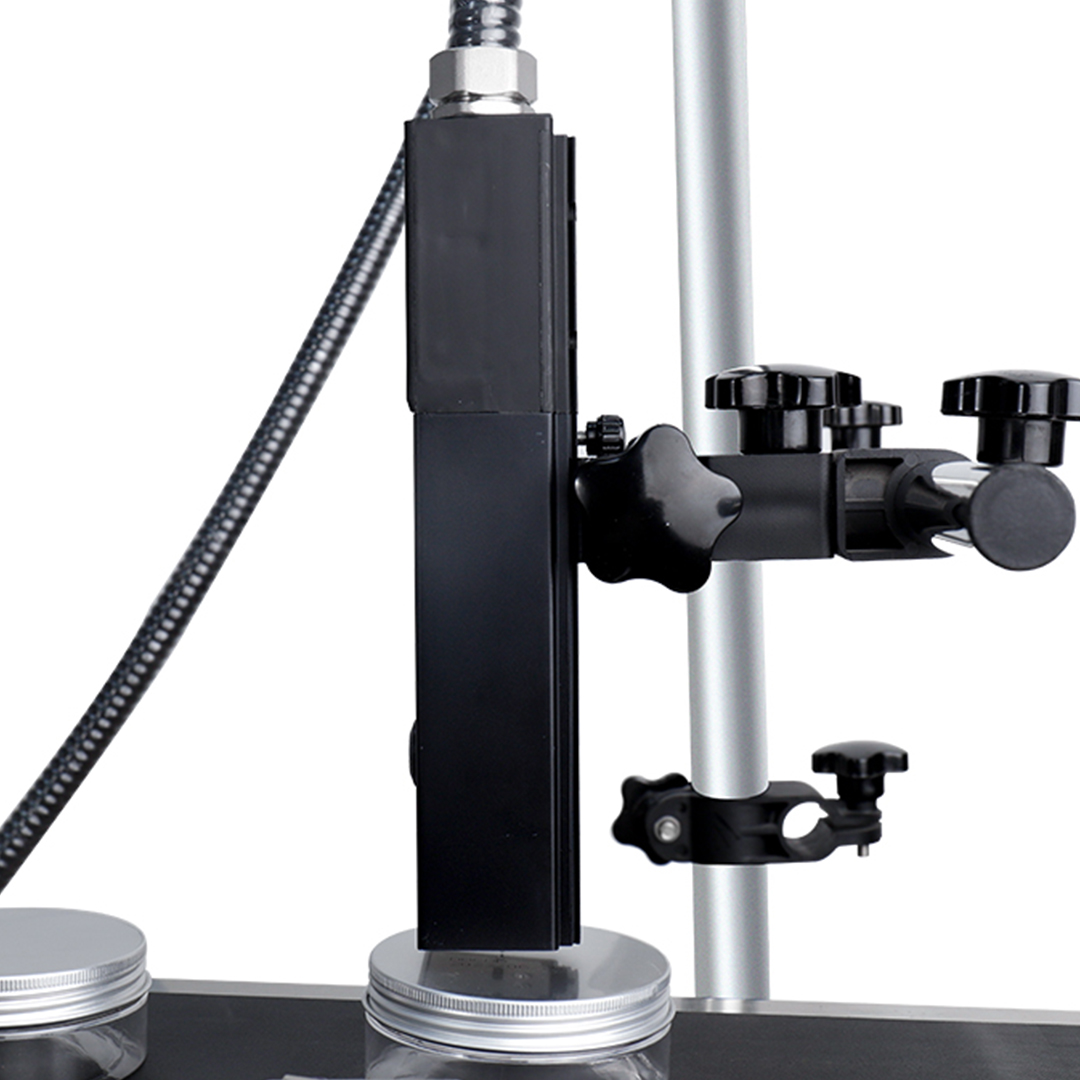
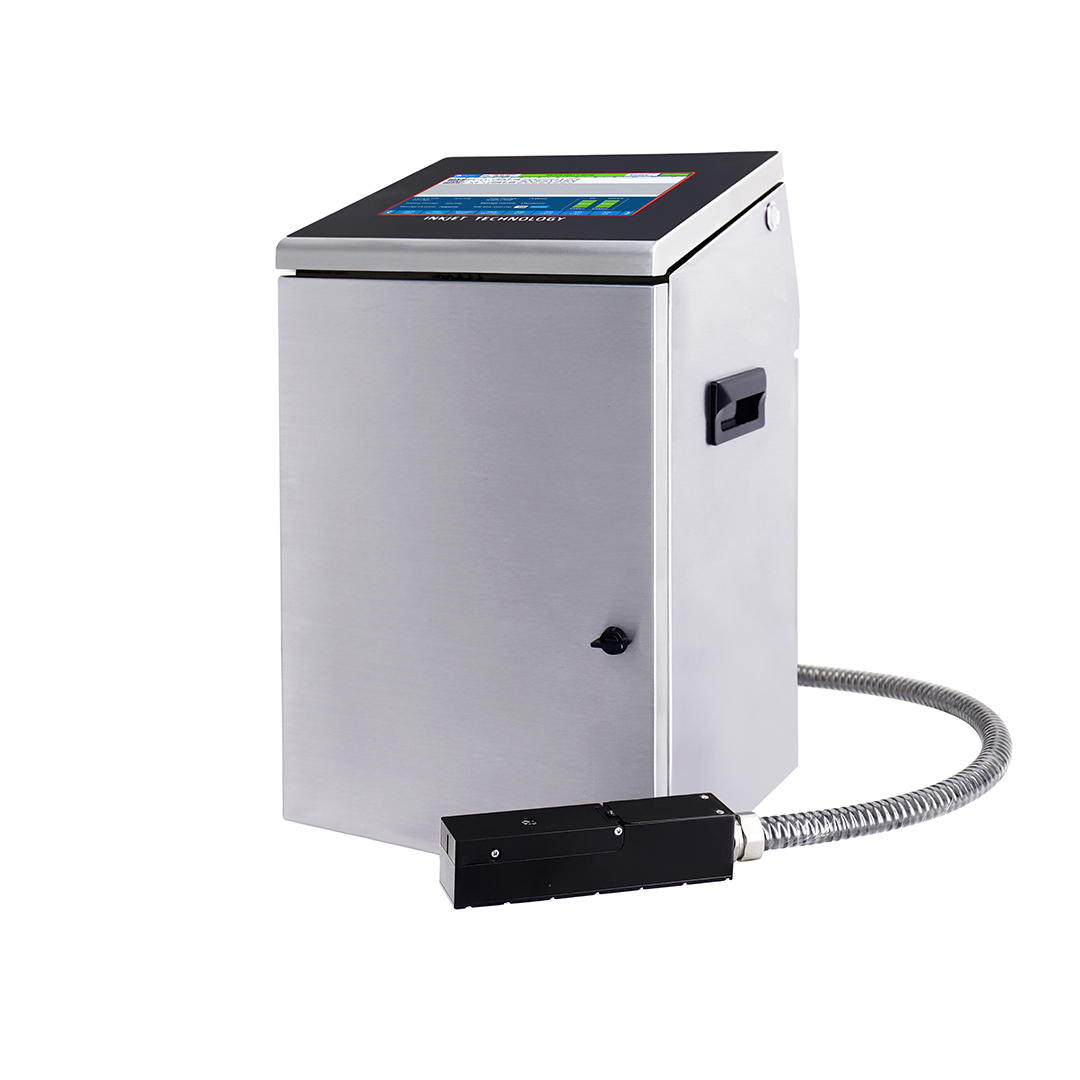
CIJ printers are well suited to high-speed, non-contact coding on curved or moving surfaces. The DOCOD M2000 Series prints 1–4 lines at a maximum speed of 528 m/min, with printing height from 3–30 mm, IP65 protection, and a 10.1-inch capacitive touch display. It supports multiple ink types including high adhesion, high temperature resistance, special for glass, food grade, and oil resistance, and can connect to an enterprise MES management system through USB, RS232, or network port. For higher line speeds, the DOCOD S1000 Series reaches up to 960 m/min with a 50u nozzle; the S300plus can print up to 5 lines, and the V2000 Series supports up to 5 lines as well.
Thermal Inkjet (TIJ) Printers
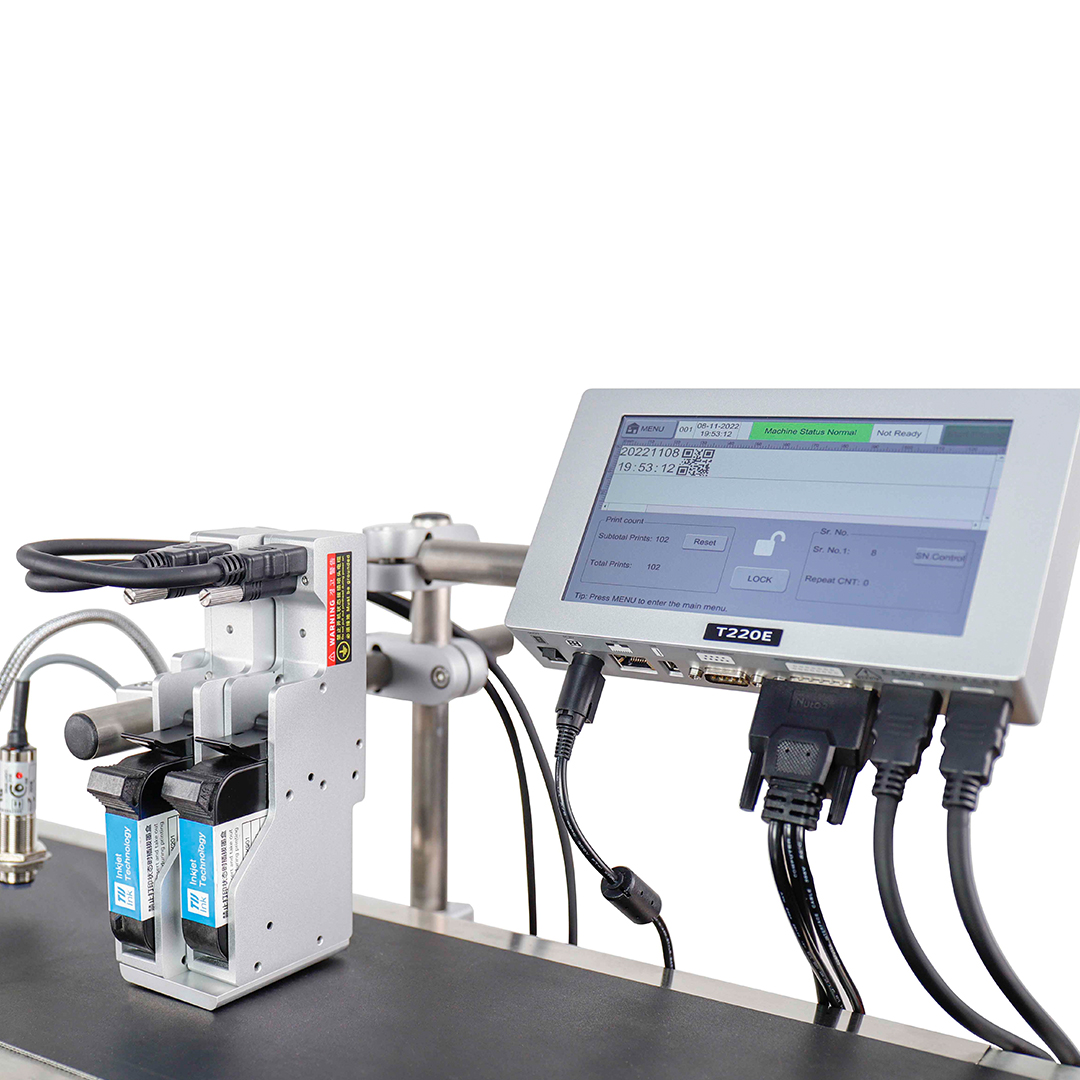
TIJ printers are used for high-resolution codes such as QR codes, GS1 codes, and variable databases. The DOCOD T220E half-inch dual-head printer offers up to 600×600 DPI, speeds up to 406 m/min, and can run one or two printheads. The TX1 half-inch seamless printer supports 1–8 printheads with print height from 1–101.6 mm. TIJ cartridges such as the DOCOD 3BK702 half-inch black solvent quick-drying ink cartridge contain 42 ml of ink and up to 300 nozzles; they are used for coding on BOPP, PVC, PP, PET, OPP, glass, and stainless steel.
Piezo Inkjet (PIJ) Printers
Piezo inkjet printers provide high-resolution printing on secondary packaging. The DOCOD P2000 uses I1600 series nozzles, offers 300 or 600 dpi, prints a single head up to 33.8 mm high, and reaches 190 m/min at 300 dpi. It supports negative-pressure continuous ink supply and can be cascaded across multiple devices while sharing one encoder or photocell sensor.
Thermal Transfer Overprinter (TTO)
TTO is used mainly on flexible films and pack materials. The DOCOD R3000 Series is an intermittent thermal transfer overprinter available in R3032 and R3053 models, with ribbon widths from 24 to 55 mm and print areas of 32×75 mm or 53×70 mm. It prints GS1 DataMatrix, dynamic QR codes, barcodes, serial numbers, and variable databases at 300 dpi, and supports network remote centralized control, ERP database connection, and anti-counterfeiting traceability systems.
Laser Marking Systems
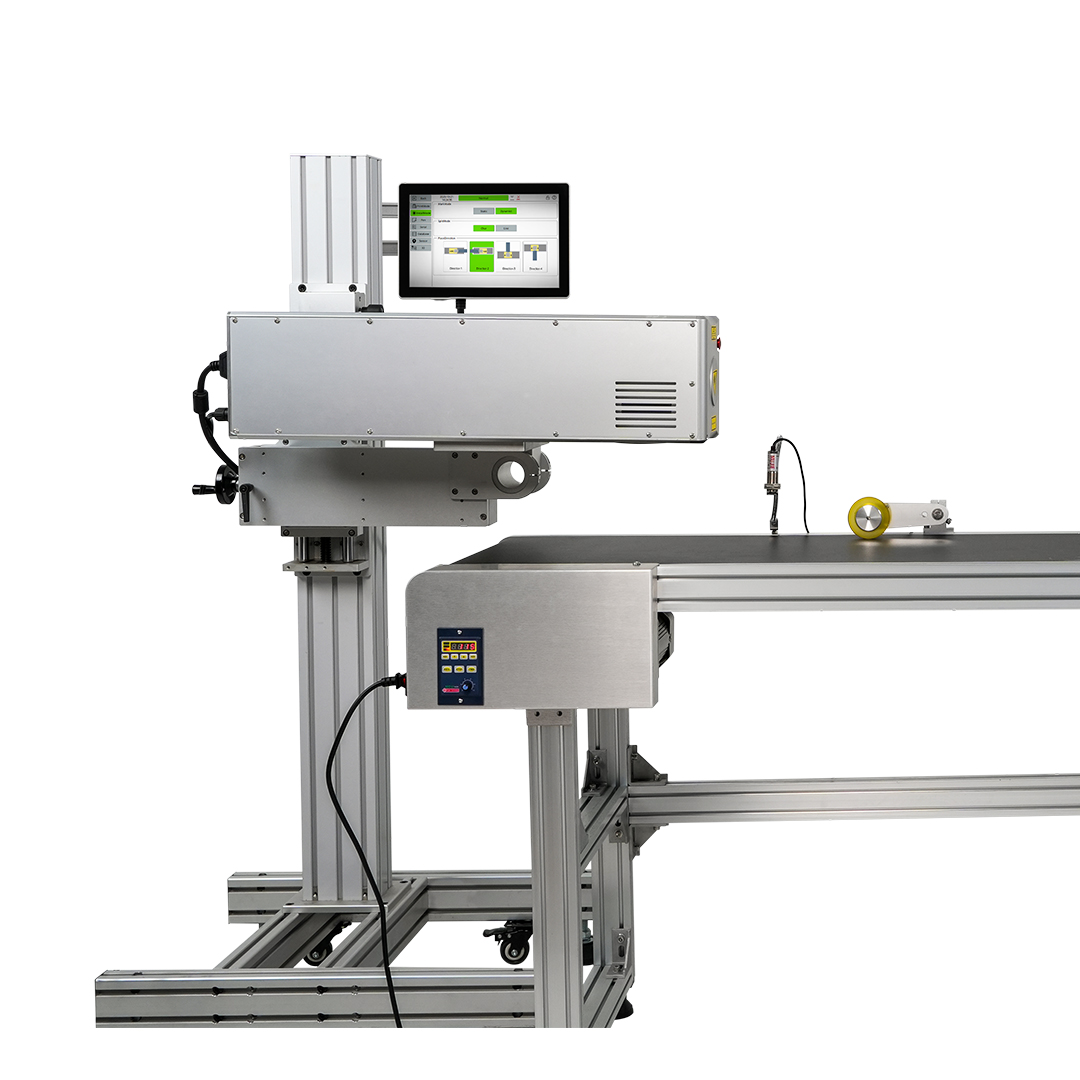
Laser marking removes the need for ink or ribbon consumables and provides permanent marks. DOCOD offers CO2, fiber, and UV laser systems. The Venus1 Series CO2 model is used for non-metal materials such as plastics, packaging, wood, rubber, and food packaging, with laser life of 20,000 hours. The Venus1 Series fiber laser is used for metal and coated materials, with laser life up to 100,000 hours. The Venus1 Series UV and the L3000 Series 5W UV laser are used for applications requiring low-heat, high-contrast marks on plastics, glass, film, and printed circuit boards. Under a stated test condition, the L3000 can mark a date code on PP film with character width 20 mm and height 2.8 mm in 29 milliseconds.
Supporting Equipment and Verification
Project adaptation also includes conveyors and inspection systems. The DOCOD XC20 mini conveyor belt is a compact desktop conveyor for coding and inspection lines, with a belt width of 150 mm, speed range 5–12 m/min, and an aerospace aluminum structure. The DOCOD XF30 vertical rewinding machine combines rewinding with a TIJ printer and is used for label rework, barcode and traceability printing, with support for GS1 data matrices and dynamic traceability QR codes. On the verification side, DOCOD’s portfolio includes inline vision inspection systems and print-and-verify workflows, which can be integrated with coding equipment for closed-loop code control.
Comparison Table: Technology Fit at a Glance
| Technology | Representative Model | Max Print Speed | Resolution / Print Area | Typical Substrates | Common Project Fit |
|---|---|---|---|---|---|
| CIJ | M2000 / S1000 / S300plus / V2000 | Up to 960 m/min (S1000, 50u) | 1–5 lines; height 2–30 mm | Carton, plastic, metal, glass, cable, pipe | High-speed, non-contact coding; curved or moving surfaces |
| TIJ | T220E / T260E / TX1 | Up to 406 m/min (T220E / TX1); up to 60 m/min (T260E) | Up to 600×600 dpi; print height 1–101.6 mm | Cartons, plastics, metals, coated packaging | High-resolution variable data, GS1 codes, multi-head configurations |
| PIJ | P2000 | 190 m/min at 300 dpi | 300 or 600 dpi; single head max 33.8 mm | Corrugated paper, labels, cartons, plastics | High-resolution text and 2D codes on secondary packaging |
| TTO | R3000 (R3032 / R3053) | 200–350 mm/s (up to 800 mm/s) | 300 dpi; print area 32×75 / 53×70 mm | Flexible film, pouches, sealed bags, metallized labels | Intermittent coding on flexible packaging |
| CO2 Laser | Venus1 CO2 | Depends on material and content | Character height from 0.6 mm | Non-metal materials: plastics, wood, rubber, packaging | Permanent, consumable-free marking on non-metals |
| Fiber Laser | Venus1 Fiber | Depends on material and content | Character height from 0.6 mm | Metal and coated materials | Permanent marking on metal parts and components |
| UV Laser | Venus1 UV / L3000 | Depends on material and content | Character height from 0.6 mm | Plastics, glass, film, PCB, coated packaging | Low-heat, high-contrast marking on sensitive materials |
Step-by-Step Process for Project Adaptation
- Document the line condition. Record the substrate, line speed, available print area, temperature, humidity, dust level, and mounting space. For example, the DOCOD M2000 works in 0–45°C and 30–70% RH; the S1000 operates at up to 960 m/min; IP65 or IP55 housings suit different washdown and dust levels.
- Define the code content and verification need. Decide whether the project requires date codes, batch codes, serial numbers, GS1 DataMatrix, DotCode, QR code, or a combination. If the final code must be read automatically, plan for vision inspection or print-and-verify.
- Choose the technology family. Use scenario mapping to narrow options. CIJ for high-speed non-contact coding, TIJ for high-resolution variable data, PIJ for wide-format high-resolution coding, TTO for flexible films, laser for permanent marks without consumables.
- Validate with samples. DOCOD’s standard equipment supply includes sample printing verification and function tests before shipment. For integration projects, sample runs and video acceptance are performed before delivery.
- Plan mechanical and data integration. Depending on the line, the coding system must connect to photocells, encoders, alarm lights, PLCs, or MES. DOCOD supports production line integration with conveyor/pager/rewinder matching, encoder and sensor connection, and GS1/DataMatrix serialization workflow matching.
- Confirm service and lead time. Standard equipment lead time is within 15 working days; OEM branding 15–25 days; ODM customization 20–30 days; production line integration 20–35 working days. These numbers are based on DOCOD’s stated operating capacity.
Use Cases from Coding Operations
| Client Type | Country | Application | Equipment | Observed Result |
|---|---|---|---|---|
| Cable manufacturer | US | Meter marking on cable sheath, 6 lines | M2000 Series CIJ | Clearer and more consistent codes; stable pressure and easy cleaning |
| Beverage bottling plant | VN | Batch coding on PET bottles, 4 lines | V2000 Series CIJ | Stable daily coding; suitable for high-speed lines |
| Pharma packaging supplier | IN | QR and expiry printing on cartons, 3 cartoning lines | T220E dual-head TIJ | Improved code readability; dual-head high-speed printing |
| Cosmetics OEM | PL | Lot coding on plastic bottles and caps, 2 lines | L3000 Series 5W UV laser | Permanent high-contrast marks; low-heat UV marking |
| Label converter | BR | Label secondary rewinding and coding, 1 station | XF30 vertical rewinding machine | Smoother short-run relabeling; suitable for roll-label rework |
| Snack manufacturer | ID | Date coding on flexible film, 2 VFFS lines | R3000 TTO | Cleaner film coding output; industrial-grade TTO performance |
| Contract packer | BR | Batch and QR printing on shipping cartons, 8 packing stations | TX1 half-inch TIJ | Faster deployment across small lines; compact setup for limited space |
| Electronics parts supplier | DE | Permanent marking on metal connectors, 2 workstations | Venus1 fiber laser | Durable readable marks; suitable for metal components |
Frequently Asked Questions
How can DOCOD support compliance-driven coding projects such as GS1 DataMatrix or serialized traceability?
DOCOD equipment supports multi-language text, GS1 codes, dynamic traceability QR codes, barcodes, serial numbers, dates, shifts, counters, and variable databases. For medical packaging, the P2000, TX1, and L3000 UV are applied to projects requiring UDI/GS1 DataMatrix with online code verification. For tobacco track-and-trace, M2000, T260E, and CO2 laser configurations print batch codes, tax-control codes, DotCode/DataMatrix, QR codes, and supply-chain traceability codes. Integration with vision inspection enables print-and-verify workflows.
What integration capabilities are available for existing production lines?
DOCOD supports production line integration with conveyor/pager/rewinder matching, encoder and sensor connection, and workflow matching for GS1/DataMatrix and serialization. Standard components include external interfaces for photocells, encoders, alarm lights, and communication via USB, RS232, TCP/IP, or network port to MES. The XC20 mini conveyor can support bench-line coding, and the XF30 supports label rewinding and coding. Integration testing, sample run, and video acceptance before delivery are part of the process.
How should buyers plan budgets for industrial coding and marking equipment across different project scenarios?
Budgets depend on the selected technology, print resolution, print area, integration complexity, and consumables. CIJ models such as the M2000 are used in high-speed lines with 1–4 lines, while TIJ models like the T220E offer up to 600×600 DPI for high-resolution codes. Laser systems involve higher initial investment but no ink or ribbon consumables, while TTO requires ribbon replacement. Buyers should include integration components such as sensors, encoders, conveyors, and code inspection devices. Standard equipment supply is typically MOQ 1 set; custom integration projects are MOQ 1 line.
Can I run a sample or bench test before committing to a system?
Yes. DOCOD's standard equipment supply includes sample printing verification and function tests before shipment. OEM branding projects include sample confirmation; production line integration projects include integration testing, sample run, and video acceptance before delivery. For distributor and service partner support, demo/sample validation is part of the cooperation review. Contact DOCOD to arrange substrate evaluation and coding tests.
What are typical lead times for project-specific coding equipment?
For standard equipment: within 15 working days (MOQ 1 set). OEM branding: 15–25 working days. ODM functional customization: 20–30 working days. Production line integration: 20–35 working days. Spare parts and consumables: within 15 working days. Distributor support: 15–30 days, MOQ 2 units. Lead times depend on configuration and testing requirements; final confirmation is made at order stage.
Conclusion: Start with the Scenario, Then Choose the System
The project scenario provides the most reliable starting point for selecting industrial coding and marking equipment. By documenting line conditions, understanding code requirements, and comparing technology capabilities, buyers can avoid the costly trial-and-error of installing a printer that does not fit the line.
DOCOD Precision Group Co., Ltd. offers a broad portfolio of CIJ, TIJ, PIJ, TTO, laser, inspection and supporting equipment, along with OEM, ODM, production line integration, spare parts, and distributor support. For project-specific guidance, contact DOCOD with your substrate, line speed, code format, and integration needs.
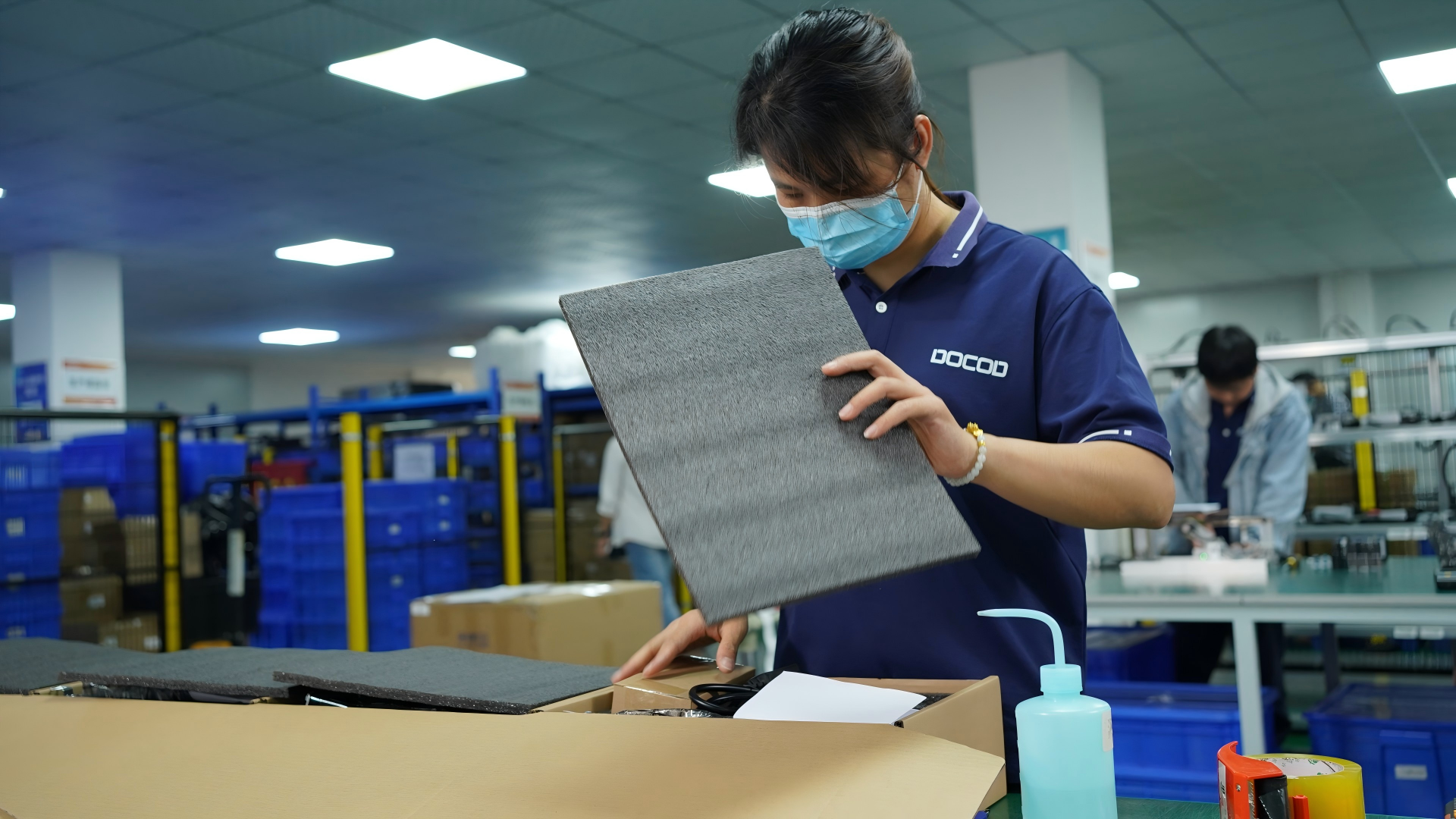
Get project-specific coding and marking guidance
Email: sales@docod.com.cn
Tel/WhatsApp: +86 139-2896-7650 / +86 135-1234-4323
Address: Xilin Industrial District, Honglai Town, Quanzhou Nan'an City, Fujian Province, China
Website: www.docod-group.com
Download the DOCOD corporate brochure: DOCOD Corporate Brochure (PDF).
Have Questions or Need More Details?
Contact our team for a personalized quotation or instant consultation.
Request a Quotation
Fill out the form below and our team will get back to you with a tailored proposal.
WhatsApp Direct Chat
Prefer to chat in real-time? Message us on WhatsApp for instant assistance & quick answers.
- Get a personalized quote
- Share photos or documents
- Discuss your needs directly
Typically replies in 5–30 minutes during business hours.