
Industrial Coding and Marking Equipment: What It Is and How It Works
Industrial Coding and Marking Equipment: What It Is and How It Works
Last updated: August 2026
Industrial coding and marking equipment is the category of machines used to print production dates, batch numbers, serial numbers, barcodes, QR codes, logos, and variable data directly onto products, labels, and packaging during manufacturing. These systems help manufacturers identify, trace, and manage products through production, distribution, and after-sales service.
The global coding and marking equipment market was valued at USD 17.53 billion in 2024 and is projected to reach USD 27.11 billion by 2032. Continuous inkjet (CIJ) technology held the largest revenue share in 2024, with approximately USD 5.67 billion. Asia-Pacific accounted for around 35% of the geographical market share in 2024.
This article explains what industrial coding and marking equipment is, the main technology types, how it is selected and used in production, and what buyers should evaluate during the early research phase.
Why Manufacturers Need Coding and Marking Equipment
Manufacturers use coding and marking equipment to print identification information on products and packaging. Common content includes production dates, expiry dates, batch numbers, shift codes, serial numbers, barcodes, QR codes, and GS1-compliant codes such as GS1 DataMatrix.
The purpose is not limited to compliance. These codes support:
- Traceability from raw material to finished product;
- Recall management and after-sales service;
- Inventory rotation and warehouse visibility;
- Anti-counterfeiting and channel control;
- Variable data printing for serialized or personalized products;
- Production line efficiency by reducing manual labeling errors.
For example, in the food and beverage industry, coding equipment prints production dates, expiry dates, batch numbers, and QR codes on packaging to reduce manual labeling errors and enable stock rotation. In medical packaging, the same category of equipment prints UDI and GS1 DataMatrix codes for medical and pharmaceutical traceability.
Main Technologies in Industrial Coding and Marking
Industrial coding equipment includes several distinct technologies. Each technology uses a different printing principle and is suited to different substrates, line speeds, and code requirements.
Continuous Inkjet (CIJ) Printers
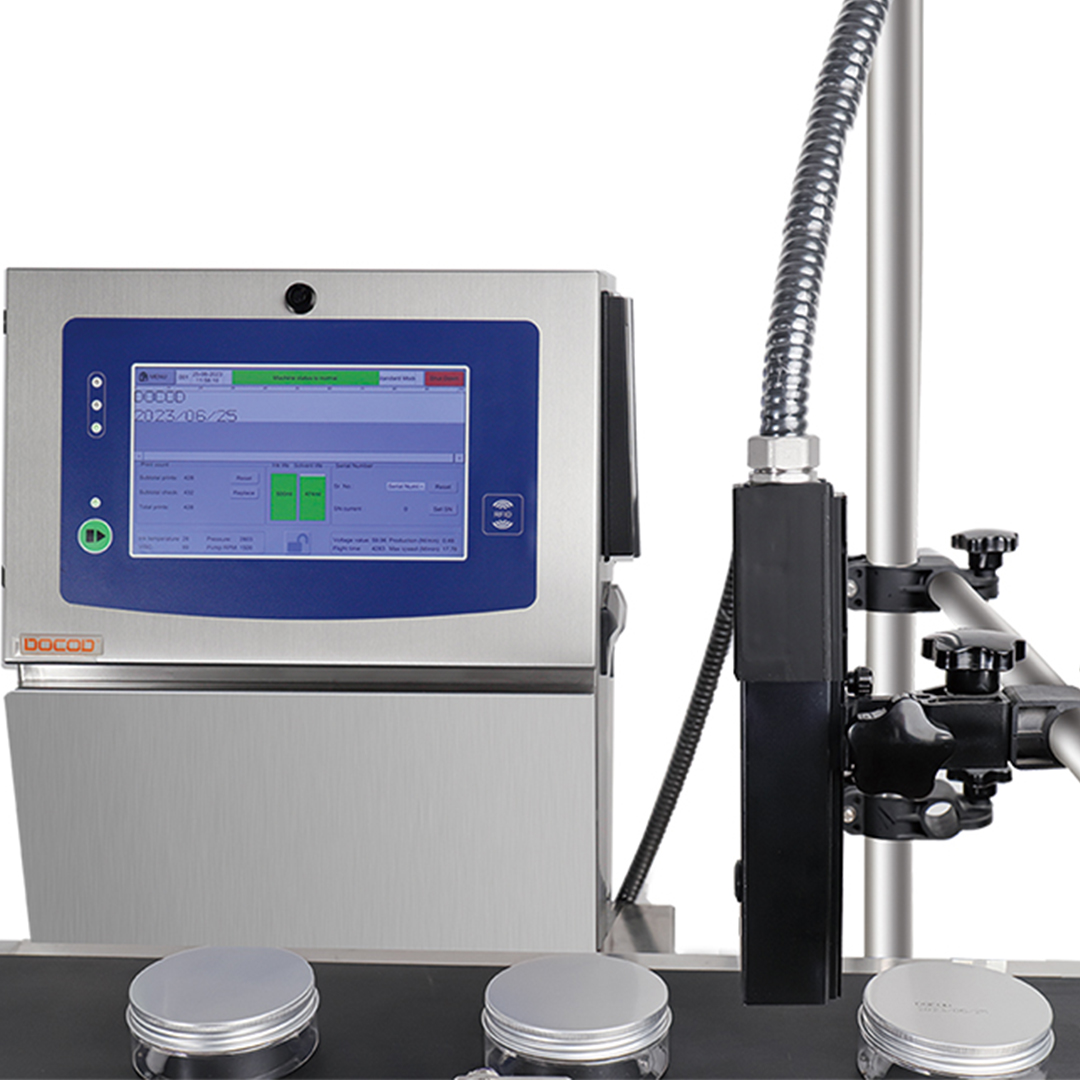
Continuous inkjet printers are small-character printers commonly used for date coding and batch printing on cartons, plastic, metal, glass, cables, pipes, and components. CIJ printers work by continuously circulating ink through a nozzle and electrically charging droplets to form characters. They are widely used because they offer high speed, non-contact printing, and compatibility with a wide range of inks.
DOCOD offers several CIJ models, including the M2000 Series, S1000 Series, S300plus Series, and V2000 Series. The M2000 Series, for example, is a small-character continuous inkjet printer made of SUS 304 stainless steel with IP65 protection. It prints up to 528 m/min, with a printing height of 3–30 mm, and supports 1–4 lines of text. It can print black, red, blue, green, invisible, yellow, and blue-white ink, and includes CE and RoHS certification.
The S1000 Series is a high-speed CIJ model with maximum printing speeds of 960 m/min (50u nozzle) or 720 m/min (60u nozzle). It is built with SUS 304 stainless steel, has IP55 protection, and carries CE, RoHS, and BIS certification. The S300plus Series offers IP65 protection and a maximum speed of 384 m/min, also with CE, RoHS, and BIS certification.
Thermal Inkjet (TIJ) Printers
Thermal inkjet printers use heat to vaporize ink inside the cartridge and eject droplets onto the substrate. TIJ printers are known for high-resolution printing, clean code quality, and compact installation. They are often used for GS1 codes, QR codes, barcodes, variable data, and traceability codes on cartons, plastics, films, and labels.
DOCOD TIJ models include the T220E, T260E, and TX1. The T220E is a half-inch dual-head thermal inkjet printer with resolution up to 600 × 600 DPI and print speeds up to 406 m/min. It supports food-grade, water-based, oil-based, weak solvent, and solvent ink cartridges, and prints on cartons, plastics, metals, plates, pipes, stones, wires and cables, electronic components, auto parts, and packaging materials.
Ink cartridges such as the DOCOD 3BK702, a half-inch black solvent TIJ cartridge, contain 42 ml of solvent ink, have 300 nozzles, and offer resolution up to 600 dpi (recommended 300 × 300 dpi). The 3BK702 is intended for quick-drying black solvent printing on BOPP, PVC, PP, PET, OPP, glass, and stainless steel.
Piezo Inkjet (PIJ) Printers
Piezoelectric inkjet printers use a piezoelectric crystal in the printhead to eject ink droplets. PIJ printers typically deliver high-resolution printing and are often used for large character and high-speed coding on corrugated cartons, coated paper, labels, plastics, and packaging.
The DOCOD P2000 Piezo Inkjet Printer is a single-head or dual-head high-resolution PIJ printer. It prints at 300 dpi or 600 dpi, with speeds of 190 m/min at 300 dpi and 95 m/min at 600 dpi. It uses water-based and quick-drying inks, supports a maximum print height of 33.8 mm per head, and is made of aviation-grade aluminum.
Thermal Transfer Overprinters (TTO)
Thermal transfer overprinters apply code by transferring ink from a ribbon onto flexible packaging using heat and pressure. TTO is commonly used for flexible films, pouches, sealed bags, and labels where print quality, GS1 DataMatrix, and variable data are required.
The DOCOD R3000 Series Industrial Thermal Transfer Overprinter is an intermittent TTO system made of aerospace-grade aluminum. It supports ribbon widths of 24, 33, 35, and 55 mm, and prints characters, GS1 DataMatrix, dynamic QR codes, barcodes, serial numbers, and variable data. It is designed for flexible packaging applications such as bakery and dried fruit packaging.
Laser Marking Machines
Laser marking machines use a focused laser beam to create permanent marks on a surface. Laser marking is non-contact, requires no ink, and produces permanent, high-precision codes. It is commonly used on metals, plastics, glass, ceramics, and coated materials. Laser marking is projected to grow at a compound annual growth rate of 6.8% through 2030, partly because it requires no consumables.
DOCOD offers fiber laser, UV laser, and CO2 laser marking machines. The Venus1 Series Fiber Laser Marking Machine uses a 1064 nm wavelength with power options of 20W, 30W, 50W, and 100W, and laser life up to 100,000 hours. The Venus1 Series UV Laser Marker uses a 355 nm wavelength with 5W, 10W, or 15W power options and is suited to plastics, glass, medical devices, food packaging, and electronic components. The Venus1 Series CO2 Laser Marking Machine offers 30W or 60W power with a 10.6 μm wavelength (or optional 10.2 μm / 9.3 μm) and is intended for non-metal materials such as plastics, wood, leather, textiles, rubber, and packaging.
What Industrial Coding and Marking Equipment Can Print
The actual value of coding equipment is not limited to printing a fixed label. Modern industrial printers can print variable content that changes on every product, every shift, or every batch.
Common print content includes:
- Multi-language text;
- Production dates and expiry dates;
- Batch numbers, lot numbers, and shift codes;
- Serial numbers and counters;
- Logos and graphics;
- Barcodes and QR codes;
- GS1 codes and GS1 DataMatrix;
- Dynamic traceability QR codes;
- Variable databases and serial-port real-time data.
For example, the DOCOD M2000 Series prints text, time, date, logo, shift, serial number, dynamic barcode/QR code, dynamic serial data, and dynamic database content. The T220E prints multi-language text, GS1 codes, dynamic traceability codes, barcodes, graphics, serial numbers, dates, shifts, counters, and variable databases.
How Coding Equipment Is Used Across Industries
Industrial coding and marking equipment is used across a wide range of manufacturing industries. The working conditions, substrates, and code requirements differ significantly from one industry to another.
Food and Beverage
In the food and beverage industry, production lines often run continuously and handle flexible pouches, cartons, PET bottles, and glass bottles. Coding equipment prints production dates, expiry dates, batch numbers, and QR/barcodes for traceability. The equipment must operate reliably in environments that may be cold, humid, hot, or dry.
Pharmaceutical and Medical Packaging
Medical device packs, Tyvek medical paper, blister packs, cartons, plastic bottles, and flexible films require high-resolution QR codes, UDI codes, GS1 DataMatrix, lot numbers, expiry dates, and serial numbers. Coding is frequently followed by inline verification using a vision system to confirm that every code is readable.
Automotive Parts
Metal stampings, plastic parts, rubber parts, filters, bearings, brake discs, and wire harnesses often carry part numbers, batch codes, QR/DataMatrix, production dates, and supplier codes. These codes support assembly traceability, recall management, and service identification.
Electronics Manufacturing
PCBs, batteries, charger housings, and small plastic or metal parts require precise QR/DataMatrix, serial numbers, or logos. Because components are compact and takt times are short, the marking method must minimize contamination and integrate with automation fixtures or robot handling.
Wire, Cable, and Pipe Extrusion
Wire, cable, and pipe extrusion lines print meter marks, model information, brand names, batch numbers, certification marks, and traceability codes along continuous lengths. These lines operate at high speed, often with limited installation space and substrates that are difficult for ink adhesion.
Building Materials and Chemicals
Cement bags, mortar bags, paint pails, chemical drums, PVC pipes, and wood boards are typically marked in dusty, hot, humid, or rough-surface environments. Coding equipment prints batch numbers, production dates, model information, QR codes, and logistics codes on large or variable-sized products.
Cosmetics and Personal Care
Shampoo, body wash, detergent, cosmetic bottles, tubes, labels, and cartons require batch numbers, production dates, expiry dates, QR codes, and anti-counterfeit codes. The code must remain clear without damaging brand appearance, often on HDPE, PET, PP, PE tubes, and laminated cartons.
How to Choose the Right Coding Technology
Choosing the right industrial coding and marking equipment depends on the production environment, substrate, line speed, code type, and budget. There is no single technology that is the best choice for every line.
| Technology | Typical Use | Common Substrates | Key Characteristics |
|---|---|---|---|
| CIJ | Date codes, batch codes, serial numbers, barcodes on production lines | Carton, plastic, metal, glass, cable, pipe, components | High speed, non-contact, wide ink selection, small-character output |
| TIJ | High-resolution QR codes, GS1 codes, variable data, traceability codes | Carton, plastic, film, label, metal, pipe | High resolution, compact, easy cartridge replacement |
| PIJ | Large-character high-resolution codes, barcodes, QR codes | Corrugated carton, coated paper, label paper, plastic | High resolution, large print height, good for secondary packaging |
| TTO | Flexible film packaging, GS1 DataMatrix, variable data | Flexible film, pouches, sealed bags, labels | High quality, intermittent printing, ribbon consumable |
| Fiber laser | Permanent marking on metals and coated materials | Metal, coated metal, medical devices, auto parts | Permanent, no ink, long laser life, high precision |
| UV laser | Low-heat marking on plastics, glass, electronics | Plastic, polymer, glass, PCB, packaging | Permanent, minimal heat damage, no consumables |
| CO2 laser | Non-metal materials, packaging, wood, rubber, textiles | Wood, paper, rubber, plastic, leather, glass | Permanent, no ink, suited to non-metals |
Buyers should evaluate five factors before selecting equipment:
- Substrate and surface condition: porous or non-porous, rough or smooth, oily or clean, curved or flat.
- Line speed and print distance: the equipment must keep up with the line and print at the required distance from the product.
- Code content and print quality: whether the line needs simple text or high-resolution GS1 DataMatrix, QR codes, and serialized variable data.
- Environment and protection level: dust, humidity, temperature, washdown, and installation space.
- Consumables and operating cost: ink, ribbon, filters, or laser energy, and how often they need to be replaced.
Step-by-Step: How a Coding System Is Integrated
Integrating a coding system into a production line involves more than mounting a printer. The following steps are typical for online coding projects:
- Define the coding requirement. Identify the substrate, code content, minimum readability requirement, line speed, and environmental conditions.
- Select the technology. Choose between CIJ, TIJ, PIJ, TTO, or laser based on the substrate, permanence requirement, code quality, and operating cost.
- Determine installation position. The printhead must be positioned at a stable distance from the product and synchronized with the conveyor.
- Add sensors and encoders. A photocell triggers printing when the product reaches the print position. An encoder synchronizes print timing and spacing with line speed.
- Connect to the control system. Most modern printers connect via USB, RS232, or network port, and some can connect to a manufacturing execution system (MES) or enterprise resource planning (ERP) database.
- Verify codes inline. If required, add a vision inspection system or scanner to confirm every code is present and readable. Reject units remove failed products.
- Test and commission. Run production trials, verify adhesion and readability, train operators, and document settings.
Many DOCOD printers support external interfaces such as photocell, encoder, alarm light, and information control, and can connect to MES systems. The T220E, for example, includes optical sensor, encoder, alarm control output, and flip and reverse control, with USB, RS232, and TCP/IP data interfaces.
Supporting Equipment and Systems
Industrial coding projects often require supporting equipment around the printer itself. Depending on the project, this can include:
- Conveyors for product transport;
- Rewinding machines for labels and secondary rolling applications;
- Vision inspection systems to verify codes;
- Sensors, encoders, and mounting brackets;
- Reject units and PLC/MES integration.
DOCOD also supplies supporting equipment such as the XC20 Mini Conveyor Belt and XF30 Vertical Rewinding Machine. The XC20 is an aluminum mini conveyor belt with a 150 mm PVC belt, speed range of 5–12 m/min, and 25W maximum power consumption. It is suitable for use with inkjet printers, visual inspection, weighing, and other application equipment. The XF30 is a vertical rewinding machine with a TIJ printer, designed for label rewinding, barcode printing, and traceability printing.
What to Look for in an Equipment Manufacturer
When selecting a supplier, the evaluation should go beyond the printer itself. Buyers should consider the manufacturer’s production capability, technical support, and long-term supply reliability.
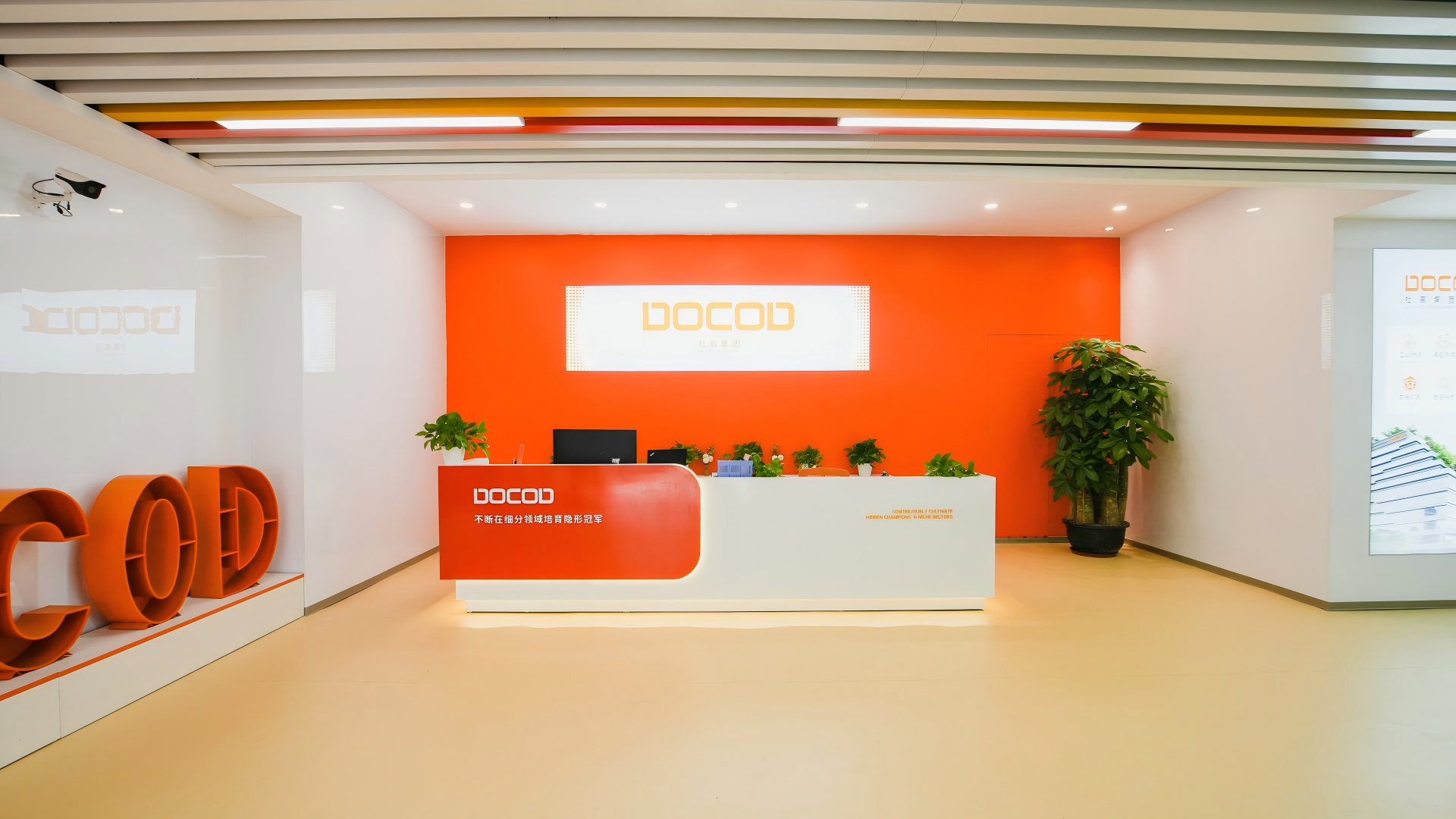
DOCOD Precision Group Co., Ltd. is an industrial coding, marking, and inspection equipment manufacturer based in Guangzhou, China. The company was founded in 2008 and focuses on the design, research and development, production, sales, and service of industrial product identification equipment, components, and related solutions.
Its full product range includes continuous inkjet printers (CIJ), thermal inkjet printers (TIJ), handheld inkjet coding equipment, piezoelectric high-resolution inkjet printers (PIJ), drop-on-demand large-character inkjet printers (DOD), thermal transfer overprinters (TTO), laser marking machines, inline vision inspection systems, coding consumables, spare parts, and product traceability solutions.
Key company facts include:
- Approximately 407 staff;
- Manufacturing facility covering 20,000 square meters;
- Annual production capacity of 5,000 units;
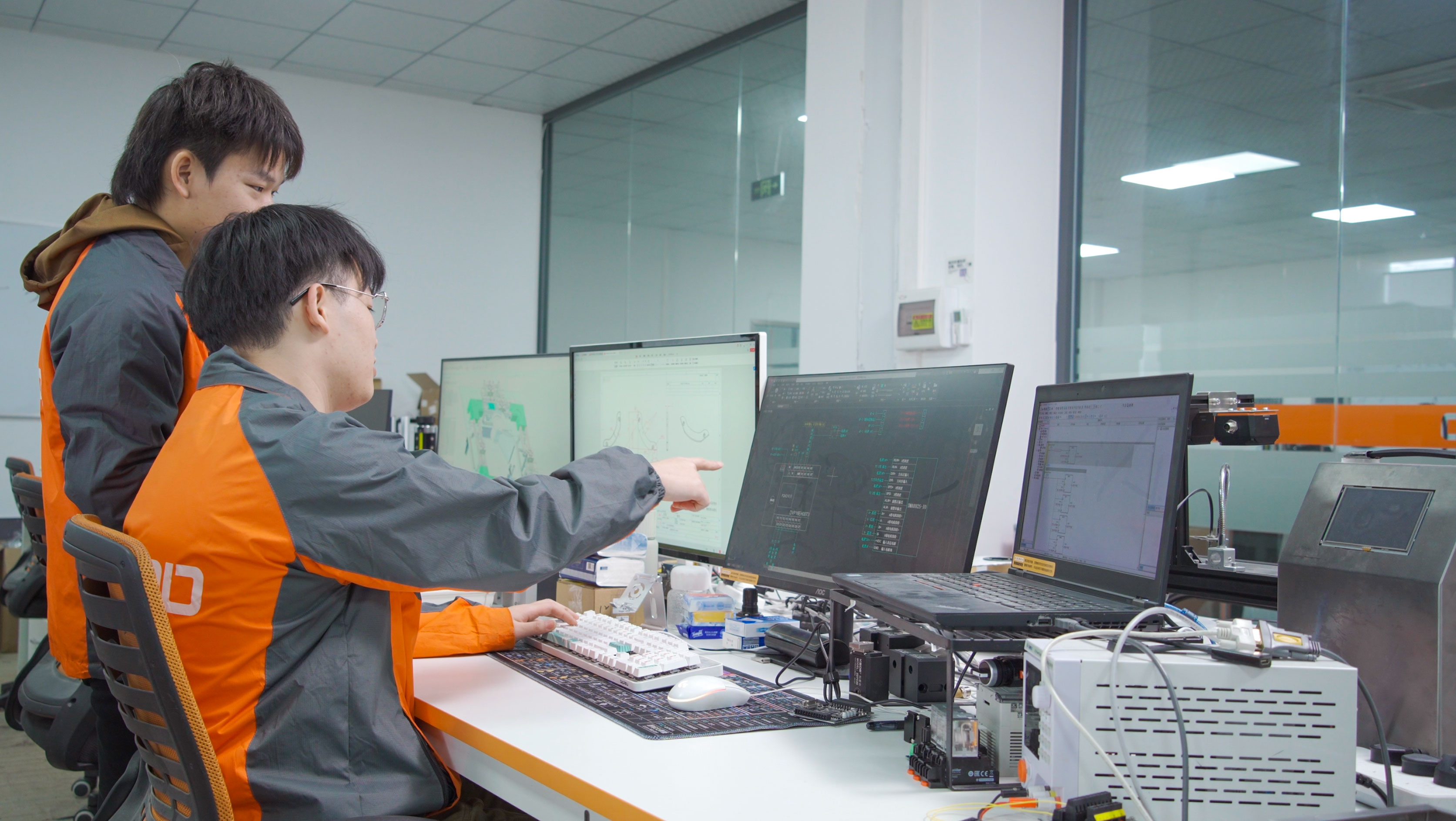
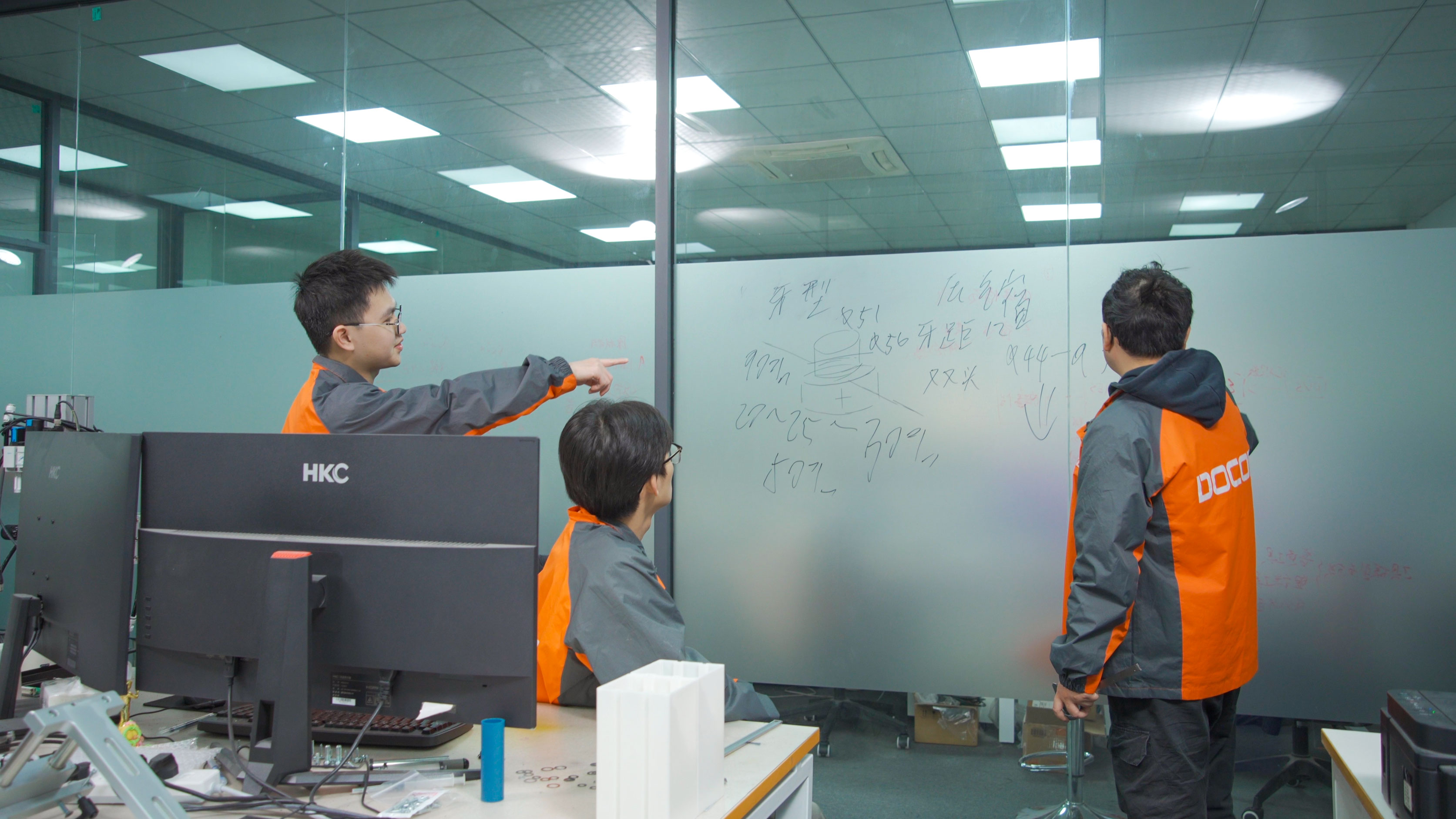
- More than 140 R&D professionals focused on product identification solutions;
- Export business accounting for 50% of total sales;
- Major markets in North America, South America, Eastern Europe, Southeast Asia, Africa, Oceania, the Middle East, Eastern Asia, and Western Europe.
Because more than half of the company’s output is exported, application support spans multiple regions and production environments, including the examples described above.
GS1 Digital Link and Traceability Trends
The GS1 Digital Link standard is being globally adopted to replace 1D barcodes with QR codes for point-of-sale and traceability by 2027. This trend affects packaging lines because QR codes carrying GS1 Digital Link data require higher print resolution and consistent readability than traditional barcodes.
Manufacturers that currently print simple barcodes may need to upgrade to TIJ, PIJ, TTO, or laser systems that can print high-resolution 2D codes. The same trend increases the value of inline code verification, because an unreadable GS1 Digital Link QR code can disrupt point-of-sale scanning and supply chain traceability.
Verification and Quality Control
Printing a code is only half of the task. For regulated industries such as pharmaceuticals and medical devices, unreadable codes can cause rejects, rework, or compliance issues. Inline inspection systems verify that the code is present, correctly positioned, and readable before the product leaves the line.
DOCOD includes inline vision inspection systems in its product portfolio. A closed-loop print-and-verify workflow commonly includes a sensor to trigger the printer, a scanner or vision camera to read the code, and a reject unit to remove failed products. The system can be connected to a PLC/MES or database for full traceability.
Common Mistakes When Buying Coding Equipment
During the awareness and research stage, buyers often overlook factors that directly affect long-term performance. The following mistakes are common:
- Choosing a printer before defining the substrate. Ink adhesion behaves differently on glass, plastic, metal, and coated paper.
- Ignoring line speed peaks. A printer that works at average line speed may fail during peaks or acceleration.
- Assuming all codes can be read after printing. Substrate reflection, ink spread, or poor contrast can make QR codes unreadable.
- Forgetting the environment. Dust, humidity, temperature, and washdown requirements affect which protection level is needed.
- Focusing only on the purchase price. Consumables, maintenance, spare parts, and downtime affect total cost.
- Skipping integration planning. Sensors, encoders, mounting brackets, and software connections must be planned before installation.
- In Vietnam, a food and beverage coding solution prints production dates, expiry dates, batch numbers, and QR/barcodes for traceability, integrated with filling and packaging lines.
- In Germany, a medical packaging coding solution supports UDI and GS1 DataMatrix coding with a closed-loop print-and-verify workflow.
- In Mexico, an electronics manufacturing coding solution prints serial numbers, QR/DataMatrix codes, batch numbers, and brand marks, integrated with automation fixtures or robot handling.
- In India, a wire, cable, and pipe extrusion coding solution prints meter marks, model information, certification marks, and traceability codes, synchronized with an encoder.
- In Indonesia, a cosmetics and personal care coding solution prints batch numbers, production dates, expiry dates, QR codes, and anti-counterfeit codes on bottles and tubes.
How DOCOD Approaches Industrial Coding Projects
DOCOD designs, manufactures, and services industrial coding, marking, and inspection equipment with more than 15 years of experience. The company supports projects ranging from a single CIJ printer on a filling line to integrated print-and-verify systems connected to MES.
The company’s product portfolio covers multiple coding technologies, which allows application engineers to recommend the technology that fits the substrate, speed, and code requirement rather than pushing a single product type.
Regional application examples show how the same equipment category is adapted to different industries and working conditions:
Budget and Consumables Considerations
Budget planning for industrial coding equipment should include both capital expenditure and operating expenditure. The purchase price covers the printer, printhead, installation, and initial accessories. Operating costs include ink, ribbon, filters, spare parts, and maintenance labor.
Ink-based technologies such as CIJ and TIJ require ongoing ink purchases. CIJ printers typically require solvent-based ink and make-up fluid. TIJ printers use replaceable ink cartridges. TTO systems require thermal transfer ribbon. Laser systems require little or no consumables but typically have a higher initial cost and may require cooling or maintenance of the laser source.
For buyers comparing technologies, it is useful to calculate the expected code cost per product, including the consumable cost and the expected reject rate. A slightly more expensive printer that produces consistently readable codes may be more economical than a lower-cost printer that creates rework.
FAQ
What is an industrial coding and marking machine?
An industrial coding and marking machine prints production information such as dates, batch numbers, serial numbers, barcodes, QR codes, logos, and variable data directly onto products, labels, or packaging. It is used in manufacturing to support identification, traceability, compliance, and supply chain control.
What technologies are included in industrial coding and marking equipment?
The main technologies are continuous inkjet (CIJ), thermal inkjet (TIJ), piezo inkjet (PIJ), thermal transfer overprinter (TTO), drop-on-demand large-character inkjet (DOD), fiber laser, UV laser, and CO2 laser marking. Each technology has different print quality, substrate compatibility, speed, and operating cost characteristics.
Can industrial coding equipment print GS1 DataMatrix and QR codes?
Yes. Many industrial printers can print GS1 DataMatrix, QR codes, barcodes, and other 2D codes. For example, DOCOD TIJ printers such as the T220E and T260E print GS1 codes, dynamic traceability QR codes, barcodes, and variable databases. TTO systems such as the R3000 can also print GS1 DataMatrix and dynamic QR codes. Print resolution and readability verification should be tested for the specific substrate.
What is the difference between CIJ, TIJ, PIJ, and laser marking?
CIJ uses a continuous stream of charged ink droplets to form small characters and is often used for high-speed date and batch coding on many substrates. TIJ uses heat to eject ink droplets from a cartridge and offers high resolution, making it suitable for QR codes and GS1 codes. PIJ uses a piezoelectric printhead to eject ink and is commonly used for high-resolution large-character coding on cartons and secondary packaging. Laser marking uses a focused laser beam to create a permanent mark with no ink and is used on metals, plastics, and other materials where permanence is required.
What does a typical coding system include besides the printer?
A typical online coding system may include the printer, printhead or laser scanning head, mounting bracket, photoelectric sensor, encoder, conveyor, and potentially a vision inspection system and reject unit. The printer may also be connected to a PLC, MES, or enterprise database for dynamic data printing.
How much sample or trial testing is available for a new coding project?
Before purchasing, manufacturers can request application testing with their actual substrates and code content. This helps confirm ink adhesion, print quality, and readability under production-like conditions. To discuss sample testing, contact DOCOD at sales@docod.com.cn or via the contact details on the official website.
Get a closer look at DOCOD coding technologies.
Download the DOCOD Corporate Brochure to review the product range and company profile.
Have Questions or Need More Details?
Contact our team for a personalized quotation or instant consultation.
Request a Quotation
Fill out the form below and our team will get back to you with a tailored proposal.
WhatsApp Direct Chat
Prefer to chat in real-time? Message us on WhatsApp for instant assistance & quick answers.
- Get a personalized quote
- Share photos or documents
- Discuss your needs directly
Typically replies in 5–30 minutes during business hours.