
Industrial Coding and Marking Equipment: Decision Framework for Speed, Substrate, and Cost
Industrial Coding and Marking Equipment: Decision Framework for Speed, Substrate, and Cost
Selecting industrial coding and marking equipment is not a technology contest. In most purchasing decisions, the real question is whether a Continuous Inkjet Printer, Thermal Inkjet Printer, Piezo Inkjet Printer, Thermal Transfer Overprinter, or Laser Marking Machine can hold code quality under the specific line speed, substrate, and data requirements of a production environment. This article gives buyers a practical comparison framework for the final decision, using DOCOD Precision Group Co., Ltd. as a structured reference.
Why Final Equipment Decisions Still Fail
Even when a buyer has already shortlisted equipment brands, the final decision can still go wrong. The most common failure is not an underperforming machine. It is a machine selected around the wrong constraint: packaging material, true line speed, code density, consumable workflow, or integration responsibility.
A CIJ system may be excellent for continuous coding on bottles but wrong for a large 2D code on a coated carton. A laser system may eliminate ink cost but damage heat-sensitive film. A TIJ printer may deliver beautiful resolution but slow down a high-speed cable line. These are not quality failures; they are fit failures.
The purpose of this article is to move the buyer from specification comparison to decision validation. For each technology family, the relevant question is simple: Does it fit the substrate, the line speed, and the code content that the production line will actually run?
Market Context: Coding and Marking Is Now a Data Infrastructure Purchase
The global market for coding and marking equipment is expanding. According to SkyQuest, the market was valued at USD 17.53 billion in 2024 and is projected to reach USD 27.11 billion by 2032. Grand View Research also reports that Continuous Inkjet technology held the largest revenue share in this market, at approximately USD 5.67 billion in 2024.
Two trends make the final equipment decision more demanding. First, the GS1 Digital Link standard is being adopted globally to replace 1D barcodes with QR codes for point-of-sale and traceability by 2027. This pushes code content toward serialized, data-rich 2D codes that require consistent print quality and code verification. Second, laser marking is projected to grow at a CAGR of 6.8% through 2030, according to Fortune Business Insights, because no-ink laser routes can reduce consumable handling when the substrate is suitable.
Detailed Solution: Read DOCOD's Product Lines as a Decision Map
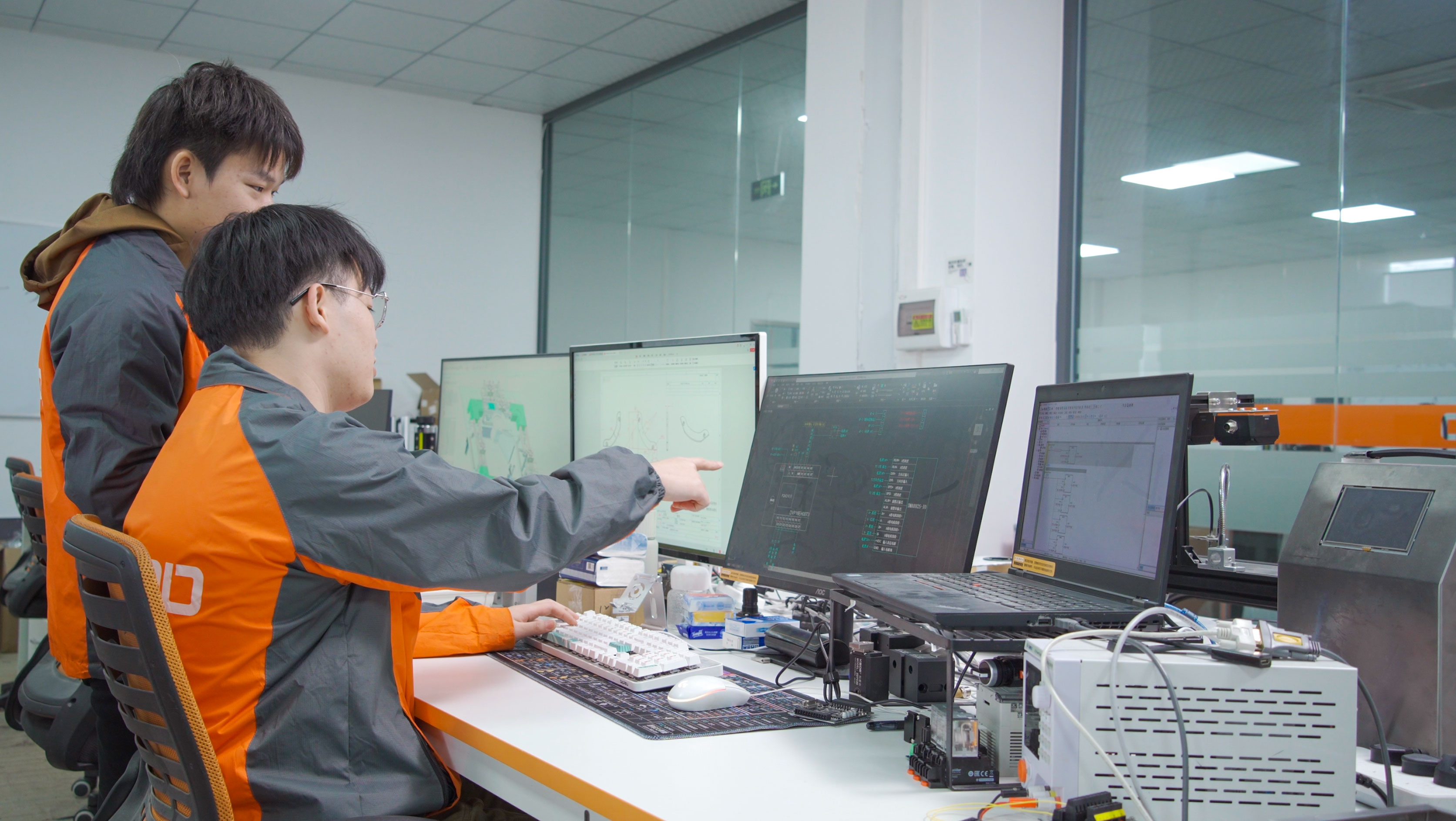
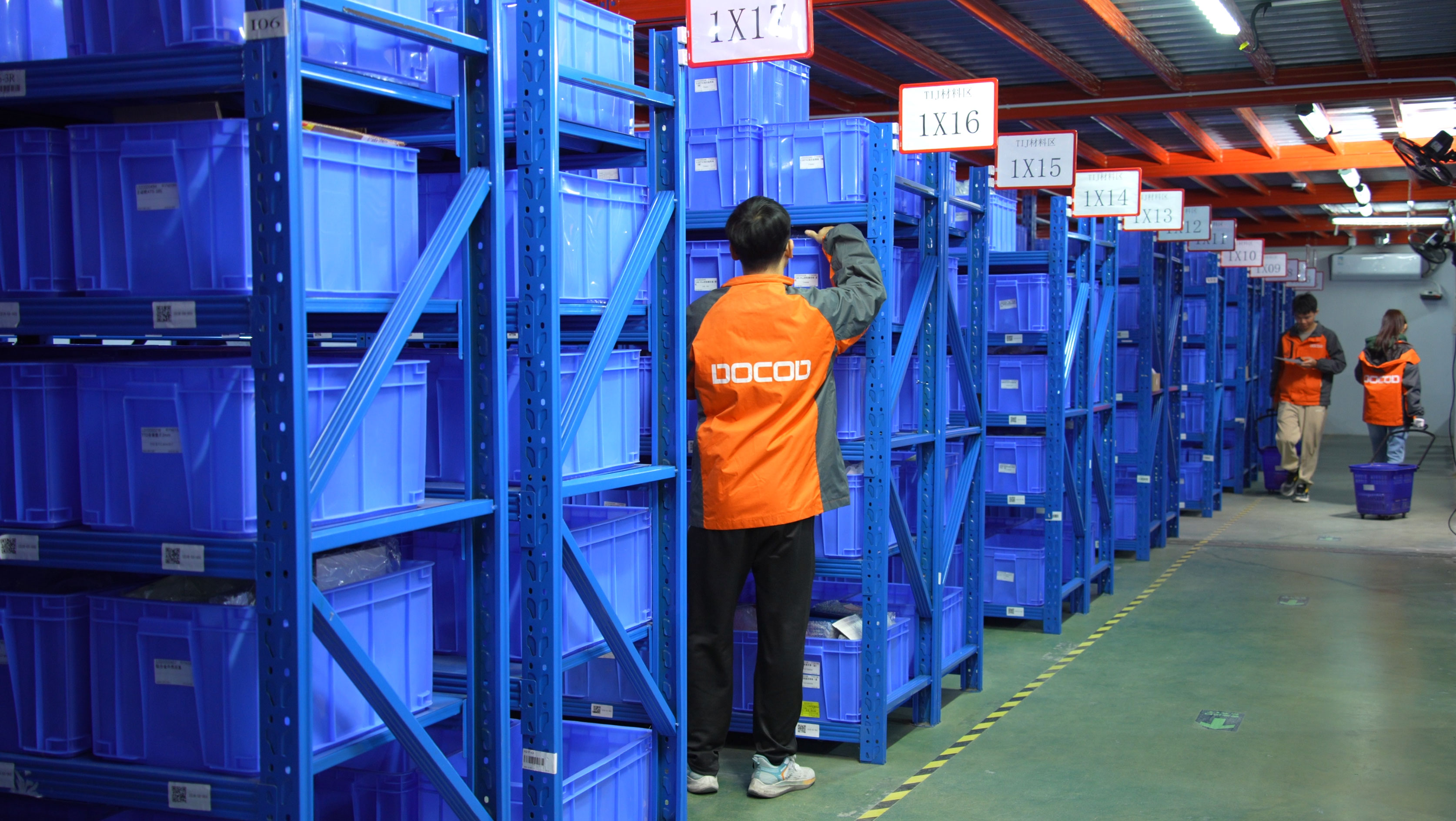
DOCOD Precision Group Co., Ltd. is a China-based industrial coding, marking, and inspection equipment manufacturer founded in 2008. The company operates a 20,000 m² facility with 407 employees and 140+ R&D staff, and produces roughly 5,000 units annually. Around 50% of output is exported to North America, South America, Eastern Europe, Southeast Asia, Africa, Oceania, the Middle East, Eastern Asia, and Western Europe.
DOCOD's product portfolio includes continuous inkjet printers, thermal inkjet printers, handheld inkjet coding equipment, piezoelectric high-resolution inkjet printers, drop-on-demand large-character inkjet printers, thermal transfer overprinters, laser marking machines, inline vision inspection systems, coding consumables, spare parts, and traceability solutions. The practical value of this range is that a buyer can compare different technologies against the same manufacturing and service standard.
The technology sections below describe what each product family is best used for, based on DOCOD's comparison data.
CIJ: The Baseline for Small-Character Continuous Coding
Continuous Inkjet is the most widely used technology in the industry and the natural baseline for small-character coding on continuous lines. CIJ is flexible on irregular surfaces, generally has a lower initial cost than laser systems, and suits coding tasks where code height is modest and line speed is high.
The DOCOD S1000 Series Continuous Inkjet Printer runs up to 576 m/min, making it suitable for high-speed cable, pipe, and extrusion lines. It includes IP55 protection and automatic nozzle cleaning for harsher production environments. Compared with the DOCOD V2000, the S1000 provides up to 242 m/min more top speed.
The DOCOD V2000 Series Continuous Inkjet Printer runs up to 334 m/min and is designed for bottles, cables, and varied irregular surfaces. When material variety is high, the V2000 remains the more flexible CIJ route. CIJ uses ink and solvent consumables, so the ongoing consumable workflow must be included in the decision.
TIJ: Cartridge-Based High Resolution for Cartons and Labels
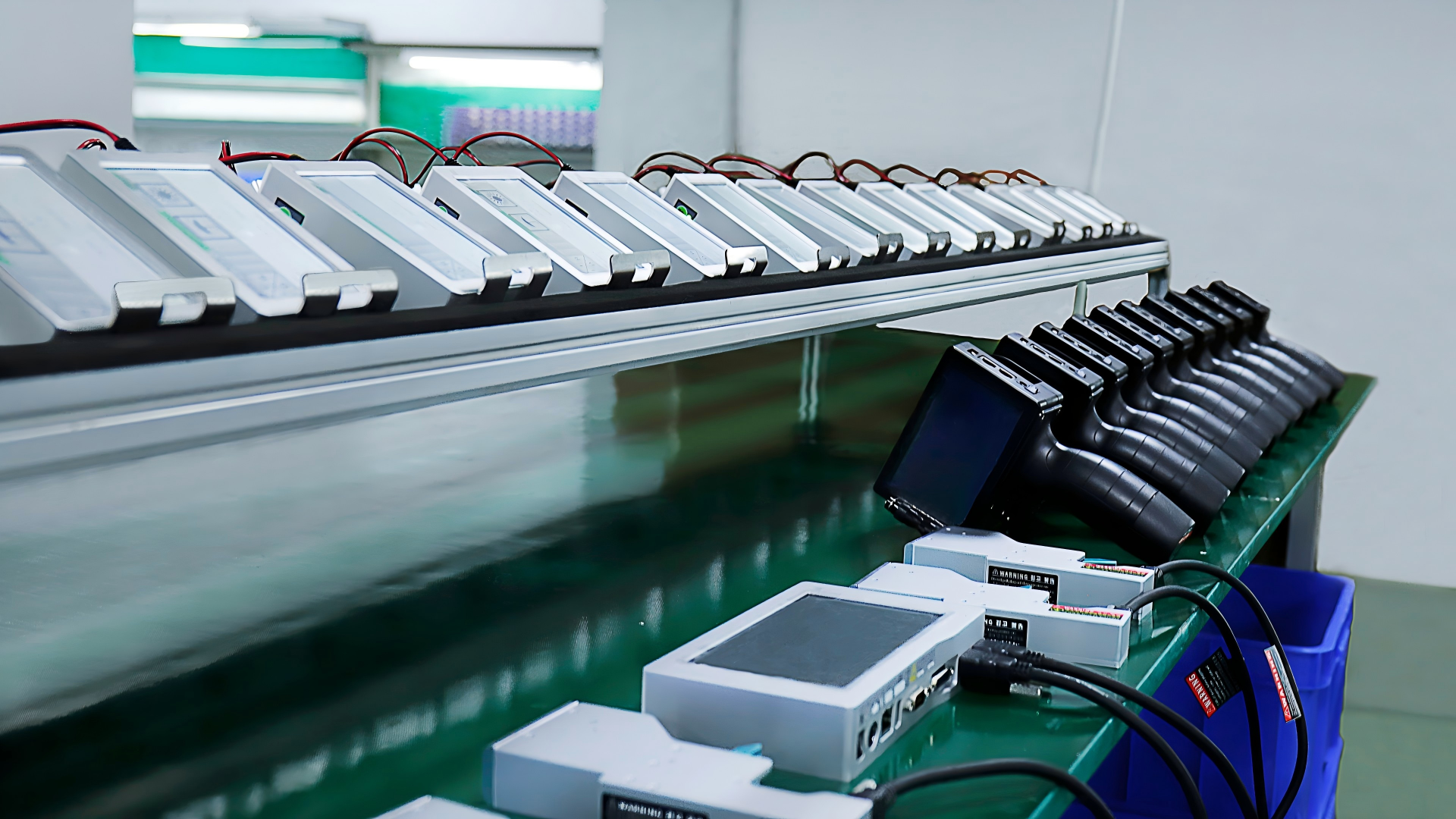
Thermal Inkjet is a cartridge-based route to high-resolution coding. It is a strong choice when the buyer needs readable barcodes, QR codes, or variable data on cartons and labels, especially in short-to-medium runs.
The DOCOD T220E Half-Inch Dual-Head Inkjet Printer delivers a print height of 25.4 mm and top speed of 406 m/min. Compared with the V2000 CIJ, the T220E offers 9.4 mm greater print height and is more suitable for cartons, QR/barcodes, and readable variable data. Compared with the compact TX1, the T220E offers 12.7 mm more print height, while both list a top speed of 406 m/min.
The DOCOD T260E is positioned for basic low-cost TIJ coding. It runs up to 60 m/min and is suitable for simple date coding on eggs, bottles, and boxes. The DOCOD TX1, with 12.7 mm print height, is useful for tight small lines and compact installations.
PIJ: Wide High-Resolution Coding with Continuous Ink Supply
Piezo inkjet is the right family when the code area is wider and the data content is denser. The DOCOD P2000 Piezo Inkjet Printer provides a 33.8 mm print height and 190 m/min at 300 dpi. Compared with thermal inkjet alternatives such as the T220E, the P2000 provides 8.4 mm more print height and 70 m/min more speed at 300 dpi. Compared with the V2000 CIJ, the print height advantage is 17.8 mm.
The P2000 uses a continuous ink-supply architecture, reducing per-cartridge costs and waste. It is more suitable for larger QR codes, coated cartons, traceability codes, and bigger print areas. The trade-off is higher system complexity, so the buyer should validate the line integration before ordering.
TTO: Ribbon-Based Coding for Flexible Packaging
Thermal Transfer Overprinting is a proven route for flexible films, sachets, pouches, and labels. The DOCOD R4000 Series Industrial Thermal Transfer Overprinter runs up to 800 mm/s and supports ribbon lengths from 400 m to 1200 m.
Compared with UV laser marking, the R4000 remains the safer mainstream route on standard flexible packs, although UV laser can reduce ribbon handling and bring cleaner long-run operation on laser-receptive films. For a line that changes flexible packaging frequently, TTO is still the more predictable technology.
Laser: Permanent No-Ink Marking, But the Wavelength Must Match the Substrate
Laser marking removes ink, solvent, and ribbon from the consumable workflow. The decision inside the laser family is mainly about wavelength and substrate.
DOCOD Venus1 Series Fiber Laser Marking Machines operate at 1,064 nm and are suited to metals and robust plastics. DOCOD Venus1 Series CO2 Laser Marking Machines operate at 10,600 nm and are suited to paperboard, labels, PET, glass, and other non-metal packaging. DOCOD L3000 Series 5W UV Laser Marking Machines operate at 355 nm and are suited to glass, PVC, ABS, HDPE, and delicate packaging that needs low-heat marking.
The UV laser provides better mark integrity than CO2 on delicate materials, while CO2 covers a wider range of standard non-metal packaging. Fiber laser is more efficient on metal parts, whereas CO2 is more efficient on mainstream non-metal packaging. Laser is not automatically better; it is better only when the substrate fit is confirmed.
Step-by-Step Breakdown: How to Finalize the Equipment Choice
Use the following five-step process to move from a shortlist to a final purchase decision.
- Confirm the substrate and print surface first. The marking method must match the actual packaging material: carton, film, plastic, metal, or glass. A pre-production sample printing and substrate test should be done before mass shipment to reduce print quality and material compatibility risk.
- Define the full code content and data volume. Confirm text, barcode, QR code, date format, language settings, GS1, serialization, and variable data requirements before production. Dense data changes the equipment family: a simple date code can run on CIJ or basic TIJ, while larger GS1-compatible QR codes often need wider TIJ, PIJ, or laser routes.
- Match the line speed and code width realistically. Use actual line speed, not rated packaging speed. For cable, pipe, and extrusion lines, the S1000 CIJ is designed for up to 576 m/min. For general bottles, cables, and irregular surfaces, the V2000 CIJ works up to 334 m/min. For carton barcodes and QR codes, the T220E TIJ prints up to 406 m/min with a 25.4 mm print height. For larger traceability codes, the P2000 PIJ provides 33.8 mm print height.
- Compare the consumable and maintenance workflow, not only the purchase price. CIJ generally has a lower upfront cost than CO2 laser, but it uses ink and solvent. TIJ uses cartridges or a continuous ink supply. PIJ uses continuous ink supply and reduces per-cartridge waste. TTO has recurring ribbon costs. Laser systems avoid ink, solvent, and ribbon, but may have higher upfront cost and require substrate validation.
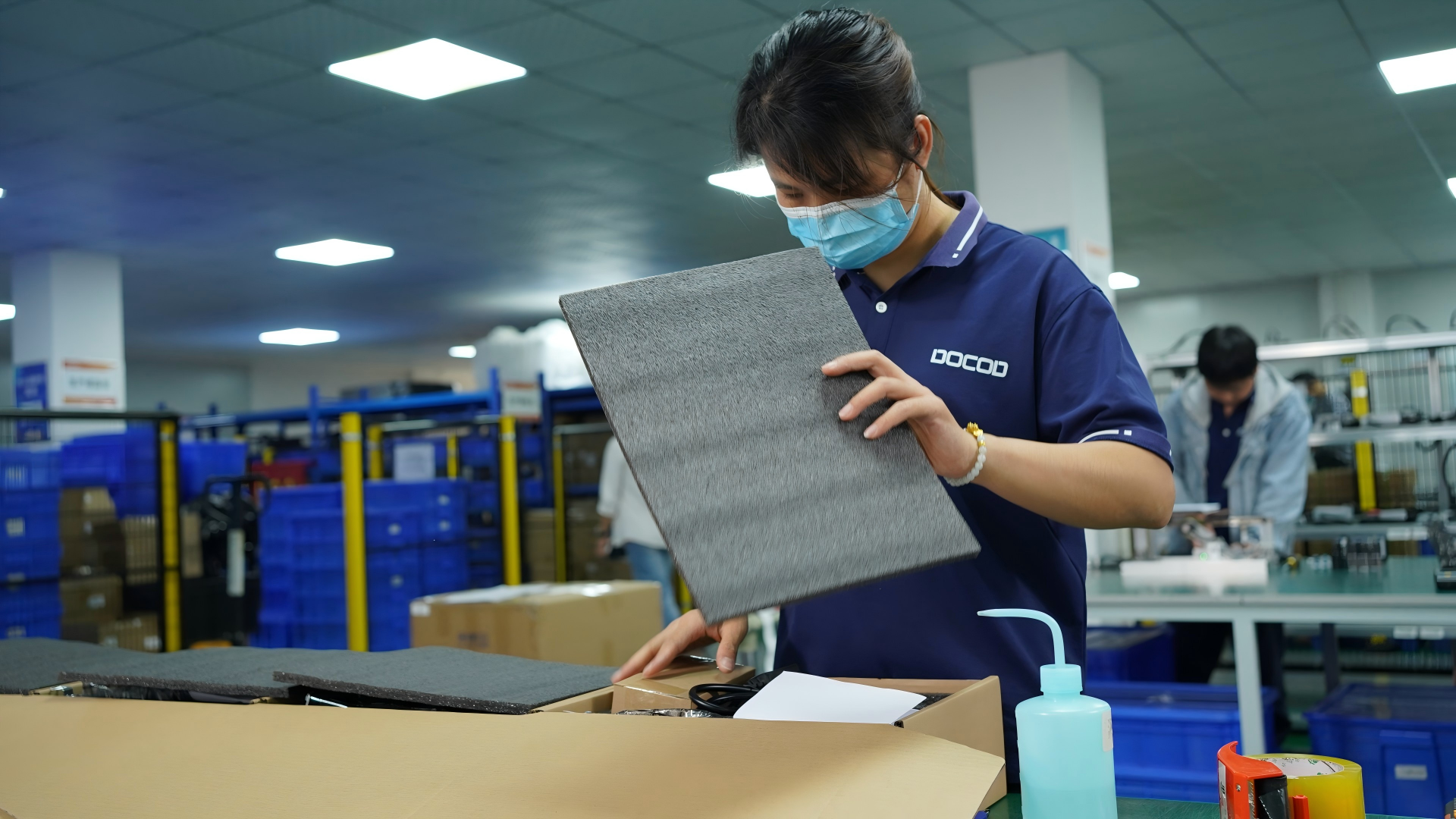
- Put risk controls into the order. Confirm certification by model and destination market before order release. Agree on milestones: order confirmation, assembly, testing, and shipment. Use reinforced export packing with shipment photos to reduce transport damage. Plan for online support, installation guidance, troubleshooting response, and a recommended spare parts list for repeat operation. For critical lines, consider optional OCR/barcode inspection, alarm light, or rejection linkage to prevent missed coding.
Use Cases: Matching Equipment to Production Scenarios
High-speed cable, pipe, and extrusion lines. The DOCOD S1000 CIJ is the reference for ultra-fast date coding in continuous production. Its 576 m/min top speed, IP55 protection, and automatic nozzle cleaning support demanding line conditions.
Bottles, cables, and mixed irregular surfaces. The DOCOD V2000 CIJ runs up to 334 m/min and remains flexible when the line changes package shape frequently. It is a stronger match for general continuous production coding than a wide-format printer.
Carton QR codes, labels, and GS1 content. For short-to-medium run high-resolution jobs, the DOCOD T220E TIJ provides 25.4 mm print height and 406 m/min. For larger QR codes, coated cartons, and traceability codes, the DOCOD P2000 PIJ provides 33.8 mm print height and 190 m/min at 300 dpi.
Flexible films, sachets, and pouches. The DOCOD R4000 TTO is more suitable than UV laser for these standard flexible pack formats. It prints up to 800 mm/s and supports ribbon lengths from 400 to 1200 m.
Permanent marking on metal or non-metal parts. DOCOD Venus1 Fiber Laser handles metals and robust plastics at 1,064 nm. DOCOD Venus1 CO2 Laser handles paperboard, labels, PET, glass, and other non-metal packaging at 10,600 nm.
Delicate packaging. DOCOD L3000 UV Laser operates at 355 nm and is suitable for glass, PVC, ABS, HDPE, and other heat-sensitive substrates where low-heat marking protects mark integrity.
Comparison Table: DOCOD Coding and Marking Lines at a Glance
| Technology | DOCOD series | Speed / output reference | Print height / wavelength | Typical production fit |
|---|---|---|---|---|
| Continuous Inkjet | S1000 | Up to 576 m/min | Small-character CIJ | High-speed cable, pipe, extrusion lines |
| Continuous Inkjet | V2000 | Up to 334 m/min | 16 mm print height | Bottles, cables, varied irregular surfaces |
| Thermal Inkjet | T220E | Up to 406 m/min | 25.4 mm print height | Cartons, labels, QR/barcode, GS1 content |
| Thermal Inkjet | T260E | Up to 60 m/min | Basic TIJ coding | Simple date coding on eggs, bottles, boxes |
| Thermal Inkjet | TX1 | Up to 406 m/min | 12.7 mm print height | Tight small lines, compact installations |
| Piezo Inkjet | P2000 | 190 m/min at 300 dpi | 33.8 mm print height | Larger QR codes, coated cartons, traceability |
| Thermal Transfer Overprinter | R4000 | Up to 800 mm/s | Ribbon 400-1200 m | Flexible films, sachets, pouches, labels |
| Fiber Laser | Venus1 Fiber | Not stated in comparison data | 1,064 nm | Metals, robust plastics |
| CO2 Laser | Venus1 CO2 | Not stated in comparison data | 10,600 nm | Paperboard, labels, PET, glass, non-metal packaging |
| UV Laser | L3000 | Not stated in comparison data | 355 nm | Glass, PVC, ABS, HDPE, delicate packaging |
The technical table is only half of the decision. The other half is the cost and maintenance logic.
| Technology | Consumable logic | Maintenance consequence | Cost position from DOCOD comparison data |
|---|---|---|---|
| CIJ | Ink and solvent route | Ink-route management; S1000 has automatic nozzle cleaning | Generally lower initial cost than CO2 laser; ongoing consumables |
| TIJ | Cartridge / CISS route | Cartridge-change planning | Basic models available for low-cost coding; recurring cartridge cost |
| PIJ | Continuous ink supply | Ink-supply management, less cartridge interruption | Reduced per-cartridge cost and waste |
| TTO | Ribbon from 400 to 1200 m | Ribbon changeovers | Recurring ribbon cost |
| Laser | No ink, solvent, or ribbon | Lower routine consumables handling; substrate validation required | Upfront cost varies; lower long-run consumable burden |
FAQ
Conclusion
The final selection of industrial coding and marking equipment should be made on four axes: substrate, code content, real line speed, and consumable cost workflow. Any technology can look strong on paper. The machine that works is the one whose wavelength, print height, speed, and maintenance model fit the actual production line.
DOCOD's portfolio covers CIJ, TIJ, PIJ, TTO, and laser, so a buyer can compare these routes within one manufacturer and then validate with sample prints, compliance checks, and delivery milestones. That validation matters more than another spec sheet.
Next step: turn the comparison into a project decision. Send a substrate sample to DOCOD for printing validation, ask for model-specific compliance confirmation, and request a delivery milestone schedule. Contact sales@docod.com.cn, WhatsApp +86 135-1234-4323, or visit www.docod-group.com.
Download the DOCOD corporate brochure: Corporate Brochure-DOCOD.pdf.
Have Questions or Need More Details?
Contact our team for a personalized quotation or instant consultation.
Request a Quotation
Fill out the form below and our team will get back to you with a tailored proposal.
WhatsApp Direct Chat
Prefer to chat in real-time? Message us on WhatsApp for instant assistance & quick answers.
- Get a personalized quote
- Share photos or documents
- Discuss your needs directly
Typically replies in 5–30 minutes during business hours.