
P2000 PIJ vs T220E TIJ: Choosing for Variable Data Coding
Variable data coding fails in two ways: the code is unreadable at the speed the line runs, or the printer cannot give the code enough area for the data the job now carries. The DOCOD P2000 high-resolution piezo inkjet printer and the DOCOD T220E half-inch dual-head thermal inkjet printer sit on different sides of that problem. Choosing between them is a line decision — print window, data payload, substrate and consumable model — not a vote on which inkjet technology is newer.
This comparison uses the published DOCOD specifications for both machines and the application notes that accompany them. It separates what those numbers establish from what they do not, and where a specification is not part of the supplied set, the page says so instead of filling the gap. DOCOD Precision Group Co., Ltd., founded in 2008 and based in Guangzhou, manufactures both printer families within one portfolio, so the choice is genuinely about the application rather than about supplier coverage.
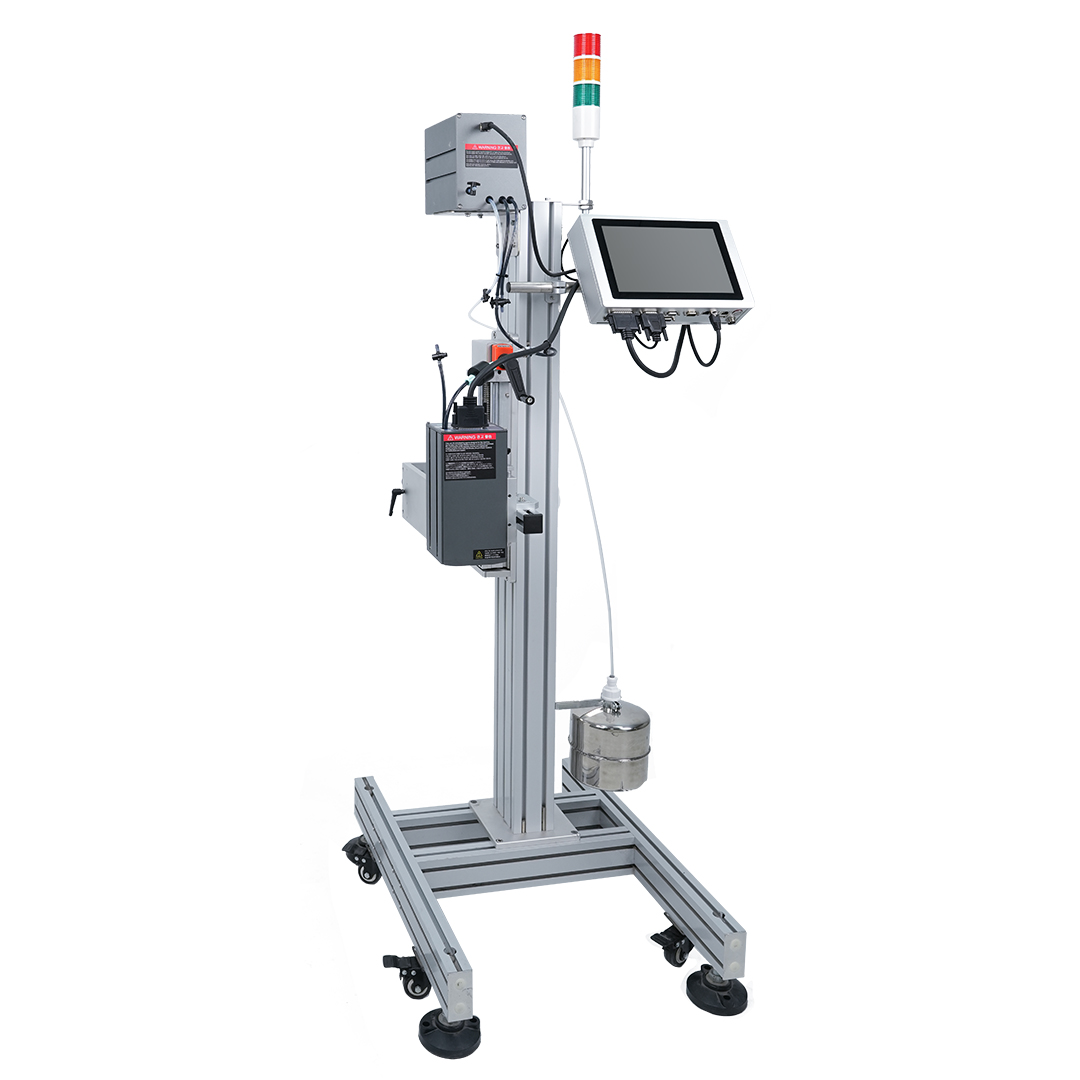
DOCOD P2000 high-resolution piezo inkjet printer: 33.8 mm print height, single- or dual-head PIJ format.
The short answer. Take the P2000 when the code needs more room — a 33.8 mm print window, larger QR or traceability codes, coated carton stock — and when the higher 300 dpi throughput figure of 190 m/min matters against 120 m/min. Take the T220E when a half-inch dual-head TIJ layout fits the line, the code fits inside 25.4 mm, and a cartridge-based supply model (3BK702 solvent cartridge, up to 600 dpi, 42 ml fill) suits your consumable and changeover practice. Neither answer is universal; the sections below show how the two specification sets produce that split.
Why variable data is the demanding part of a coding job
Variable data means content that changes item by item: date and batch codes, serial numbers, GS1 DataMatrix, 2D and QR codes for traceability. Fixed text tolerates a narrow print window because the same block repeats all shift. Variable data does not, because every code has to decode on the first read at line speed, and a code that needs a wider module or a taller block has nowhere to expand once the print head is fixed.
The compliance calendar reinforces the point. GS1 Global documents the retail transition from 1D barcodes to 2D codes under the GS1 Digital Link standard, with a deadline of 31 December 2027. Buyers preparing for that date are not only adding a symbol; they are adding data payload, and payload is what turns print area and resolution into procurement criteria rather than marketing preferences.
Scale does not settle the question either. Fortune Business Insights puts the global coding and marking equipment market at USD 7.51 billion in 2025 and credits inkjet — CIJ, TIJ and PIJ combined — with 40.1% of the technology segment. That figure confirms the inkjet family is a mainstream route; it says nothing about which inkjet format suits a specific carton, code size and line speed, which is exactly the decision this page addresses.
The two machines, defined
The DOCOD P2000 high-resolution piezo inkjet printer is a PIJ system offered in single- or dual-head format, built on an aviation-grade aluminum body with a 10.1-inch touch screen. Its supplied specification lists a 33.8 mm print height and 190 m/min at 300 dpi, with a continuous ink supply using negative pressure. DOCOD describes the P2000 as more suitable for larger QR codes, coated cartons, traceability codes and bigger print areas, and states that the continuous ink-supply architecture reduces per-cartridge costs and waste.
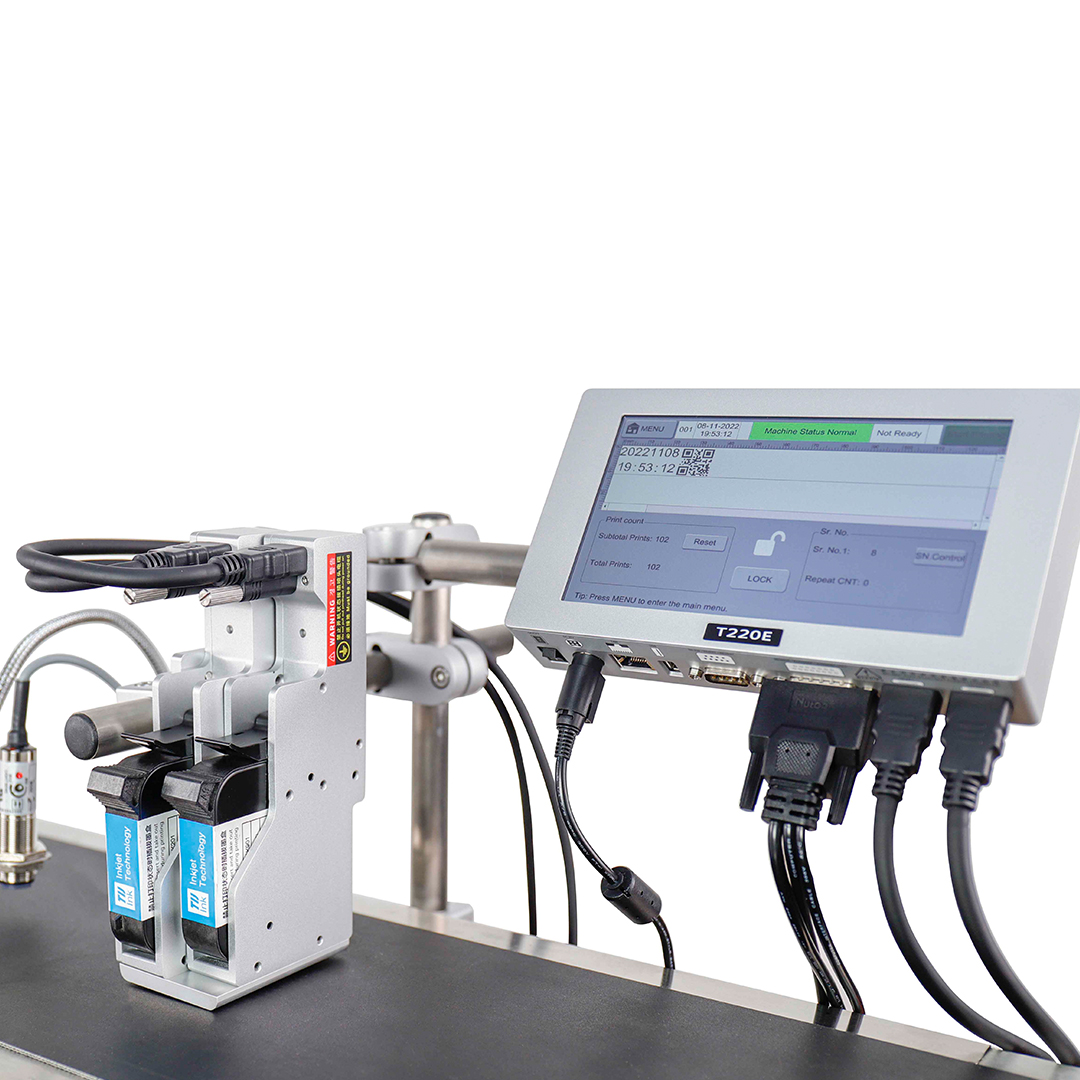
DOCOD T220E half-inch dual-head thermal inkjet printer on a production-line workstation.
The DOCOD T220E half-inch dual-head thermal inkjet printer is a TIJ system with a 25.4 mm print height and a listed top speed of up to 406 m/min. At 300 dpi the supplied comparison states 120 m/min. It runs a cartridge or CISS workflow; the specified 3BK702 solvent cartridge is listed at up to 600 dpi with a 42 ml fill. DOCOD positions the T220E for cartons, labels, GS1 and wider QR or barcode content, and describes it as more efficient when code height and data density are larger than a compact single-head machine can handle.
Reading the speed and size numbers correctly
The most common error in this comparison is placing the T220E's 406 m/min beside the P2000's 190 m/min. Those are not the same quantity. The 406 m/min is a listed top speed for the T220E; the 120 m/min figure appears in the same specification set as the T220E's speed at 300 dpi. The P2000's 190 m/min is also stated at 300 dpi. Compared at the stated resolution, therefore, the supplied data gives the P2000 a 70 m/min advantage — and comparing 406 with 190 would invert the like-for-like result without telling the reader anything true about either machine.
Both figures remain specification values for defined configurations. Before a purchase decision, re-confirm speed for the head count, code height and content you intend to run, because the resolution-speed pair is what actually governs throughput on a variable data job.
Print window is more straightforward. The P2000 offers 33.8 mm against the T220E's 25.4 mm, a difference of 8.4 mm. That extra height is what allows stacked fields, taller data blocks or a larger symbol than a half-inch layout can carry, and it is the reason DOCOD's own notes pair the P2000 with larger QR codes and bigger print areas. It does not automatically mean a specific code will be 8.4 mm taller; module size, orientation and head arrangement all affect the finished mark, so the code should be measured on a sample rather than calculated from the head width alone.
Resolution needs the opposite caution. The 3BK702 cartridge is listed at up to 600 dpi, while the supplied P2000 material does not state a maximum resolution. That is a documentation gap, not a capability verdict: the P2000 is described as high-resolution PIJ and should be assessed against your required code grade with a printed sample and a verifier.
Side-by-side comparison
The table below uses only the supplied specification and application statements for each model. Rows without a supplied value are marked accordingly rather than inferred from the other machine.
| Decision dimension | DOCOD P2000 (PIJ) | DOCOD T220E (TIJ) |
|---|---|---|
| Technology and head format | High-resolution piezo inkjet; single- or dual-head format | Thermal inkjet; half-inch dual-head format |
| Print height | 33.8 mm | 25.4 mm |
| Speed at 300 dpi | 190 m/min | 120 m/min |
| Listed top speed | Not stated in the supplied specification set — confirm for the configured head count | Up to 406 m/min |
| Ink supply | Continuous ink supply with negative pressure; reduces per-cartridge costs and waste | Cartridge or CISS workflow; 3BK702 solvent cartridge, up to 600 dpi, 42 ml fill |
| Stated application fit | Larger QR codes, coated cartons, traceability codes, bigger print areas | Cartons, labels, GS1 and wider QR or barcode content with larger code height and data density |
| Build and interface | Aviation-grade aluminum construction; 10.1-inch touch screen | Not stated in the supplied specification set |
| Consumable logic | Bulk continuous supply, fewer cartridge changes in batch work | Per-cartridge cost tracking and cartridge changeovers |
Sources: DOCOD published comparison and application statements for the P2000 and T220E. Values are configuration-specific specification figures, not field test results.
A six-step decision path for your line
The specifications only become a decision when they are applied in order. Working through these six steps produces a defensible choice even where a data point is missing.
- Fix the code before the printer. Define the symbology, module size, data payload and required print grade for the smallest and largest item on the line. A GS1 Digital Link QR code and a short date code make very different demands on the same machine.
- Size the print window. If the code plus its human-readable text fits comfortably inside 25.4 mm, the T220E layout is viable. If the job needs stacked fields, a larger symbol, or room to grow as payload increases, the P2000's 33.8 mm window removes a constraint the T220E cannot.
- Confirm substrate and ink or cartridge match. Coated cartons behave differently from labels and uncoated board. Match the ink route or the 3BK702 solvent cartridge to the surface, and test before committing — substrate compatibility is a validation item, not an assumption.
- Set resolution and speed as a pair. At 300 dpi the supplied figures are 190 m/min for the P2000 and 120 m/min for the T220E. If your code grade requires 600 dpi, the cartridge specification gives you a stated T220E figure; ask DOCOD to confirm the P2000 resolution for the same job rather than assuming parity.
- Choose the consumable model. A continuous supply changes how often operators intervene during a batch; a cartridge workflow makes consumption easy to track per unit. Pick the model that matches your shift pattern, not the one that looks cheaper on the quotation line.
- Plan verification and changeover. Decide whether code inspection, alarm or rejection linkage is needed, confirm print files and language settings before production, and agree spare-parts coverage for repeat operation.
Where each machine earns its place
The P2000 is the stronger fit when print area is the binding constraint. Coated cartons carrying a large QR or traceability code, jobs where the data payload is growing toward a 2D standard, and batch runs long enough that repeated cartridge changes interrupt the shift all point toward the wider PIJ platform and its continuous ink supply. The aluminum body and 10.1-inch touch screen are operational details, but they matter on a line where the interface is used by shift staff rather than a specialist.
The T220E is the stronger fit when the half-inch dual-head layout is enough. Cartons and labels with GS1 or wider QR content, and lines where code height and data density are larger than a compact single-head TIJ machine can handle, are the applications DOCOD describes for it. It is also positioned for short- to medium-run high-resolution work, where a cartridge-based supply keeps commissioning simple and consumption visible. Its 406 m/min top speed figure is relevant for lines that genuinely run fast with modest data density — but it should be checked against the 300 dpi figure for the actual job.
The boundary case: when neither is the right machine
Both printers are flat-head inkjet systems aimed at cartons, labels and similar surfaces. If the job is small-character date coding on bottles, cables or irregular surfaces, the supplied data points elsewhere: the DOCOD V2000 continuous inkjet printer is described for bottles, cables and general continuous production coding, with a 16 mm print height and speeds up to 334 m/min, against the T220E's 25.4 mm. Recognising that boundary early avoids buying a high-resolution flat-head machine for a job that a CIJ route handles more naturally.
Consumables, cost and what the data does not say
Neither machine's price appears in the supplied specification set, and no ink or cartridge consumption rate is published. That means any total-cost comparison built today would be an estimate dressed as a fact. What the data does support is the shape of the cost: the P2000's continuous supply is stated to reduce per-cartridge costs and waste, which shifts attention to bulk ink consumption and start-up waste, while the T220E's cartridge workflow makes cost per cartridge easy to see but leaves changeover frequency and cartridge life as the variables to confirm.
A fair quotation request therefore asks both suppliers — or the same supplier for both models — to price the same annual code volume, the same code size, and the same shift pattern, and to include the recommended spare-parts and consumables list for repeat operation. Anything less compares hardware prices rather than running costs.
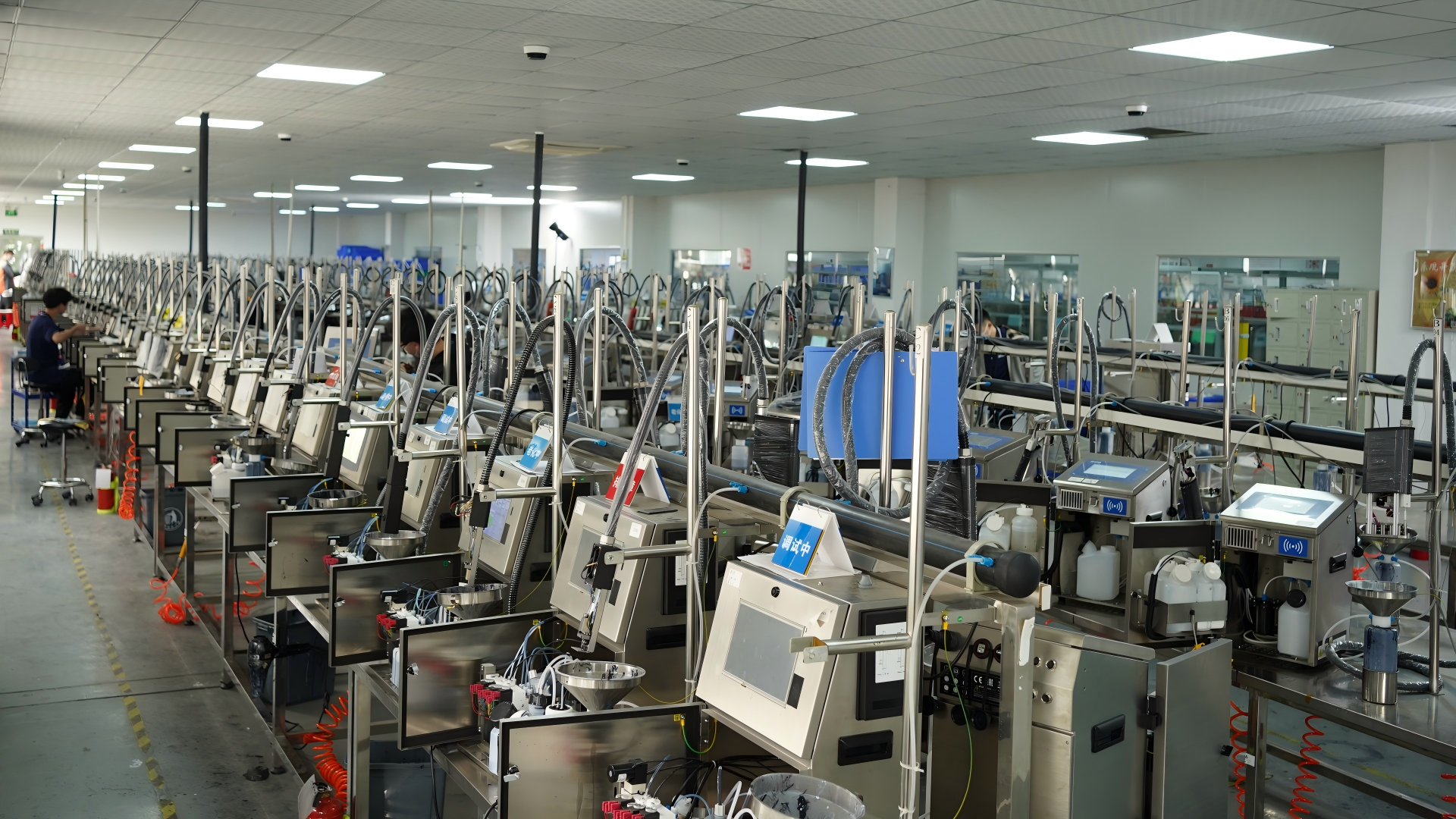
Both printer families are built within DOCOD's own production operation in Guangzhou.
Proving the choice on your own substrate
The specification comparison narrows the field; a printed sample decides it. DOCOD's stated pre-production practice is sample printing and substrate testing before mass shipment, with ink or marking method matched to carton, film, plastic, metal or glass surfaces. That is the point at which the 8.4 mm print-height difference and the resolution question stop being numbers and become a scannable code.
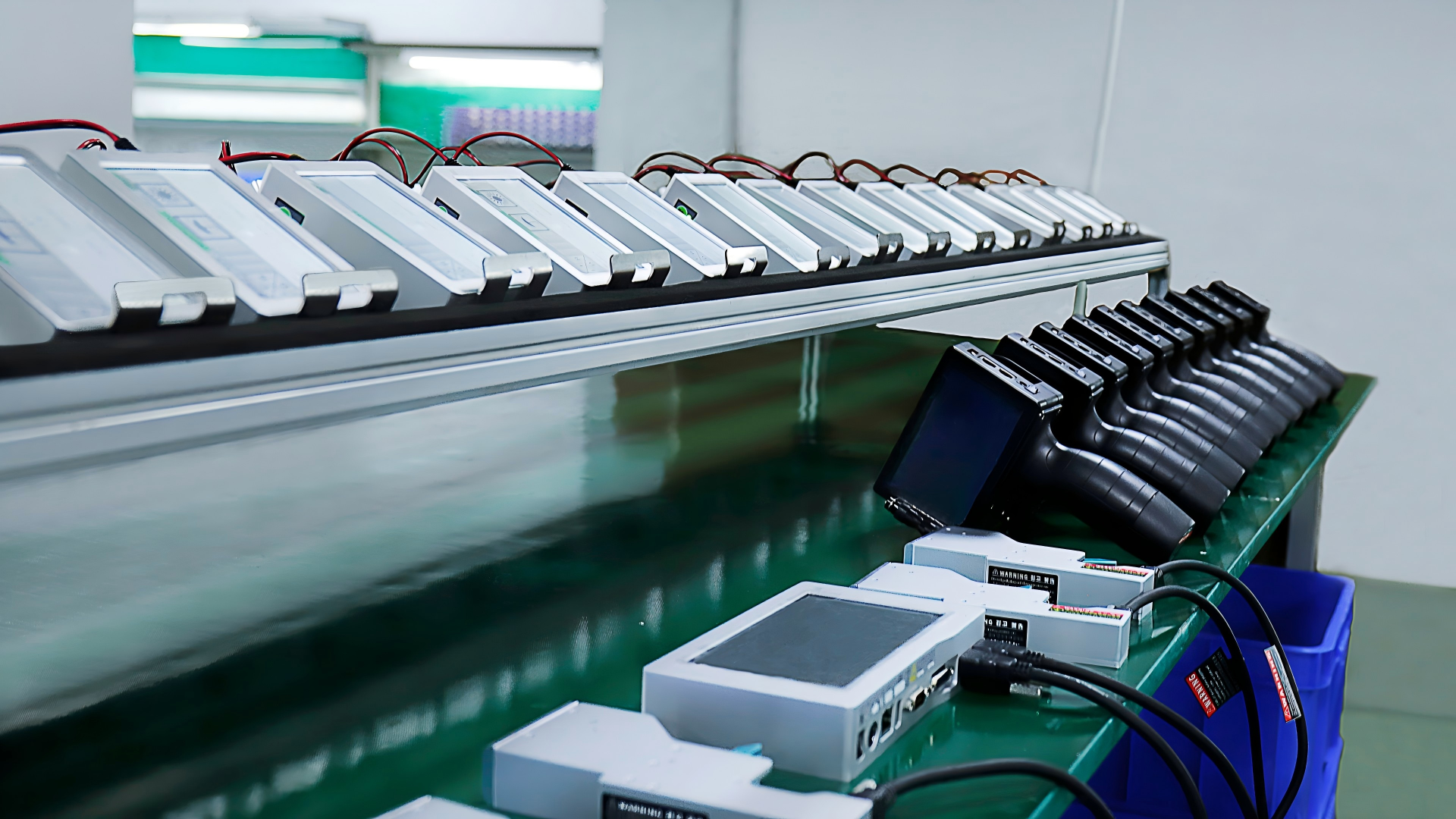
Pre-production print and substrate testing: the step that converts specifications into a verified code.
A useful validation set covers four checks: print the actual code content at production speed and grade it with a verifier; confirm the substrate and ink or cartridge combination on the real stock; double-confirm text, barcode, QR, date format and language settings in the print file; and confirm the working conditions — temperature, humidity and line environment — before the model is fixed. Where a missed code carries real cost, add code inspection with alarm or rejection linkage so an unreadable mark is caught rather than shipped.
Frequently asked questions
Can the P2000 or the T220E handle the GS1 Digital Link 2D transition before the 31 December 2027 deadline?
Both machines are described by DOCOD as suitable for QR, barcode and traceability content, and DOCOD states that its coding portfolio supports GS1 DataMatrix, serialization and variable data printing. The deadline itself comes from GS1 Global, which documents the retail move from 1D to 2D codes under GS1 Digital Link with a 31 December 2027 date. Compliance is not settled by the printer name, however: the code must reach the required grade on your substrate at your line speed, so the practical answer is a printed sample verified against the standard you ship into. Where payload is large, the P2000's 33.8 mm window gives more room than the T220E's 25.4 mm.
How much more print area does the P2000 provide than the T220E?
The P2000 is specified at 33.8 mm print height and the T220E at 25.4 mm, a difference of 8.4 mm. That is a head-width figure. The finished code size depends on module size, orientation and head arrangement, so the extra height should be confirmed by printing your own code on both machines rather than by scaling the difference.
Which machine is cheaper to run for variable data coding?
The supplied data does not include prices or consumption rates, so a definitive running-cost answer cannot be given here. What is documented is the architecture: the P2000 uses a continuous ink supply that DOCOD states reduces per-cartridge costs and waste, while the T220E uses a cartridge or CISS workflow with the 3BK702 solvent cartridge at up to 600 dpi and 42 ml fill, which makes per-cartridge consumption easy to track. Compare the two on the same annual code volume, code size and shift pattern, and include consumables and the recommended spare-parts list in both quotations.
What should a pre-purchase sample prove?
A sample should prove four things: that the code decodes at the required grade when printed at production speed; that the ink or cartridge suits the actual substrate, whether coated carton, label stock or film; that the print file — text, barcode, QR, date format and language — is correct before mass production; and that the machine's stated speed and print height hold for the code you intend to run. Testing before shipment is DOCOD's stated practice, and it is the cheapest point at which to discover a mismatch.
What happens after ordering — delivery, spares and support?
DOCOD schedules standard models through defined milestones: order confirmation, assembly, testing and shipment, with protective export packing and shipment photos before dispatch. A recommended spare-parts and consumables list is provided for repeat operation, and online support, installation guidance and troubleshooting response continue after delivery. Lead times are quoted per configuration rather than published as fixed values, so the practical next step is to send your code sample, substrate and line speed for a matched P2000 or T220E proposal and a printed sample.
Conclusion
The P2000 and the T220E are not rival answers to the same question; they answer two versions of it. If the variable data job needs a wider print window, larger QR or traceability codes on coated cartons, and the higher 300 dpi throughput figure of 190 m/min, the P2000's 33.8 mm PIJ platform and continuous ink supply fit the requirement. If the code fits inside 25.4 mm, a half-inch dual-head TIJ layout suits the line, and a cartridge workflow with the 3BK702 solvent cartridge at up to 600 dpi and 42 ml fill is easier to run, the T220E is the match. Both carry a 406 m/min-class or higher headline in their own specifications, but the only number that decides the purchase is the one your code achieves on your substrate at your line speed — which is why the sample, not the datasheet, closes the decision.
Next step. Send DOCOD your code content, substrate and line speed to request a matched P2000 or T220E configuration, a printed sample for verification, and a quotation on the same volume assumptions. The full product and capability overview is available in the DOCOD corporate brochure.
Have Questions or Need More Details?
Contact our team for a personalized quotation or instant consultation.
Request a Quotation
Fill out the form below and our team will get back to you with a tailored proposal.
WhatsApp Direct Chat
Prefer to chat in real-time? Message us on WhatsApp for instant assistance & quick answers.
- Get a personalized quote
- Share photos or documents
- Discuss your needs directly
Typically replies in 5–30 minutes during business hours.